Gil Geron has a useful way of describing his product career: unevenly. Before co-founding Orca Security, he spent almost eleven years at Check Point and helped build four or five products. Some were great, he says. Some were less so. The interesting part is what he took from the misses. He learned to listen, to adapt and to resist the warm narcotic of believing that yesterday's solution deserves tomorrow's customer.
For a founder, this is nearly rude advice. Founders are paid in conviction long before they are paid in cash. The pitch deck asks for certainty. The product asks for revision. Geron chose revision. His line about learning “how to not fall in love with what you've done” is less a slogan than a compact operating manual: pay attention, explain why something matters, and be ready to begin again.
That manual followed him from a large security company to a startup with an unusually crowded founding table. Orca Security began in 2019 with eight former Check Point colleagues. Investors noticed. Eight founders can sound like a dinner reservation with bylaws. Geron and his colleagues made it work through a rule that is simple to recite and expensive to practice: the relevant expert owns the relevant decision.
A party of eight
The founders already knew one another's abilities. Their arrangement was built around trust rather than universal consensus. When a question belonged to product, the product leader decided. When it belonged elsewhere, authority moved with the expertise. Geron has described the necessary surrender plainly: “If you don't trust and let go, it won’t work.”
Letting go appears twice in his story. He lets go of a product idea when customers expose its weakness. He lets go of control when a colleague understands a decision better. Both moves sound modest. Both require an executive to place the quality of the outcome above the pleasure of being right.
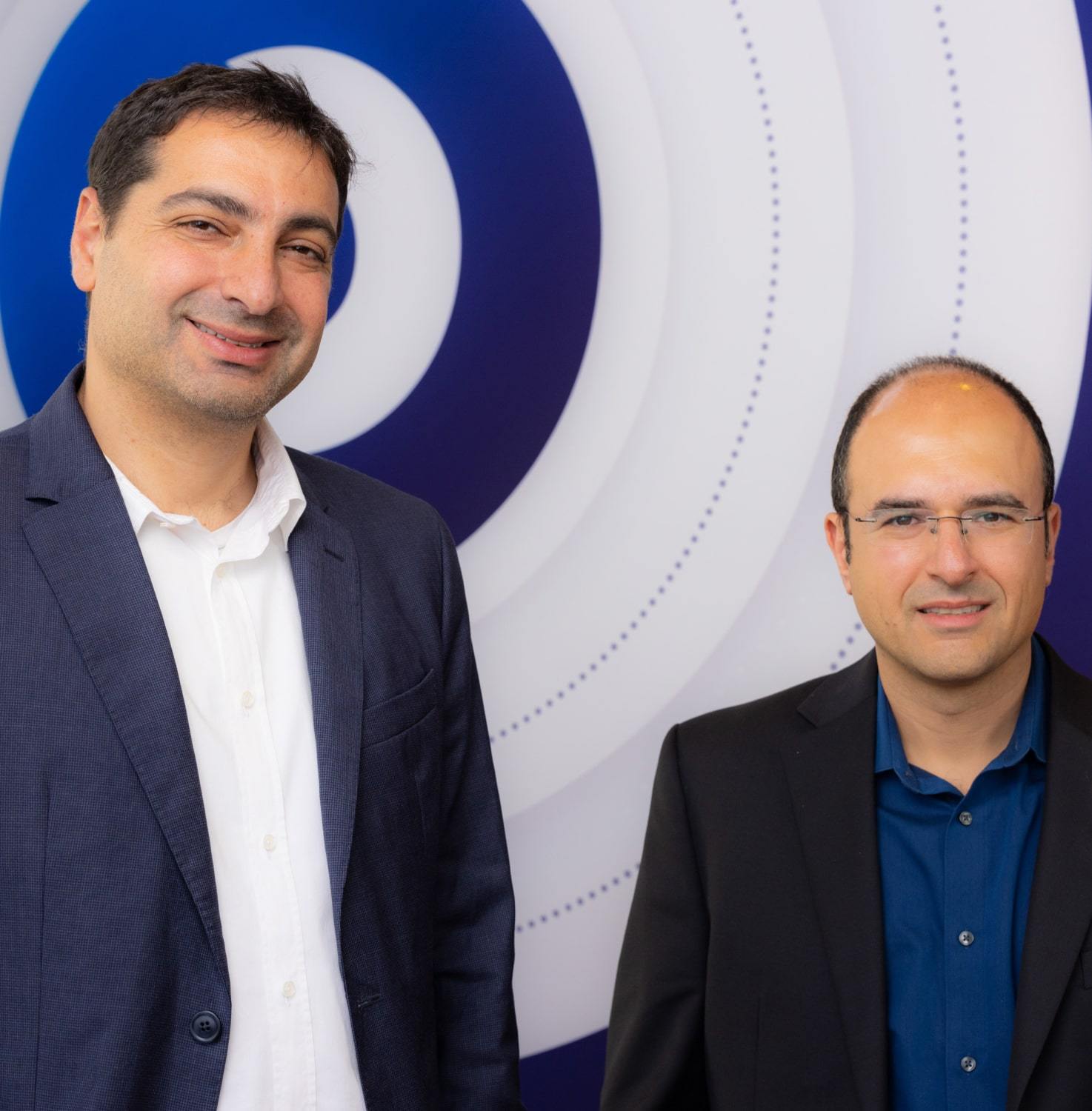
In March 2023, Orca formalized that division of appetite. Geron, the founding chief product officer, became CEO. Avi Shua moved from CEO into a new chief innovation officer role and stayed on the board. The announcement framed Geron's passion around customer success and Shua's around continuous invention. The choreography matters because it did not exile either founder. It sharpened the job each was being asked to do.
“My biggest lesson learned is how to listen and how to not fall in love with what you've done in order to really reinvent yourself.”Gil Geron
The alert is not the story
Geron's technical career has made him preoccupied with translation. A vulnerability scanner can produce a finding. An organization still has to understand why the finding deserves time, who should own it and what might happen after a change. Security teams do not suffer from a shortage of things that could be wrong. They suffer from the competition among those things for human attention.
Orca's early product argument was that cloud security could be inspected without installing an agent on every workload. Its SideScanning technology reads cloud workload storage and provider APIs to assemble a view across configuration, identity, data, vulnerabilities and attack paths. The technical mechanism is important. Geron's managerial interpretation is more revealing: combine the findings until they become a reason.
The Geron compression model
He talks about converting security work into a story that can travel between teams. The storytelling works as operational compression rather than decoration. A million signals are noise if they cannot cross the distance from a security console to an engineer's next decision. Context shortens that distance.
The idea also explains his distaste for security marketing that trades only in dread. In a 2025 conversation, he offered a buyer's rule with the cadence of advice from a cheerful uncle: “Find the ones that give you hope and stay away from the ones who are trying to sell you by fear.” Fear opens attention. Hope gives people somewhere to put it.
Automation meets the red button
Geron is optimistic about artificial intelligence, especially its ability to make expertise accessible. He has heard a customer praise an AI feature because people could ask questions without feeling judged. A junior security engineer can move faster when knowledge arrives at the moment of uncertainty. For an industry that has spent years worrying about a shortage of skilled professionals, this is a practical form of leverage.
His optimism comes with a production engineer's instinct for consequences. Automatic remediation is easy to admire in a demonstration. In a live system, a tidy fix can create a costly outage. Geron once described a case in which malicious Windows code was found on a Linux machine. The code was alarming, but it could not run there. The customer chose mitigations and planned downtime instead of an immediate shutdown. Context changed the right response.
This is the distinction shaping his current work on AI agents. Intelligence can recommend. Permission lets a system act. As agents gain access to code, cloud resources and business workflows, governance becomes part of the product rather than a policy document waiting elsewhere. Geron's version of progress keeps the judgment around the automation.
From cloud builders to everyone builders
By 2026, Geron's public focus had widened from cloud infrastructure to the software being produced with AI. Generative tools allow developers to create more quickly and invite people outside engineering to build applications of their own. The old boundary around who makes software is dissolving. Security has to follow the application to wherever it is made.
There is an echo of Orca's original thesis here. Cloud adoption changed where infrastructure lived and how quickly it moved. AI-assisted development changes who can produce software and how much can be produced. In each shift, the temptation is to bolt on control after speed has already won. Geron argues for an end-to-end workflow across development, deployment and runtime, with production context feeding back into earlier decisions.
That sounds like architecture. It is also diplomacy. Developers, security operators and business owners have different incentives. A useful platform must give each group enough context to cooperate without demanding that everyone become a specialist in everyone else's work.
“Even with exceptional skills and a powerful platform, working in a pod is better than working alone.”Gil Geron
The pod and the person
Orca Security's name has supplied the company with a generous amount of metaphor. Orcas navigate wide territory, adapt their strategy and work in pods. SideScanning has been compared with sonar. Geron enjoys the parallel, particularly the social part. Security, in his telling, is collective intelligence made useful.
The metaphor could become corporate wallpaper if his own habits did not keep returning to it. A former colleague publicly described him as intelligent, caring about his team's development and attentive to its needs. Geron speaks about hard people decisions through empathy: look at the person, the path that brought them here and how you would want to be treated in the same position. Trust the professional. Make the difficult call. Leave the ego outside the room.
This approach also changes the role of a chief executive. Geron did not arrive in the CEO seat from finance, sales or a succession search. He came from the product itself, where every roadmap is an argument about scarce attention. The skill transfers neatly. A chief product officer decides what the company will build next. A chief executive decides what the company will become next. In both jobs, the dangerous word is “everything.”
His physics and computer science education makes a tidy preface to that systems view, although his interviews linger less on theory than on use. He asks what will happen when a control reaches a working environment. He asks who must understand the finding. He asks whether the intervention will protect the business or interrupt it. The questions keep technology honest by giving it neighbors.
He also has a dry awareness of the absurdities around him. In one interview, he introduced his years as Orca's product chief by joking that he had caused most of the company's damage so far. Asked for a favorite meal, the cloud-security executive chose Mediterranean and Asian fusion, then supplied the more vivid answer: warm french fries in a nice, noisy place.
The detail fits. Geron's career is built around making systems quieter, but his preferred room has some life in it. He wants the signal without requiring silence. He wants conviction that can survive correction. He wants automation with judgment nearby and founders who know when someone else owns the answer.
The fashionable founder pose is certainty at maximum volume. Geron's more durable proposition is that listening can be an engineering discipline. A company improves when its builders can change their minds. A team improves when authority reaches the right person. A security finding improves when it becomes a story another human can understand. The rest is implementation.