Gary Haugen once sat outside a Safeway wondering how he would pay six people. International Justice Mission was young, the money was short, and its founder was crying in a grocery-store parking lot. He called friends. They made gifts. Payroll survived. An institution devoted to confronting violent injustice had first to clear the rather less cinematic hurdle of staying solvent.
Keep that parking lot in view. Haugen’s résumé can otherwise make his choices appear preordained: Harvard, Chicago Law, the U.S. Department of Justice, the United Nations. There is a tempting straight line through those names. Building IJM required stepping off it, exchanging an established prosecutorial career for an organization whose next six salaries were sometimes a matter of urgent persuasion.
At the center of the decision was a problem that has occupied him ever since. A person may possess rights and still have nobody willing to enforce them. The law can forbid slavery while a family remains trapped in forced labor. It can protect property while a widow loses her land. Haugen wanted to work on the distance between those promises and the people meant to benefit.
A comfortable beginning, then a wider map
Haugen grew up in Sacramento in a family of eight. When he arrived at Harvard in 1981, he later recalled, his understanding of social problems was limited. The Harvard-Radcliffe Christian Fellowship helped change that. He volunteered at a homeless shelter in Cambridge and helped winterize homes in Boston. The tasks were ordinary enough to resist romantic description. They also put actual neighbors into questions he might otherwise have considered from a distance.
Through the fellowship, he led a committee examining whether Harvard should divest from companies operating in South Africa. After graduating in 1985 with a degree in social studies, he went there himself, working with the National Initiative for Reconciliation, a Christian movement concerned with political reform and racial reconciliation. An overseas issue had become a place, with people in it.
Law gave that developing interest a profession. At the University of Chicago, where he earned his J.D. in 1991, Haugen studied international law as a Ford Foundation Scholar. His early work included examining human rights cases in the Philippines for the Lawyers Committee for Human Rights. He joined the Justice Department in 1991 and worked on civil rights cases involving police misconduct.
These experiences supplied a useful complication for his later career. Police could be protectors. They could also be perpetrators. Any organization proposing to work through public justice systems would have to reckon with both possibilities.
The investigator arrives after the crime
In 1994, detailed from the Justice Department, Haugen directed the United Nations investigation into the aftermath of the Rwandan genocide. He led lawyers, prosecutors, law enforcement officers, and forensic specialists gathering evidence against those responsible. It was work requiring precision in circumstances that made precision painfully inadequate as a human response.
The distinction between investigation and prevention stayed with him. Evidence could help establish responsibility after catastrophe. It could not supply the protection people had needed beforehand. Years later, when writing about emerging forms of exploitation, he would return to the experience of arriving too late.
In 1997 he left the Justice Department and founded IJM. The departure was a calculation about where his presence might matter. America would still have federal prosecutors without him. Elsewhere, he believed, abused people could have no practical advocate at all. His professional training remained useful; he was changing where he would put it to work.
Joins the U.S.
Justice Department
Directs the UN’s
Rwanda investigation
Founds International
Justice Mission
The case has to go somewhere
IJM’s approach puts lawyers and investigators alongside local authorities to help victims reach safety, pursue accountability, and improve the systems supposed to protect them. Those activities depend on one another. A person can get out of danger while the machinery that permitted the abuse remains ready to fail the next person.
The organization’s work has included bonded labor in South Asia, stolen property in Uganda, and police abuse in Kenya. Those are different crimes with a shared practical question: can someone without money or influence get a public institution to act? The answer depends on people who receive complaints, gather evidence, represent clients, and carry proceedings forward.
Haugen’s training makes him attentive to that machinery. His former law school has described how he treats an individual’s struggle as evidence about a larger system. An unsuccessful case may reveal an obstacle others will encounter. A successful one can show where a process begins to work. The person in front of the lawyer remains the reason for doing either.
The aim reaches beyond accumulating rescues. IJM wants public protection to become dependable enough that abuse becomes harder to commit. This places considerable weight on the quality of its partnerships with authorities. Haugen’s earlier work on police misconduct gives that choice particular significance: the institutions being asked to deliver protection may themselves require scrutiny and change.
A book about everything violence can undo
Haugen has carried the argument into books, with different doors for different readers. Good News About Injustice addresses Christian responsibility in the face of oppression. Just Courage asks readers what a life committed to that responsibility might demand. The Locust Effect, coauthored with Victor Boutros and published in 2014, brings the argument into the wider conversation about poverty.
The title suggests a destructive force capable of consuming hard-won progress. Haugen and Boutros argue that everyday violence can undermine efforts to improve people’s circumstances. Someone can acquire resources and still be unable to keep them when a more powerful person can use coercion without consequence. Protection therefore belongs inside the discussion of development.
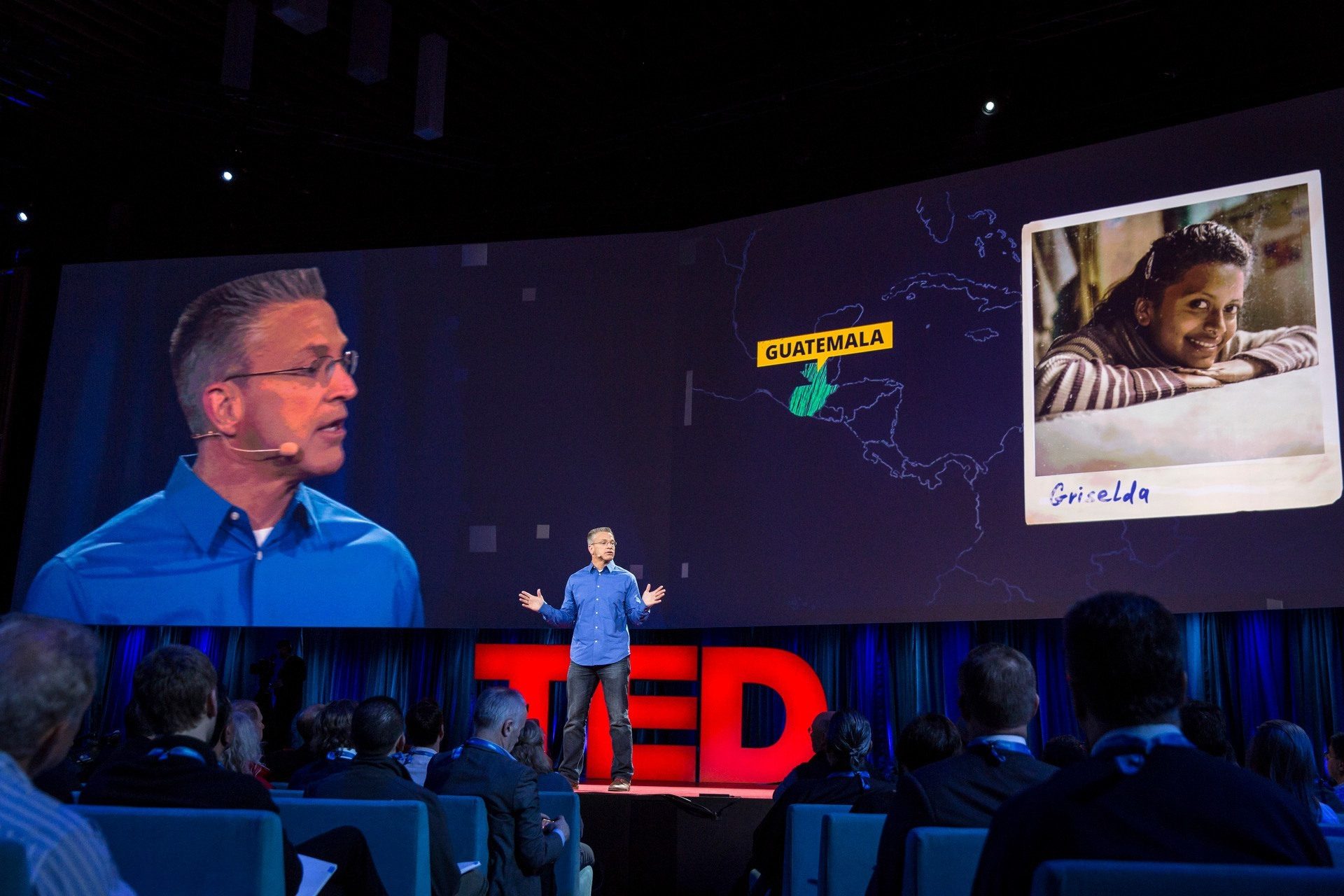
His 2015 TED talk carried that proposition to another audience. On a stage generally associated with ideas moving briskly into the future, he asked listeners to attend to an older institutional problem: people needing the law to work in the place where they live.
Public recognition followed the work through several channels. He received the William Wilberforce Award in 2007 and was named a U.S. State Department Trafficking in Persons Report Hero in 2012. In 2021, InterVarsity Press included Good News About Injustice in its anniversary Signature Collection. The audiences ranged from government officials to church reading groups, a fair indication of how much translation his role requires.
He has also discussed violence and poverty alongside Danielle Allen and Jeffrey Sachs at Harvard. Such conversations place legal protection among questions usually divided between disciplines. Haugen’s recurring contribution is to keep the person exposed to coercion within the frame, even when the discussion becomes economic or institutional.
Permission to enjoy the work
There is another Haugen visible at the lectern. Before his 2019 baccalaureate address at Wake Forest, he asked interns and recent graduates what they remembered about their own speakers. Nothing, they said. He then searched his memory and found it equally unhelpful. The audience research offered a comforting prospect: his own remarks might also disappear.
He used the opening to urge graduates to enjoy their lives. For someone whose work involves sustained attention to cruelty, the invitation had a particular weight. He described colleagues who joke, sing, dance, delight in their children, and laugh together while doing demanding work. Solemnity, apparently, had not been added to the job description.
“If your life in the law does not have a great purpose, it will not produce great joy.”
Gary Haugen / remarks to Chicago Law graduates, 2009
His Christian faith is explicit in his account of the work. It helped direct his student interests and remains central to his writing about justice and courage. At the same time, IJM’s work serves victims across religious backgrounds. His personal motivation and the organization’s practical legal task meet in the obligation to help the person who needs protection.
Running the institution also means sharing responsibility. When Sean Litton became IJM’s president in 2016, his remit included day-to-day headquarters operations and global strategy, while Haugen retained responsibility for the vision and ultimate success. An idea large enough to outgrow six employees needs more than its founder’s determination. It needs people authorized to carry it.
The screen changes. The question persists.
In 2026, Haugen’s attention includes the people forced to operate online scams. At Davos, he joined a discussion of cybercrime’s human consequences. In a June essay, he described how AI translation, voice cloning, and other technologies can expand criminal operations. Behind a fraudulent message may be someone trafficked into a compound and compelled to send it.
That account connects the person losing money with the person being coerced into taking it. Haugen argues that technology businesses need to anticipate criminal uses of their tools and that governments need to establish accountability. His concern about prevention remains recognizable from Rwanda: waiting until the evidence is overwhelming can mean waiting until people have already been harmed.
The tools have changed considerably since he left federal service. The question underneath his work has proved durable. When a person is threatened, confined, or robbed, will the institutions that promise protection actually answer? For Haugen, that question has required books, investigations, partnerships, speeches, and an organization with salaries to pay. Somewhere between the statute and the doorstep, someone still has to show up.
Follow the argument
Watch Haugen speak, read his writing, and explore the work.
- International Justice Mission ↗
- Gary Haugen on X ↗
- Watch: the 2015 TED talk ↗
- Read: protecting people in the age of AI ↗
- Read: the Wake Forest address ↗
- Listen: The Just Life with Benjamin Watson ↗
- Read: A Calling for Justice ↗
- Read: IJM’s early days and later ambitions ↗
- Read: helping people claim their legal rights ↗