The price was $9.99. For that, a business could buy a small piece of software that made its Facebook fan page do something more useful. No monthly invoice followed. The purchase covered one app on one page, for unlimited use. In the early catalog of Facebook Apps World, the unit of ambition was refreshingly manageable: improve this page, perform this task, pay this amount.
- BrandReact owned and operated the fan-page app store.
- Standard apps cost $9.99 once; the Full Page editor was free.
- The catalog covered sign-ups, product displays, videos, feeds and visitor-specific screens.
- Its most instructive tension: a fixed price inside a platform whose rules could change.
There is something charming about the scale of that promise. A fan-page administrator did not need to imagine a digital transformation. They needed a place to show a product, collect a name, or welcome a visitor. Facebook Apps World arranged those needs into a little shop. The customer could recognize the problem before learning the technology.
A shop window, rather than a new shop
Consider ShopWindow. Its original description explains a straightforward arrangement: upload product images, display them on a Facebook fan page, and link each image to the corresponding product in an existing webshop. A visitor browsed inside Facebook and followed a click elsewhere to shop.
That boundary matters. The app’s job was display and referral. The webshop remained the destination. For a merchant who already had somewhere to sell, the attraction was easy to understand: put a selection of goods where page visitors could see them, then give those visitors a route to the actual product. The software did not require the merchant to rebuild the whole business around it.
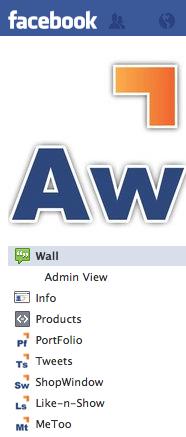
Other catalog entries had similarly literal ambitions. FeedMaster displayed an RSS feed. TweetStream brought a Twitter account or list onto a Facebook page. VideoPlayer showed up to five YouTube videos, using embed URLs the administrator could paste in. PortFolio displayed linked Facebook pages and refreshed their avatars and fan counts. Each tool answered a small question about what should occupy a tab.
VideoPlayer → up to 5 videos
CSV → downloadable responses
TweetStream → Twitter
The useful thing was the list
MeToo, another app documented in January 2011, let people sign up for events, promotions, causes, white papers or contests. The administrator could edit the explanation in a visual editor, choose optional form fields, and add three fields with custom names. Responses could be downloaded as a CSV file.
That last detail is worth lingering over. A fan count tells an administrator that people have clicked a button. A sign-up list records a more particular request. Someone wants to attend, receive something, or participate. A downloadable file gives the administrator a practical next step outside the page itself.
The distinction offers a useful way to judge a marketing tool: what work can you do after someone uses it? In MeToo’s case, the answer was explicit. You could retrieve the list. Whether that list produced attendance or sales would depend on the offer and the follow-through. The app supplied a mechanism, rather than evidence that a campaign had succeeded.
The page with two faces
Like-N-Show had the most theatrical idea. Administrators edited two screens directly inside Facebook. Visitors saw the first before liking the page; the second appeared after the Like and on subsequent visits. The original product page suggested welcome messages, company information, even a funny message.
It also offered alternative tab names: Welcome and About. A small interface constraint had become a product decision. The catalog explained that users could not simply rename these app tabs, so the company supplied variants. This is the sort of detail that makes a software product useful to an ordinary person: someone has already encountered the inconvenient little rule and arranged a choice around it.
Then the company gave away the editor
On August 27, 2011, Facebook Apps World announced Full Page. The post described the bother of adding content beyond Facebook’s standard features: a programmer had to write the code and configure an application so Facebook knew where to find it. Full Page offered a new tab with a chosen name, editable in a visual editor or HTML. Its price was zero.
The same announcement presented the paid collection at $9.99, with unlimited use and lifetime updates. The company’s competitive argument concerned the friction of custom programming and the cost of other page apps, including monthly subscriptions. A free editor made that argument tangible. A prospective customer could begin with a general-purpose page, then consider a specialized tool.
one fan page
one payment
Full Page editor: $0. Historical catalog pricing.
The distinction between the free and paid products was unusually legible. Full Page provided editing freedom. The named apps provided ready-made functions. This gave two kinds of customers somewhere to start: the person who wanted to arrange content themselves, and the person who wanted the form, feed or display already organized.
The services business behind the shelf
Facebook Apps World’s archived About page identifies BrandReact, Inc. as its owner and operator. BrandReact described its business as social media monitoring and response, with locations in Miami and Hoofddorp in the Netherlands. Facebook Apps World also listed custom Facebook development and social media marketing consulting among its specialties.
Dick Raman, BrandReact’s founder and CEO, brought a wider business-software background. His author biography describes founding a company in 1987 and taking it public in 2000. It also places Facebook apps alongside BrandReact’s monitoring, outsourcing and boardroom consulting services. The app store belonged within a broader attempt to help companies manage their online presence.
“Listen to what is said about your Brand - and React”BrandReact’s description on the archived About page
By November 2013, BrandReact was announcing a 13-week Social Media Manager College. The company said businesses struggled to find qualified digital talent and agencies had limited talent pools. Its proposed response was training across marketing, customer support and other customer interactions. The announcement still directed readers to Facebook Apps World for fan-page tools.
A fixed bill in a changing room
There was a condition beneath the entire catalog: Facebook had to permit the interactions on which the apps depended. In 2014, Facebook announced restrictions on incentives for liking pages, with existing apps required to comply by November 5. Content and rewards could no longer serve as payment for a Like. For the market around visitor-gated pages, that changed the terms of the work.
This platform event should not be mistaken for a documented account of Facebook Apps World’s own decisions. It does explain why a historical two-screen app deserves to be read in its period. An attractive purchase price does not determine whether the underlying interaction will remain available.
The lesson a reader can copy is precise: define a small job, make the buying unit clear, and show how the customer gets from a visitor to a useful outcome. ShopWindow supplied the product link. MeToo supplied the list. Full Page supplied an editable space. Those are intelligible promises.
The conditions matter just as much. A product display needs visitors with an interest in the goods. A sign-up form needs an offer people want and someone to act on the responses. A platform app needs continued access to its host’s features. Facebook Apps World’s little catalog brings all three into view. The price made the decision small. The work around that decision remained considerable.
Visit the old shop and its channels
Company website · LinkedIn · Twitter / X · Facebook
The website and social handles are those published by the company in its original materials.