Company Profile · Food Justice
Everytable
Fresh, nutritious food at a price your block can actually afford. No exceptions.
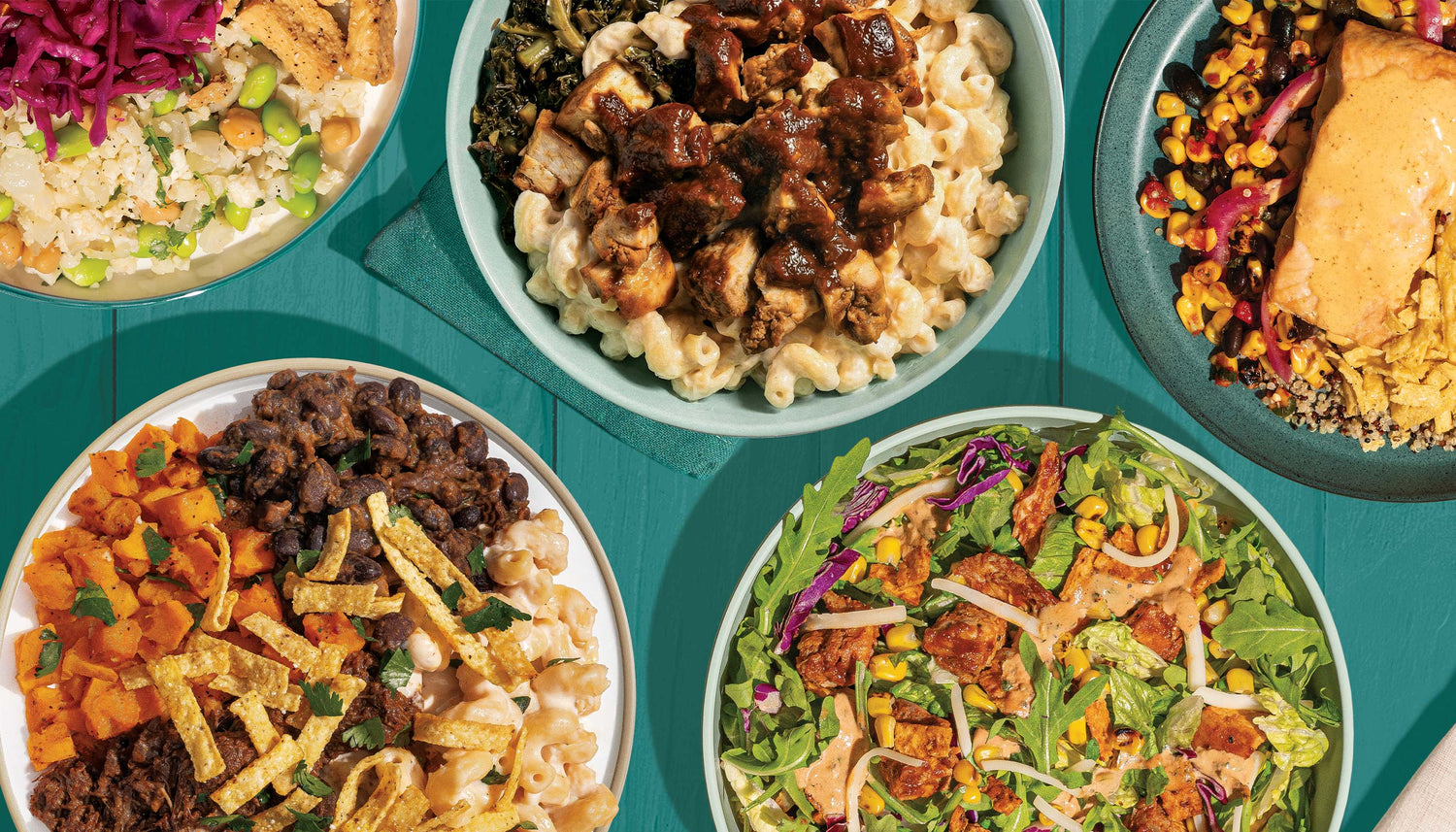
Fresh, nutritious food at a price your block can actually afford. No exceptions.
It is noon somewhere in Los Angeles, and someone is reaching into an Everytable SmartFridge for a chicken bowl that costs about the same as a bag of chips. A few miles away, in a glossier zip code, the identical bowl rings up for a little more. Same kitchen. Same recipe. Different price. That is not a glitch. That is the entire point.
Everytable is a fresh-food company that decided the cost of eating well should bend to the neighborhood, not the other way around. Meals come out of one central kitchen and travel to small grab-and-go stores, refrigerated SmartFridges, home-delivery boxes and workplace programs across greater Los Angeles, New York City and the Bay Area. More than five million meals later, it is still chasing the same stubborn idea.
"Good food available to everyone, no exceptions."
- Everytable's working definition of successWhole neighborhoods get labeled "food deserts" - a tidy phrase for a brutal arithmetic. Fast food is everywhere and a dollar a bite. A genuinely fresh, balanced meal is either far away, expensive, or both. The result is predictable and measurable: diet-related disease tracks neatly along lines of income and zip code.
Most of the food industry treats this as a fact of life. Everytable treated it as a pricing problem - and a supply-chain problem - waiting for someone willing to do the unglamorous work of solving it.
The conventional fix is charity: a pop-up market, a grant, a free box that arrives and then stops. Useful, but temporary. The harder question was whether good food could be sold - profitably, repeatedly, and at a price that worked in the very places the market had written off.
Answering that meant rebuilding how a meal is made, moved and priced. Which is, conveniently, exactly what Everytable set out to do.
"The idea came from residents of South Los Angeles who said they needed a place to buy healthy, affordable meals on the go."
- The origin of Everytable, in one sentenceSam Polk made his name as a Wall Street hedge-fund trader, then walked away from it - the kind of career pivot that usually ends in a memoir and not much else. His ended in a nonprofit, FEAST (originally Groceryships), teaching nutrition and cooking in South Los Angeles. The neighbors kept asking the same thing: where can we actually buy this food? David Foster, a former private-equity executive, left his own finance track to help build the answer.
Their wager, in 2016, was that the tools of high finance - operating leverage, supply-chain discipline, a relentless focus on unit economics - could be aimed at affordability instead of margin. Build one kitchen efficient enough, and you could sell a fresh meal for the price of fast food and still keep the lights on.
"A Wall Street trader banked on food. Everyone benefited."
- Beyondish, on Sam Polk's career swerveEverything starts at a central commissary kitchen, where chef-designed meals are made at volume - the single move that drags the cost curve down far enough to matter. From there, the meals fan out across whatever channel meets you where you are hungry.
Small-footprint shops stocked with refrigerated, ready-to-eat meals priced for the block they sit on.
Self-checkout refrigerators dropped into offices, campuses and community sites. Fresh food, no cashier required.
Weekly meal plans and direct-to-door delivery for people who'd rather the food find them.
Fresh-meal programs for offices and institutions that want better than the vending machine.
Franchises offered to graduates of Everytable University with no cash equity required - by design.
The quiet engine: higher-income locations help underwrite low prices where they're needed most.
"Same recipe, different receipt - that's not a discount, it's the business model."
- On Everytable's neighborhood-based pricingEverytable opens in South Los Angeles, born from a nonprofit's conversations with the neighborhood.
Capital arrives to grow the store count and prove the model travels.
A franchise program built to close the racial wealth gap, not just sell lunch.
Unit count roughly triples in a single year as expansion accelerates.
Impact investors led by the Dohmen Company Foundation back the diet-and-disease thesis, pushing total raised past $106M.
Plans outlined for markets like Philadelphia and Washington, D.C., toward roughly 300 franchises.
A mission is easy to declare and hard to fund. Everytable's funding history is the part skeptics tend to take seriously: each round larger than the last, the most recent led by investors who measure returns in part by their effect on diet-related disease.
The traction shows up off the spreadsheet too: dozens of retail locations across Southern California, a New York City footprint, a Bay Area outpost, and a franchise program backed by a guarantee from the Community Investment Guarantee Pool and a fund structured with Mission Driven Finance.
"Impact investors focused on food as medicine put $25M behind the thesis."
- On the 2023 Series C-2 roundPlenty of companies bolt a mission onto a press release. Everytable wrote it into its legal structure as a public benefit corporation, and then into its most ambitious bet: the Social Equity Franchise Program. The premise is blunt - the traditional path to franchise ownership demands capital that decades of inequality made scarce for entrepreneurs of color. So Everytable removed the capital requirement.
Graduates of Everytable University can take on a franchise through loans that require no personal cash equity, with multi-year terms designed to build ownership rather than extract it. The goal stretches past lunch: roughly 300 franchises and a generation of new owners, in the neighborhoods the food system usually skips.
"A pioneering social equity restaurant franchise built to fix the industry's discriminatory practices."
- Black EnterpriseThe bet has never been that one company can feed a country. It is that one company can prove the model - that fresh, affordable food is a solvable business problem - and then hand the recipe to hundreds of owners who carry it into new cities. Philadelphia and Washington, D.C. are on the map. The math, so far, keeps holding.
Back at that humming refrigerator in South LA, the chicken bowl is gone - bought, eaten, unremarkable. And that is the quiet revolution of it. A fresh, balanced meal that costs about what the fast-food window charges, in a place that was told it didn't get to have one. Everytable's whole argument is that this should be boring. The fact that it still isn't is exactly why the company exists.