Dror Davidoff’s first intended destination was investment banking. He liked the prospect of deals, international business and a working life that crossed borders. The plan had respectable credentials: an economics degree in Israel, followed by an MBA in finance at City University of New York. Then came the job, and the discovery that doing investment banking was less appealing than imagining it.
As an analyst, he covered technology companies, including Israeli software and cybersecurity businesses. The subjects of his research began to offer a more interesting direction than the research itself. He moved into software. A finance education had brought him close enough to technology to change his mind. It was an expensive route to a useful discovery, but careers have rarely been accused of taking the shortest possible path.
Years later, he would help build Aqua Security, a company valued at $1 billion, and lead it for a decade. In October 2026, he announced another change: joining Team8 as a managing partner. His career makes more sense as a series of decisions about where to work next than as an inevitable march toward a founder’s title.
The apprenticeship was in selling
Davidoff came to founding through enterprise software, sales and business development. At Sentrigo, a database-security startup, he was executive vice president of sales and business development. At McAfee, he headed global sales of database-security products. These were jobs concerned with getting technology into customers’ hands, explaining its value and finding a business around it.
He had also worked at Netegrity and in CA’s security division. The sequence exposed him to small companies, acquisitions and larger organisations. Selling enterprise security meant understanding more than the product’s cleverness. Customers needed a reason to adopt it, people able to support it, and confidence that it would fit their existing systems. Those concerns would follow him into Aqua.
Outside work, his preferred beginning to a day was rather less corporate. At home in Tel Aviv, he liked an early swim in the Mediterranean. In a 2018 account of family life, he described frequent travel to the United States and the support of his wife and children. The career crossed oceans; the morning routine involved getting into one.
Before Aqua, a name called Scalock
In 2015, Davidoff and Amir Jerbi founded the business that became Aqua Security. Its original name was Scalock. A November launch post explained the opportunity in plain terms: containers were becoming widely used, and security gaps were appearing along with them. The founders wanted companies to gain the benefits of this way of developing software without sacrificing application and data security.
The ambition already extended from development through deployment. Security would have to follow the application through its life, rather than arrive as a final inspection. That starting point matters because it predates the larger platform language that later surrounded the company. The first proposition was tied to a concrete change in how software was being packaged and run.
There was also a Barcelona conference and an invitation to a city tour ending at a party. Even an announcement about securing virtual containers had room for an evening out. The founders were entering a technical market, but they still had to meet the people who might buy.
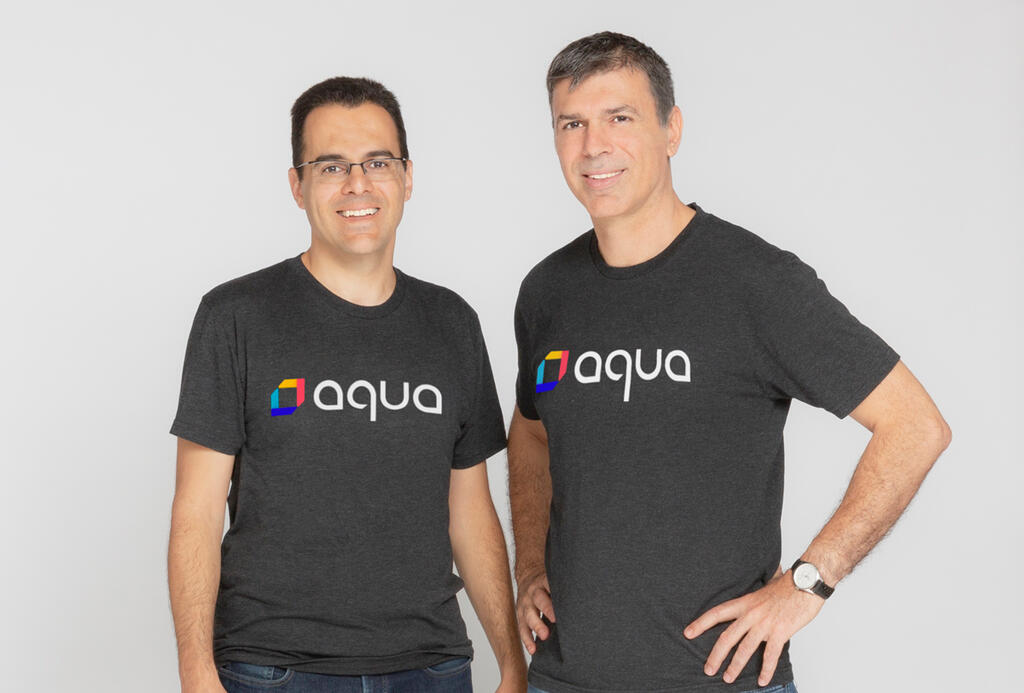
Davidoff later described the working connection with Jerbi as “love at first sight.” The attraction was a shared view of the market: moving to the cloud would also change the security stack. Applications were being modernised, creating opportunities to build protection into development and to make it more specific to the software being protected.
Their pairing put business experience alongside technical leadership. Davidoff became CEO; Jerbi became CTO. A security gap alone does not make a company. Somebody has to develop the response, and somebody has to persuade an enterprise to trust it. Aqua’s founding joined those tasks around the same bet.
A billion dollars, then more work
By March 2021, Aqua had raised a $135 million Series E and reached a $1 billion valuation. Davidoff explained the financing as fuel for competing in a category that had barely existed when the founders started. The market had become recognisable. That made the opportunity larger, and the work more demanding.
His account of customer deployments was concerned with scale. Securing a handful of workloads and securing an estate of many thousands required different capabilities. Large customers also became an early guide to what the wider market would need. Their requests pushed the company to support environments that other buyers might adopt later.
A valuation made a tidy headline. The untidy part was keeping up with customers whose infrastructure continued to change. A company could reach a financial milestone on a particular morning; the engineers would still have a backlog that afternoon.
The international dimension had been present long before the billion-dollar announcement. Aqua’s move of its US headquarters to the Boston area drew on a concentration of technology businesses, universities and security talent. Davidoff spoke about the local hiring pool and the chance to build a team there. For a founder based in Israel, a US office was part of the operating plan, with sales, marketing and technology people close to the market.
The wrong hire can arrive perfectly qualified
In 2022, Davidoff wrote about responsible hiring. His argument began with timing. An early company might need generalists who could move between tasks. A larger organisation might need specialists and established processes. The person who enjoyed experimenting with an early sales operation might have different strengths from the person who could turn it into a repeatable system.
He also challenged the appeal of an expensive executive with a polished résumé. Success inside a large organisation did not automatically establish suitability for a young startup. Experience had to fit the work available. A famous previous employer could make an introduction impressive while doing very little to resolve the actual bottleneck.
“Too many new people too fast, and the company loses its identity.”
Dror Davidoff, on responsible hiring
His examples were practical: marketing generating leads that an understaffed sales team could not follow, or salespeople arriving before there was enough product to sell. The central concern was balance between functions. Headcount was useful when it helped the work move.
With Jerbi, he also set out a product-development sequence. Start by checking the idea with potential customers. Find a small group of design partners. Build, learn and revise. As adoption grows, give more attention to enterprise requirements and integration. Their recommendation was five to ten design or beta partners, enough to test assumptions against a defined customer group.
The restraint was as interesting as the sequence. Features needed evidence of demand before receiving substantial investment. The founders’ advice gave listening a specific job: helping decide which requests belonged on the roadmap and which could wait. An attractive feature could still consume time without giving customers a reason to buy.
- ExploreValidate the customer problem
- BuildWork with 5-10 design partners
- IterateTest demand before adding features
- ScalePrepare for enterprise deployments
Aqua’s own growth included difficult reductions. It cut staff in 2022 and 2023, and a January 2025 reorganisation involved further layoffs. The company said the later changes were intended to simplify operations and focus on customer needs. Those decisions belong beside the financing announcements. Advice about pacing a business becomes more consequential when the business has to make painful adjustments of its own.
Protection where the application runs
Davidoff’s product argument kept returning to runtime: the period when an application is actually operating. Aqua’s September 2023 announcement reported a 65 percent increase in new business for the first half of the year. His explanation emphasised protection across the software lifecycle and the ability to intervene during an attack. Seeing a problem was only one step in the response.
That emphasis carried into his March 2025 essay on Google’s announced Wiz acquisition. He expected cloud providers to absorb more of the work of configuration checking and visibility. Application-specific protection, he argued, would remain a demanding responsibility for the organisations running the software. His prediction concerned where the work would sit as the market matured.
He was describing a boundary that mattered to Aqua’s business: what the infrastructure provider could supply, and what the application owner still needed to arrange. The argument was commercially interested, of course. It was also consistent with the company’s original concern about protecting software as it moved from development into use.
Customer requests could change the competitive picture, too. In 2024, Aqua and Orca Security brought their capabilities together in an integration for shared customers. Davidoff said customers had proposed it. The response acknowledged how enterprises actually bought security: several vendors, overlapping needs, and a desire to make the pieces work together. A platform strategy still had to accommodate the systems already in the room.
The founder changes seats
Mike Dube joined Aqua as chief revenue officer in April 2024. By then, Aqua reported more than 500 enterprise customers across 40 countries. Dube brought experience from CrowdStrike and other security companies. His appointment added a leader whose work centred on customers and sales execution, familiar territory for Davidoff himself.
In November 2025, Aqua announced that Dube would become CEO. Davidoff and Jerbi stepped back from their daily executive roles and continued as strategic advisors. After ten years leading the company, Davidoff expressed confidence in his successor and the team. The handoff changed his relationship with a business he had spent a decade building.
Now another chapter has begun. Announcing his move to Team8, he described time away spent with Asian cultures and cuisines, books, nature hikes and silent meditation. Then came a return to cybersecurity, through a firm that works with founders to develop ideas and build companies.
He is approaching the early decisions from a different seat. The stated interest remains recognisable: teams, ideas and the capacity to scale. Finance led him toward software companies. Sales taught him how customers bought. Founding Aqua kept him occupied with what a growing business required. At Team8, the next conversation starts closer to the beginning.
Keep reading, keep watching
- Aqua Security ↗
- Davidoff on X ↗
- Davidoff on LinkedIn ↗
- His essays at Aqua ↗
- The banking-to-software conversation ↗
- The original Scalock introduction ↗
- Davidoff on cloud security ↗
- The 2021 financing conversation ↗
- Aqua’s 2025 reorganisation ↗
- His Google-Wiz essay ↗
- Responsible hiring ↗
- The product-building essay ↗
- Aqua’s leadership handoff ↗
- Team8’s announcement feed ↗
- Watch: NYSE conversation on YouTube ↗