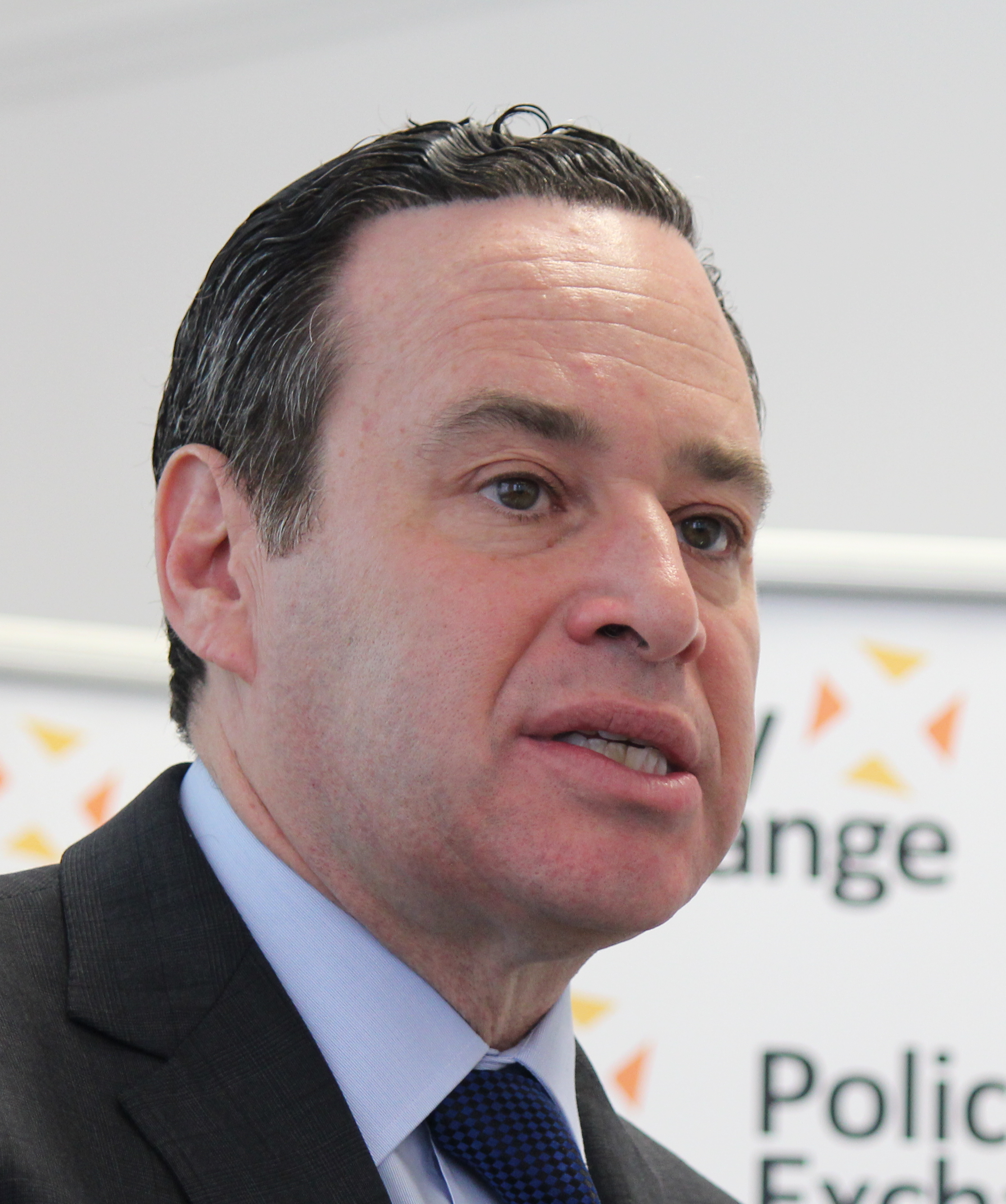
The Argument, In Person
David Frum
He wrote two words into a presidential speech and spent the next two decades watching the world argue about them. The arguing never stopped. Neither did he.
He wrote two words into a presidential speech and spent the next two decades watching the world argue about them. The arguing never stopped. Neither did he.
Every week, a man who helped build the modern conservative movement sits down at a microphone and takes it apart, plank by plank, on a podcast that bears his own name.
The David Frum Show is The Atlantic's bet that there is still an audience for slow argument in a fast country. Frum hosts it the way he writes: long sentences that turn a corner you did not see coming, a historian's habit of reaching for Lincoln when everyone else reaches for the latest poll. The show streams on Apple, Spotify, and YouTube. The pitch, in his own framing, is that "the American idea is worth defending" - and that defending it requires telling people things they would rather not hear.
This is the strange position Frum has occupied for a decade now. He is a conservative who voted for Hillary Clinton. A Bush speechwriter who became the most cited critic of the Republican president who followed. A Canadian by birth who became an American citizen on September 11, 2007 - six years to the day after the attacks that defined the administration he served. In November 2024, after a lifetime card-carrying membership, he quietly left the Republican Party. He kept the principles. He changed the party affiliation. He would tell you those were never the same thing.
Today his title at The Atlantic reads "staff writer," a deliberately modest label for someone who has been a senior editor, a bestselling author, and a fixture of cable green rooms since before cable news learned his name. The columns arrive at the pace of the news cycle. The verdicts arrive slower, and they last longer.
What sets the work apart is the willingness to revise. Most pundits build a position and then spend a career defending it; Frum treats his own past conclusions as evidence to be re-examined. He spent the early 2000s making the case for confronting Iraq and the years afterward reckoning, in public, with how that case landed. He argued for a harder conservatism in Dead Right in 1994 and a "comeback" of a more pragmatic one in 2007. The throughline is not a fixed answer but a method: gather the facts, weigh them against the principle, and say what you actually think even when your team would prefer the silence.
If conservatives become convinced that they cannot win democratically, they will not abandon conservatism. They will reject democracy.- David Frum, The Atlantic
Late December 2001. The head speechwriter handed Frum an assignment: make the case for confronting Saddam Hussein's Iraq, and do it in a few sentences, for the State of the Union. His draft reached for a phrase. He first wrote "axis of hatred." It became "axis of evil."
"Axis of evil" - the line that outlived the speech, the speechwriter, and very nearly the administration.
It is the rare bit of political language that everyone recognizes and almost no one agrees about. To supporters it named a real danger. To critics it bundled three unlike regimes into one slogan and helped grease the path to a war Frum himself would later weigh, on the record, with the unsparing eye he turns on everyone else - including himself.
The line through it is not left or right. It is a stubborn belief that arguments should be settled by argument, and that institutions - courts, parties, the press, the Constitution - are the machinery that lets a free country disagree without breaking.
When the American Enterprise Institute parted ways with him in 2010, the proximate cause was a blog post telling Republicans they had blundered on healthcare reform by refusing to negotiate. It was an early preview of a pattern. Frum would keep saying the thing his own side did not want to hear, and keep paying the institutional price, and keep saying it anyway.
For most of his career, Frum was an inside man. He wrote for a sitting president. He held a chair at the American Enterprise Institute. He edited the editorial page of The Wall Street Journal and wrote columns for Forbes and Canada's National Post. The conservative establishment was not something he commented on - it was the room he sat in.
Then the room changed, and he did not. As the Republican Party reorganized itself around Donald Trump, Frum became one of its most persistent and best-credentialed critics. His 2018 book Trumpocracy: The Corruption of the American Republic and its 2020 sequel Trumpocalypse: Restoring American Democracy were not the outsider's complaints of a man who had never had access. They were the warnings of someone who had been in the building and knew where the load-bearing walls were.
The cost was real. Old allies stopped returning calls. The label "Never Trump" turned, in some quarters, into an insult. Frum wore it without much visible distress, because the alternative - staying quiet to keep the seat - was the one thing his entire career had been arguing against. In November 2024, he formalized the break and left the party outright. He framed it less as a conversion than as a refusal to pretend that the party he had joined was still the party asking for his loyalty.
It's human nature to assess difficult questions not on the merits, but on our feelings about different teams.- David Frum
He still calls himself a conservative. He just no longer accepts that any single party owns the word - or that defending democratic institutions is a partisan act at all.
One of Canada's most trusted broadcasters, host of the CBC's flagship news program. David grew up in a house where the country's evening voice was also the person passing the potatoes.
Author and journalist who went on to serve in the Canadian Senate. Public argument is, more or less, the family business.
A BA and MA in history from Yale, a law degree from Harvard - where he was president of the Federalist Society, the group that would later remake the federal judiciary.
It explains something about the writing. Frum reasons like a lawyer and reaches for history like a broadcaster who grew up watching one work. He counts Marcel Proust as his favorite novelist and Alexander Hamilton as his favorite founder - the immigrant who argued the new republic into being, which is its own kind of self-portrait.
There is a tidy symmetry to the family story. Barbara Frum spent her career asking the questions a country wanted answered; her son spent his offering answers a country did not always want to hear. Both jobs require the same nerve - the willingness to keep the conversation going past the point where it gets uncomfortable. David carried the Frum name from Toronto to New Haven to Cambridge to a West Wing office, and then back out into the open country of independent commentary, where the only institution backing him is the byline. For a writer who has spent forty years insisting that institutions matter, it is a fitting place to have landed: arguing in the open, accountable to the argument itself.
If conservatives become convinced that they cannot win democratically, they will not abandon conservatism. They will reject democracy.
It's human nature to assess difficult questions not on the merits, but on our feelings about different teams.
The American idea is worth defending.
A weekly podcast and video program from The Atlantic. Frum digs into the big questions about democracy, history, and where the country is heading - and makes the case, week after week, that the argument is worth having. It is available on Apple Podcasts, Spotify, YouTube, and wherever else listeners gather, and it gives the long-form Frum the room that a column never quite allows: the space to follow a thought all the way to its uncomfortable conclusion.
Where to read him, hear him, and argue with him.
Sources: Wikipedia, davidfrum.com, The Atlantic, Muck Rack, Podnews, NSB Speakers.