He ran a 5-star home health agency for a decade. Then he built the AI he wished he'd had.
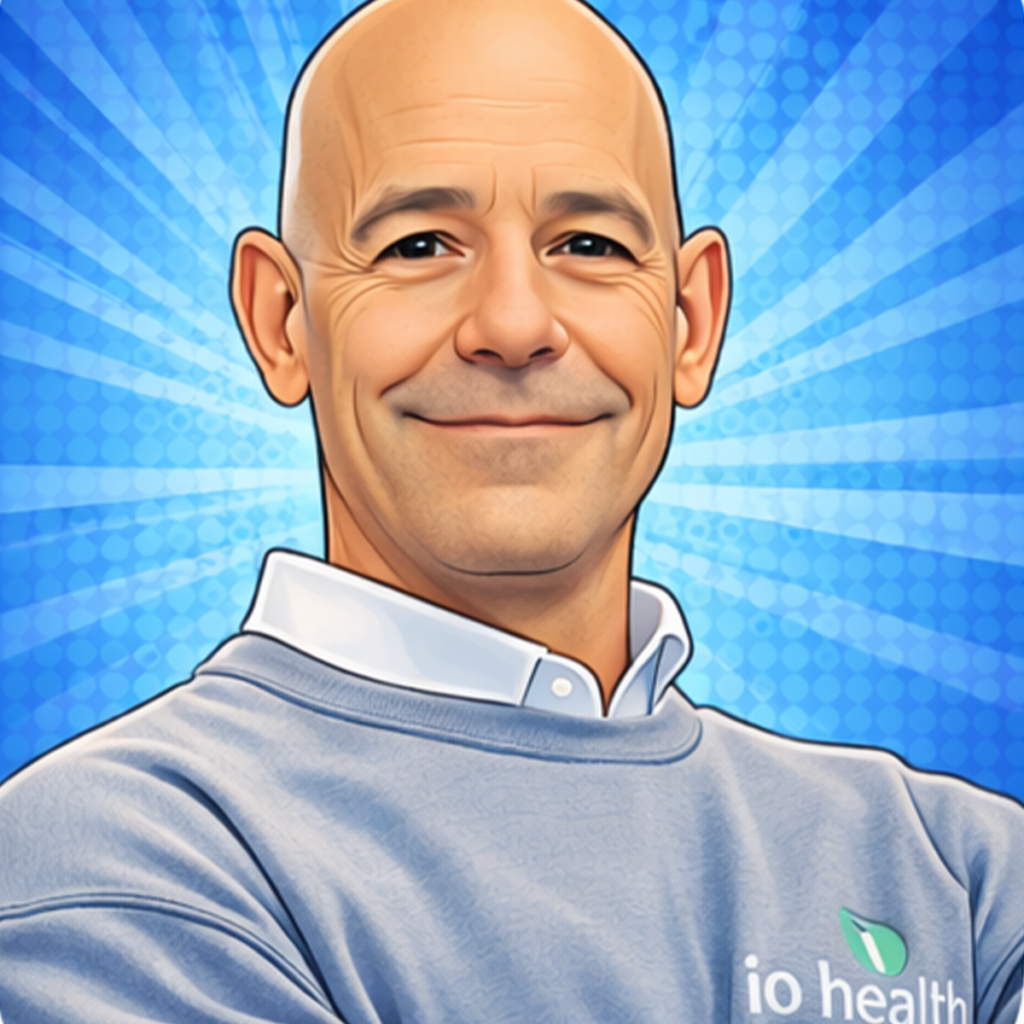
David Bell - the rare founder who knew exactly where every broken process was buried, because he buried some of them himself.
Ask a home health nurse what eats their day, and they won't say the patients. They'll say the paperwork. Every visit ends with an OASIS form - a dense clinical questionnaire that decides how an agency gets paid and rated. Get a box wrong and the money slips, the quality score dips, and a back-office reviewer spends another afternoon untangling it. David Bell spent ten years watching that loop drain the people he employed. IO Health, the company he founded in 2023 and runs from Pasadena, is his answer.
The pitch is unusually humble for an AI startup. IO Health does not replace the electronic medical record an agency already pays for. It sits on top of it - a native overlay that checks a clinician's documentation in real time, at the bedside, while it can still be fixed. The Intuition platform catches the error before it becomes a problem instead of after it becomes an expense.
In October 2025, Bell raised a $2 million seed round led by Nina Capital, a Barcelona-and-Silicon-Valley firm, to push that idea into more agencies. Early customers report a 9.1% bump in revenue per episode and roughly an hour saved at the start of care. Numbers like those tend to do the selling.
"Post-acute providers don't need extra applications for clinicians to log into or big workflow changes. We need help."
David Bell, Founder & CEO
Most people who end up running a home health agency did not start with a physics degree from Harvard. Bell did. He added a Columbia MBA, then a University of Michigan Ph.D. in rehabilitation engineering and robotics - a field that studies how machines can help bodies recover. It reads like the resume of someone circling a problem from a distance before deciding to live inside it.
His first act was industrial. In 2005 he became president of TestAmerica Drilling Corp, then CEO of MCC Controls from 2006 to 2009, and a board member at WaterTrax through 2016. Drilling rigs and water-quality software are a strange runway for a healthcare founder. But the through-line is consistent: messy operations, regulatory pressure, and software that has to earn its place by making the work easier, not heavier.
Then came GrandCare Health Services. Bell took the helm as owner-operator and grew it into a 5-star-rated home health provider across three Southern California locations, specializing in the unglamorous, high-stakes work of pre- and post-surgical rehabilitation. Low hospitalization rates. Strong employee engagement. The kind of operational excellence that gets a company noticed.
In July 2025, it got noticed. The Pennant Group, a NASDAQ-listed post-acute operator, acquired GrandCare, praising its star ratings and its "unique approach to technology." Bell stepped into the chairman's seat - and poured his attention into the startup he had already started.
"EMRs record care. IO Health improves how care is delivered."
The IO Health thesis, in seven words
IO Health's founding story isn't a technologist discovering healthcare. It's a healthcare operator who got tired of the same broken loop and decided to engineer his way out of it. Bell still chairs GrandCare - the very kind of agency IO Health is built to serve.
IO Health's suite carries the company's playful lowercase branding. Each piece does one job - and none of them ask a clinician to learn a new app.
Real-time chart validation and OASIS (and, for hospice, HOPE) data collection at the bedside. It flags the gap while the clinician is still in the room.
Automated patient handbooks and structured documentation, so the paperwork assembles itself instead of piling up.
QA optimization that scales performance management and shrinks the back-office rework loop that drives reviewers - and turnover - up.
"Accurate, compliant documentation produces 4-5x better clinical and financial results than efficiency alone."
David Bell on why he chose accuracy over speed
We designed IO Health to address the single biggest lever of improvement: accurate documentation. Better documentation means less back-office workload, faster billing, and happier clinicians.
We are honored to be recognized for the impact our technology provides to help Home Health and Hospice businesses reduce costs, optimize workflows, and identify new revenue opportunities amidst challenging profit margins.