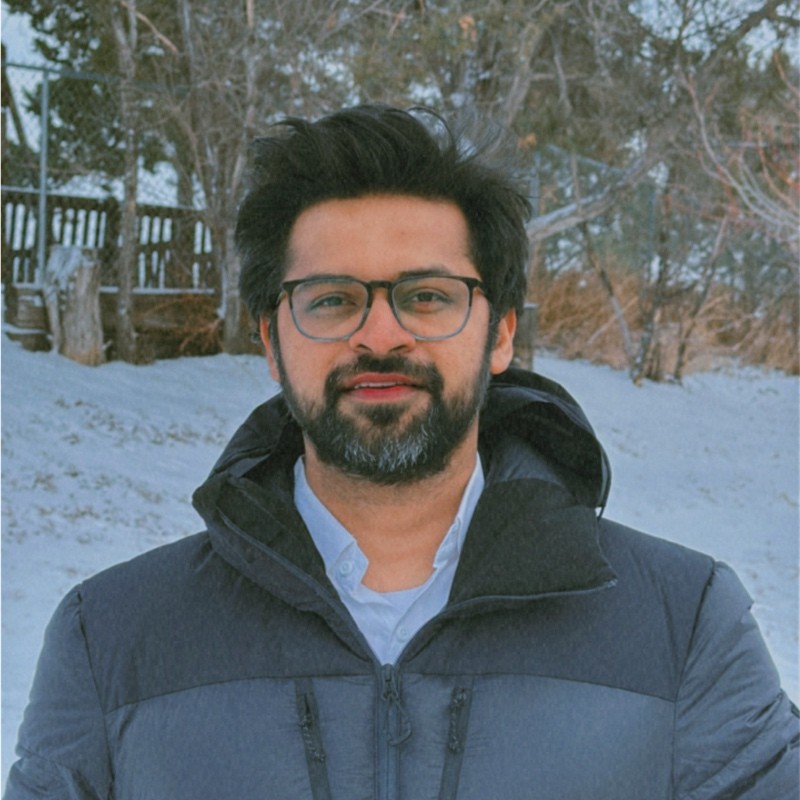
Profile / Healthtech Founder
Dushyant Mishra
He picked the least glamorous corner of US healthcare - medical billing - and is teaching machines to run it.
He picked the least glamorous corner of US healthcare - medical billing - and is teaching machines to run it.
Dushyant Mishra runs RapidClaims from New York, where the company is building an AI-first platform for one of the least visible parts of American medicine: the revenue cycle. That is the machinery that turns a patient visit into a paid claim - coding, documentation, submission, and the long back-and-forth with insurers when a claim gets denied. It is slow, manual, and expensive. Mishra's bet is that most of it can be run by software.
RapidClaims sits across that whole cycle. Its products read clinical notes and assign medical codes, flag gaps in documentation, scrub claims before they go out, and now, with a 2026 product called RapidRecovery, chase down denials with a mix of automation and voice AI. The company says it is live across more than 25 specialties, with high autonomous accuracy in over 20 of them, and around 98 percent accuracy in areas like radiology and anesthesia. Providers using it, the company says, can cut costs by up to 70 percent and shorten timelines from months to weeks.
The framing Mishra keeps coming back to is scale. US healthcare carries an administrative bill he pegs at roughly $353 billion, and he cites estimates that AI could remove around $168 billion of it. "RCM is genuinely the first administrative area where AI is really reducing workload rather than adding more clicks," he has said - a pointed contrast with the reputation software has earned in hospitals for making clinicians' days longer, not shorter.
He is deliberate about not building a single tool. "Point solutions are ineffective," he argues, pushing instead for what he calls an all-encompassing platform strategy. The reasoning is practical: a hospital that buys one vendor for coding, another for denials, and a third for documentation ends up with the same fragmentation it started with. RapidClaims wants to be the connected layer underneath all of it.
Denial management was never a question of if for RapidClaims. It was a question of when.
- Dushyant Mishra, 2026Mishra did not arrive at healthcare AI from a research lab. He trained as an engineer at IIT Kharagpur, taking a dual degree that combined a four-year B.Tech with an integrated master's, and he later earned a CFA charter - an unusual pairing of builder and finance discipline.
From 2016 to 2021 he was inside the industry he now sells to, at Abbott, where he held roles in strategy and commercial operations, including a stint leading strategic projects and commercial operations across South Asia. That is where he says he learned how the financial fault lines in healthcare actually run.
He then spent two years, from 2021 to 2023, as an early-stage investor at Together Fund, working with founders trying to build global companies. What tipped him from evaluating startups to starting one was the release of ChatGPT in late 2022. Together Fund asked him to incubate what became RapidClaims, and he left to run it.
He built it with two co-founders he trusted: Abhinay Vyas, a data scientist who had worked at Novartis, and Jot Sarup Singh, formerly of Postman and Goldman Sachs. Together they aimed at a global revenue cycle management market measured in the hundreds of billions of dollars.
Autonomous medical coding across 20+ specialties, reading clinical notes and assigning accurate codes.
Clinical documentation improvement that flags gaps before they turn into revenue leakage.
AI claim pre-screening that catches errors and reduces denials before submission.
Denial management with root-cause analysis and voice AI for autonomous payer follow-up.
US healthcare administration, as cited by RapidClaims
Figures are company and cited-expert estimates, not independently audited.
"Our approach goes beyond automation. We aim to enhance the efficiency and accuracy of medical coding, which is fundamental in reducing claim denials and improving the financial health of healthcare providers."
"Redesigning workflows, simplifying RCM processes, trimming codes, realigning incentives: all of it can be aided through purposeful AI."
"Our multi-specialty AI solution offers a distinct advantage over narrow, specialty-focused tools."
"RCM is genuinely the first administrative area where AI is really reducing workload rather than adding more clicks."
He holds both an engineering dual degree from IIT Kharagpur and a CFA charter - rare training as builder and financier at once.
RapidClaims was incubated inside Together Fund, the venture firm where Mishra had been an investor.
Early angels include healthcare and startup leaders such as Oscar Benavidez of Mass General and Ankit Jain, CEO of Infinitus.
Customers include major physician groups and federally qualified health centers, with integrations across 15+ EHR systems.
His stated aim is to help healthcare feel "patient-centered and physician-caring" again by clearing administrative waste.
The single moment he credits for the pivot: the public release of ChatGPT in late 2022.
Redesigning workflows, simplifying RCM processes, trimming codes, realigning incentives - all of it can be aided through purposeful AI.
- Dushyant Mishra on the road back to patient-centered care