The Pitch
An A24 for the internet
Ask Dave Wiskus what Nebula is and he will not say "a YouTube alternative," even though that is where most of its creators became famous. He runs the company as if the algorithm were a weather system - useful, free, and not to be trusted with your livelihood. Nebula is the building creators own. YouTube is the road that brings people to the door.
Today Wiskus is founder and CEO of Nebula, the creator-owned streaming service that launched in May 2019 with roughly 75 independent video makers and has since passed 650,000 subscribers and 100,000-plus daily active users. He also runs Standard, the talent company underneath it, which represents more than 160 creators whose combined YouTube audiences top 120 million people. The plan is unapologetically large: original films, scripted series, and a logo creators can stand behind.
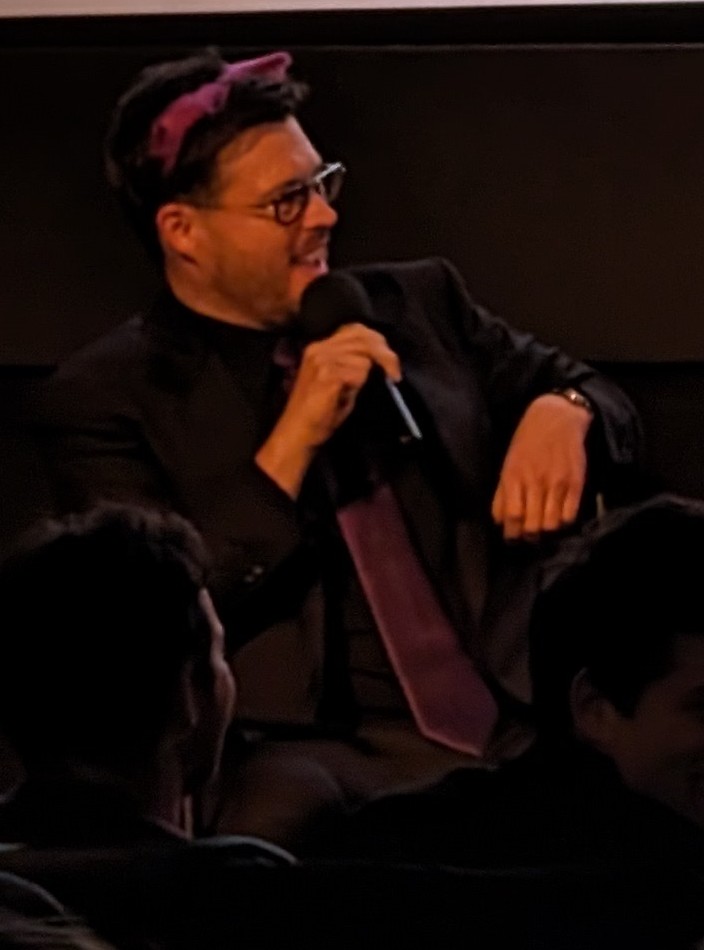
That ambition arrives with a sense of humor. The photo at the top of this page is Wiskus at the New York premiere of Jet Lag: The Game in December 2023, wearing cat ears, looking entirely unbothered. It is a good summary: serious about the work, allergic to taking himself too seriously while doing it.
The contradiction he keeps alive is that a streaming service can be both a business with payroll and a co-op with principles. Nebula does not chase the maximalist logic of the attention economy, where every metric points toward more, faster, louder. It charges a modest subscription, keeps the experience ad-free, and bets that audiences will pay for work the algorithm tends to bury. The wager is that taste is a moat - that people will follow a brand they trust the way they once followed a label or a studio.
By The Numbers
The shape of the thing
Before The Empire
The designer who sweated the corners
Long before he talked about subscriber funnels, Wiskus worked as a human interface designer for iOS and Mac apps - the kind of person who argues about the radius of a corner and the weight of a shadow. He wrote for iMore and posted his work to Dribbble, and he was respected in a community that does not hand out respect cheaply.
In 2013 he co-founded Q Branch - named, of course, for the gadget lab in the James Bond films - with two heavyweights of the Apple world: writer John Gruber of Daring Fireball and developer Brent Simmons, the creator of NetNewsWire. Together they built Vesper, a note-taking app released for iOS 7. It was small, opinionated, and beautiful, and it became one of the most discussed apps of its moment - a three-person studio shipping something that punched far above its weight.
Vesper shut down in 2016. Rather than strand its users, the team kept their data exportable and walked away cleanly. The studio was a lesson in scope, taste, and knowing when a thing is finished - habits that would resurface in how Wiskus later built a company.
The Apple-world fluency ran deeper than one app. Wiskus showed up regularly in the design and developer conversation, commenting on the craft of mobile interfaces and on Apple's moves - including its early attempt to build a social layer for musicians, Apple Music Connect. He gave talks on designing elegant mobile interfaces. The recurring theme was restraint: a good interface is the one that disappears, and a good product earns its complexity rather than assuming it. That instinct - subtract until only the essential remains - is unusual baggage for a streaming executive to carry, and it shows.
The Pivot
From app studio to a platform creators own
The seed of Nebula was a frustration shared inside a group of YouTubers: they were building real audiences while staking their careers on platform rules they did not write and could not see. Wiskus had already founded Standard in 2013 as a creator-owned management company. The idea that grew out of those conversations was simple and radical - what if the creators owned a piece of the platform itself?
So Nebula launched as a collaborative venture, part owned by the people making the work. The content is ad-free and often the kind of slower, stranger, more expensive project that the ad-driven attention economy punishes: Jet Lag: The Game, ambitious video essays, documentary-style originals. The pricing stays friendly - a few dollars a month - and the strategy treats YouTube as the top of the funnel, with a short exclusivity window on Nebula before work travels out into the wider world.
The mechanics matter here. Standard, founded in 2013, is the management company that signs and supports creators; Nebula is the destination where their ad-free work lives. A creator publishes on Nebula first, often with a short exclusivity window, before the same piece travels out to YouTube to do the discovery work. YouTube stays the road; Nebula stays the home. It is a structure designed so that the platform's interests and the creators' interests point the same direction, which is rarer in the creator economy than it sounds.
In September 2021, Curiosity Stream took a minority stake that valued the company at over $50 million. The trajectory kept bending upward, and so did the ambition.
Now
Making movies, not just feeds
In 2024 Wiskus announced Nebula Motion Pictures, a push into premium and original programming that signals where his head is. In 2025 came the platform's first scripted original series, "Sub/liminal," produced with Academy Award and Emmy winner Dan Jinks. The A24 comparison he keeps reaching for stops being a metaphor and starts being a plan: a trusted creative brand that audiences follow on faith.
The throughline from a three-person app studio to a streaming company is taste plus ownership. Vesper taught Wiskus that a small team with strong opinions can make something people love. Nebula is the same belief at a different scale - that creators do best when they own the room they perform in.
The Other Lives
Frontman, podcaster, professional amateur
Wiskus is also the lead singer and guitarist of Airplane Mode, a New York synth-rock band. Three of its four members are well-known iOS designers, which has led plenty of people to assume the group writes parody songs about Apple culture. It does not. There are no iPhones or odes to Steve Jobs in the lyrics - just tight, hard-charging, dance-friendly rock. The Apple roots show up in the band's energy and craft, not its subject matter.
Airplane Mode rounds out with Joe Cieplinski on bass, Anna Stefanic on keyboard, and Patrick Spencer on drums - musicians from different backgrounds that collide on stage into something dance-friendly and loud. The band's connection to Apple culture shows up as method, not material: the startup energy, the comfort with technology, the instinct to ship and tour rather than wait for permission.
For years he co-hosted the podcast Unprofessional with Lex Friedman, a show built on the premise of talking to interesting people about anything except their work. It is a fitting hobby for someone whose career refuses to sit in a single lane: designer, founder, CEO, guitarist, host. Wiskus seems to treat the boundaries between them as suggestions - and that refusal to specialize is arguably the through-line of everything he makes.
It also explains why Nebula reads less like a tech company and more like a creative collective with a balance sheet. A designer who plays in a band and runs a streaming service is going to build something that values craft and ownership over pure scale. The cat ears, the named-after-James-Bond studio, the band with no songs about iPhones - they are not eccentricities bolted onto a CEO. They are the same person who decided creators should own the room they perform in.
The Road So Far
Career timeline
- PRE-2013Works as a human interface designer for iOS and Mac apps; writes for iMore, posts to Dribbble.
- 2013Co-founds Q Branch with John Gruber and Brent Simmons; releases the Vesper note-taking app for iOS 7.
- 2013Founds Standard, a creator-owned talent and management company.
- 2019Launches Nebula on May 23 with about 75 creators - an ad-free, partly creator-owned streaming service.
- 2020Launches the Unprofessional podcast on Nebula, co-hosted with Lex Friedman.
- 2021Curiosity Stream buys a minority stake, valuing Nebula at over $50 million.
- 2023Nebula passes 650,000 subscribers; Wiskus reframes it as a Netflix competitor.
- 2024Announces Nebula Motion Pictures to expand premium originals.
- 2025Announces "Sub/liminal," Nebula's first scripted original, with producer Dan Jinks.