At Arhaus, a furniture purchase could encounter an absurd obstacle: the sales associate’s computer. Employees waited more than five minutes to log in. The store technology had been around for a decade; as the business grew, it struggled during busy periods. There were crashes. There were delays. A customer choosing a sofa could end up watching a terminal instead.
Coretek’s response included a revealing decision. Before extending a new Citrix-and-Azure environment across the retailer, it tested the approach in ten stores during the busy January sale. The eventual result, according to its customer case study: login waits below one minute. A cloud project had become something a shopper could notice.
- Coretek connects Microsoft cloud consulting, licensing, security, and ongoing operations.
- Its customer work turns infrastructure questions into practical measures: waiting time, server management, recovery targets, and spending.
- The useful lesson: test one real workflow before expanding the system around it.
Five minutes is a long time to sell a sofa
The interesting failure at Arhaus was a mismatch between an established system and a growing business. Coretek assessed the environment, then worked on a replacement involving Citrix Cloud, Microsoft Azure, and Palo Alto networking. The pilot ran for more than a month before the wider deployment.
That sequence matters. A working demonstration proves less than a working store during a sale. Testing under commercial pressure gave the team a chance to examine the ordinary nuisances, including printers and logins, that determine whether infrastructure feels useful. The customer’s experience was the unit of progress.
The company around the cloud
Coretek occupies the space between buying enterprise technology and making it dependable. Its Microsoft focus connects cloud migration, virtual desktops, security, data platforms, and AI. Customers buy consulting and implementation, ongoing managed services, and Microsoft licensing through its Cloud Solution Provider business. The relationship can continue long after a migration ends.
Ron Lisch, Ray Jaksic, and Clint Adkins founded the consultancy in 2005 after working in enterprise IT integration and consulting. Lisch remains CEO. The founding ambition included creating a workplace where capable people would want to stay. Its stated operating ethos is bracingly direct: “Project Success, No Exceptions!”

The specialization has substance beyond a partner badge. Coretek is an Azure Expert MSP. In January 2025, it announced Microsoft-verified Managed XDR status for security services integrating Microsoft’s platform with human-led monitoring and response. CoreDefend packages managed protection into three coverage levels. Cloud architecture and security operations live within the same service portfolio.
Seventy-five fewer things to babysit
Consider Homecare Homebase, whose software serves home-health and hospice agencies. It wanted to modernize its application and data center using Azure. Microsoft’s account team brought Coretek into the project. The work began with planning and governance, then used Terraform to automate infrastructure deployment.
The concrete change came in the database layer. With Azure SQL Managed Instance, Homecare Homebase no longer needed to manage 75 individual database servers. It could create isolated application environments more quickly. Coretek’s account also reports a one-hour recovery point objective and an eight-hour recovery time objective, supported by the automation.
Recovery point objective
Recovery time objective
Targets for data recovery and service restoration. Objectives describe the plan; they are not a guarantee for every incident.
This is the appeal of managed platforms in miniature: fewer individual machines to administer, with more attention available for the application. Someone still has to design the recovery process, control access, and operate the environment. Coretek sells that work too.
The bill needs a denominator
Stout, the financial advisory firm, faced another familiar problem: a data center in a building it was leaving. It compared a hosted facility, Azure, and a blend. Initial projected spending was similar, but Azure offered potential savings through elasticity and automation.
Coretek’s case reports spending at half the expected budget estimates after monitoring and optimization. Read that carefully. The comparison is with a forecast, rather than a documented previous IT bill. It is a useful result with a specific denominator, and a poor excuse to assume every migration halves costs.
Coretek Insights addresses the continuing task: showing usage and spending, identifying idle licenses, and helping IT and finance see the same information. Cloud procurement, configuration, and maintenance keep interacting. The invoice is another operational dashboard.
An invoice opens another door
At Lancaster Development, a highway construction company, accounts payable supplied the entry point. A Microsoft case study published in August 2026 describes an invoice-processing prototype that grew into a broader data and AI initiative.
Coretek connected the conversation to a unified Microsoft architecture involving Fabric, Azure AI services, Power BI, and identity controls. CFO Justin Nguyen saw the potential to improve business intelligence as well as automate tasks. The prototype helped leadership consider additional workflows. At publication, the first agents were entering testing and early deployment; broader efficiency gains remained expectations.
“Automation is great, but business intelligence is better.”Justin Nguyen · CFO, Lancaster Development
Coretek’s own Enterprise IQ offers a narrower doorway into AI: extracting and finding information in documents within a customer’s Azure environment. Its document preview lets users inspect material behind an answer. That review step belongs in the workflow. A fluent response still needs checking.
The July 2025 acquisition of Total Solutions added AI, data, and Power Platform capabilities. It fits a consultancy moving from the infrastructure beneath work toward the applications through which work happens.
People still have to run it
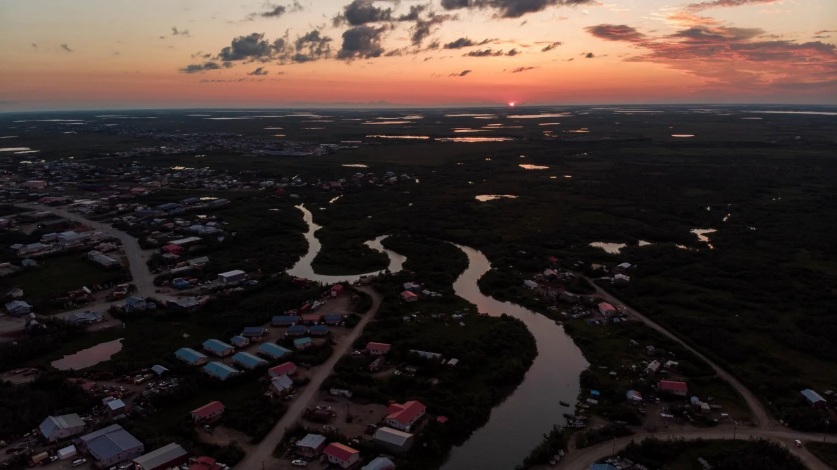
Coretek’s people practices have some texture: an employee advisory council, hybrid working, and office dog days. Its faith-based Coretek Cares program began in 2009 and says it donates 1% of corporate revenue. Projects include computer facilities and construction and IT work in Alaska.
For a buyer, the practical takeaway is to copy the sequence: pick a troublesome workflow, test it under realistic conditions, measure the result, and decide who maintains it. Coretek’s approach suits organizations prepared to invest in Microsoft’s ecosystem. Buyers seeking independence across cloud vendors should examine that fit closely. Data permissions, recurring charges, and operating responsibilities deserve attention before the pilot becomes everybody’s working day.
Keep exploring
Go deeper into the work, the people, and the product.