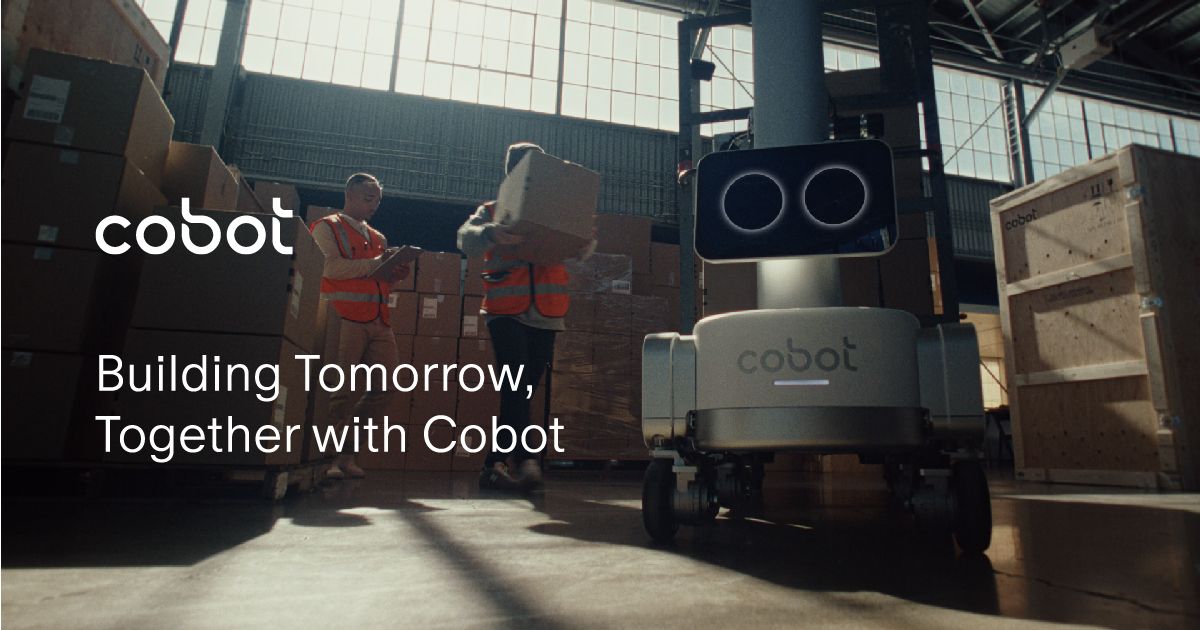
A robot is rolling down a hospital corridor. Nobody is watching it.
It's a Tuesday at the Mayo Clinic. A Proxie unit picks up a cart of surgical instruments, eases past a nurse, pauses for a gurney, and continues on. There is no soundtrack. There is no humanoid waving hello. The robot is, by design, deeply unremarkable. That is the entire pitch.
The company behind it - Collaborative Robotics, known to almost everyone as Cobot - has spent two and a half years and roughly $140 million getting to this exact moment of boredom. The founder thinks boredom is the goal. Most of his competitors are working very hard on the opposite.
The robotics industry kept making the wrong robot.
For a decade, the conversation in robotics had a strange center of gravity: the humanoid. Two arms, two legs, a head, a face. It made for excellent demo reels and surprisingly poor warehouses. Humanoids are expensive, fragile, and good at almost nothing in particular.
Meanwhile, the actual work - moving carts in hospitals, sorting bins in fulfillment centers, restocking shelves - kept being done by people, badly automated conveyor belts, or nothing at all. Brad Porter, who as VP of Robotics at Amazon helped deploy more than 500,000 industrial robots, had a different read on the situation. The robot we needed wasn't a person. It was a teammate.
Porter calls his version "practical collaborative robotics." Practical is doing a lot of load-bearing in that sentence.
Three founders, one stubborn premise.
In 2022, Porter left Amazon and started Cobot with Jane Mooney, also ex-Amazon, and Steph Tryphonas, a veteran of Tellme and Microsoft. The premise was simple in the way only expensive premises are: build a robot that reacts to humans, instead of forcing humans to react to it.
Investors found this convincing in a way they don't usually find robotics convincing. Sequoia and Khosla wrote the early checks. The Mayo Clinic, oddly, wrote one too - both as an investor and a customer, which is the kind of conflict of interest only hospitals can pull off gracefully. By April 2024, General Catalyst was leading a $100 million Series B alongside Bison, Lux, and Industry Ventures. Total raised: north of $140 million. Time elapsed: less than 24 months.
The Cap Table - selected
- Lead - Series B
- General Catalyst
- Other Series B
- Bison Ventures, Industry Ventures, Lux Capital
- Earlier rounds
- Sequoia Capital, Khosla Ventures, Mayo Clinic, Neo, 1984 Ventures, MVP, Calibrate
- Total raised
- $140M+
- Founded
- 2022, Santa Clara, CA
A Short, Suspicious-Looking Timeline
Proxie is what happens when you take "useful" seriously.
Proxie is a mobile manipulator - a wheeled base, an arm, an AI brain, a polite indifference to whether anyone admires it. It is roughly waist-high. It moves carts. It pauses for people. It learns. It is also, importantly, not pretending to be your friend.
Under the surface, Proxie runs on what Cobot calls its Intelligence platform - a foundation-model approach to robot learning that improves with every deployment. Software updates make Proxie better at its job the way iPhone updates make a phone slower. The analogy ends there.
The Robot
Mobile manipulator built for warehouse, hospital, and factory floor work. Modular. Doesn't fall over.
The Brain
A foundation-model stack run by ex-Amazon AI leadership. Proxie's situational awareness lives here.
The Program
Cobot's customer deployment loop. The faster Proxie ships, the faster Proxie learns. The faster Proxie learns, the faster Proxie ships.
Numbers, in case the vibes weren't enough.
It is genuinely easy to raise money for robotics and genuinely hard to ship a robot. Cobot's evidence that it can do the second thing is, as evidence goes, unusually concrete. Across pilots at Mayo Clinic, Maersk, Moderna, Owens & Minor, and Tampa General Hospital, the fleet has accumulated the kind of receipts robotics companies usually don't show.
Proxie - Cumulative Field Stats
Three numbers, one quiet point: Cobot has shipped. Not in the way that means a press release - in the way that means a robot pushed past a nurse at 6:14 a.m. and nothing bad happened.
Trustworthy robots in places that don't tolerate hype.
Cobot's stated mission is to build collaborative robots that integrate seamlessly into useful work - manufacturing, logistics, healthcare, municipal services. The phrase to underline is trustworthy. Healthcare doesn't reward novelty. Logistics doesn't reward charm. The customers in these markets ask one question: does it work the same way on the 4,000th try as on the first?
The company's bet is that a robot designed to lose graciously - yield to humans, ask for help, pause when confused - will end up doing more total work than one designed to dominate the floor. Humility, it turns out, scales.
Tomorrow, the boring robot wins.
There's a temptation, when writing about robotics, to gesture at AGI and disappear into the fog. Cobot makes that hard. The company has selected a smaller and more useful problem on purpose: how do you put a competent machine into a real workplace without breaking the workplace? The honest answer involves a lot of cart-pushing.
If Cobot is right, the next decade of robotics looks less like science fiction and more like the loading dock. Fewer humanoids on stages. More machines that show up, do the job, and never make a TED talk about it. The labor shortage finds its match in something that doesn't need lunch.
Back at the Mayo Clinic, the Proxie unit reaches the end of its corridor, swivels, and starts its next run. A surgeon, prepping in the next room, doesn't notice. The instruments are ready 20% faster than yesterday. The robot doesn't bow. It just keeps going. Boredom, as promised. The future is here - it's not posing for the photo.