A cheap server has a curious talent: it can make an expensive person stop doing their job. The designer becomes a backup investigator. The agency owner becomes a midnight technician. The merchant, who wanted to sell something, learns more about a database than seems entirely fair. Cloudways began with an understanding of that exchange.
- Managed hosting for agencies, developers and businesses that need their websites to earn their keep.
- Flexible keeps cloud-provider and server choices in your hands. Autonomous manages WordPress capacity as traffic changes.
- The bargain depends on the work it removes, the resources you need and the extras on your bill.
In a Google Cloud customer account, co-founder Aaqib Gadit described his earlier agency life: lost backups, websites failing at night, and “entire weekends spent trying to fix infrastructure and server problems.” The irritating part was how few people understood what had gone wrong. A server could become everybody’s problem while remaining nobody’s expertise.
That history suggests a useful way to read the company. Cloudways sells computing, certainly. But its commercial opening lies in the gap between being able to rent a machine and being willing to look after it. The first became easy. The second kept consuming afternoons.
The cloud arrived. The chores stayed.
Cloudways’ official history dates its beginnings to 2011. In the letter announcing its sale, Gadit names four founders: himself, Pere Hospital, Uzair Gadit and Umair Gadit. Their stated mission was practical: help small businesses save time and money, grow, and have some peace of mind. A surprisingly modest ambition for a technology company, and a perfectly sensible one for its customers.
The company built a management layer over infrastructure supplied by others. On Flexible, customers choose among DigitalOcean, AWS, Google Cloud, Vultr and Linode. Cloudways handles the hosting environment around that choice. The platform brings deployment, monitoring, backups and security tools into a dashboard, with support available around the clock.
Think about what that arrangement permits. An agency can use one provider for one client and another provider for a different client, while retaining a familiar management interface. The product makes several clouds feel less like several administrative jobs. It does not make every provider identical, or automatically spread each website across them.
A hundred websites make the point
For a single small website, maintenance may feel manageable. Repeat it across a client portfolio and each little chore acquires colleagues. A backup, a plugin change, a staging copy, a support conversation: none sounds dramatic. Together they shape whether the agency has time to take on another project.
Consider WebMaremma, an Italian agency serving hospitality businesses. In its Cloudways case study, owner Giulio Detti describes moving more than 100 websites from two SiteGround servers. He reports over 30% savings in server costs after cache optimization and configuration help. The agency also reports a 59% performance improvement for its Maremma Tuscany tourism portal.
Detti highlights staging, team permissions and continuing conversations with engineers through Slack. Those details matter because they describe a workflow rather than a processor. His account credits the configuration work alongside the move. Buying a different address for the same poorly tuned workload would be a much thinner experiment.

The lesson worth borrowing is the sequence: inspect the workload, improve the setup, then judge the result. Measure ordinary pages and the awkward ones. Track the staff time as well as the infrastructure charge. A migration deserves a ledger, not merely a victory lap.
Two ways to hand over the keys
Flexible suits customers who want managed infrastructure with room to make decisions. It supports WordPress, WooCommerce, Magento, Laravel and other PHP applications. Staging and cloning help test changes away from production. Git deployment and SSH access give developers useful working tools. Vertical scaling lets the customer increase a server’s resources when the workload calls for it.
Autonomous answers a different request: please handle capacity, too. Built for WordPress and WooCommerce, it uses Kubernetes-based autoscaling and load balancing, with Cloudflare Enterprise integrated. It went into beta in 2023 and became generally available in January 2024. A store preparing for a traffic surge has a different problem from an agency hosting a collection of modest brochure sites.
Choose the machine
Provider choice, server sizing and multiple PHP applications. Capacity planning stays part of the customer’s job.
Delegate the adjustment
WordPress and WooCommerce with automatic scaling. Extra resources can bring extra charges.
Neither arrangement cancels the laws of computing. Flexible permits multiple applications on a server, but they share finite capacity. A busy store can consume resources that a quiet site barely touches. “Unlimited websites” is a policy about counting websites; memory and CPU still have opinions.
The checkout refuses to be a postcard
A static page can often be served from a cache. A cart, a checkout or a logged-in course dashboard has work to do for a particular person. A quick homepage therefore tells only part of the performance story. The interesting requests are often the ones carrying money or a customer session.
Cloudways acknowledged this distinction in its November 2025 Lightning Stack announcement. It described recurring complaints about slow backend workflows, lagging WordPress administration and inconsistent speed under traffic. The new Flexible stack uses NGINX and PHP-FPM. Here, customer friction changed the architecture: the bottleneck was not simply delivering a cached page.
Cloudways advertises performance improvements from the redesign. For a buyer, the useful experiment is more specific than accepting a percentage: run the checkout, change a product, and exercise the members’ area with the actual plugins installed. A benchmark is an introduction. Your workload gets the deciding vote.
The bill has more than one line
Cloudways earns recurring revenue from hosting and management, supplemented by add-ons and enhanced support. Flexible’s charge depends on the selected server. Autonomous uses hourly per-application plans, with additional resource and autoscaling charges. Its newer pricing removes visit-based charges, following feedback that the company described in its pricing announcement.
Some costs sit outside the headline figure. Flexible’s pricing page lists offsite backup storage at $0.033 per GB per server. Cloudflare Enterprise is an add-on for Flexible and integrated into Autonomous. Standard support and paid support tiers also have different scopes. An agency counting on a particular escalation channel should check the relevant tier.
“we are not server experts”
Jens Madsen, HeatXperts partner, in DigitalOcean’s acquisition announcement
That small admission explains a large transaction. DigitalOcean completed its $350 million acquisition on September 8, 2022. When announcing the deal, it forecast more than $52 million of Cloudways revenue for that year and a three-year compound growth rate above 50%. Those are historical expectations. The purchase price bought the business; it was not a fundraising round.
The fit is easy to understand. DigitalOcean supplied infrastructure. Cloudways reached people who wanted the result of infrastructure without becoming its specialists. The customer’s choice of provider survives on Flexible, even after one of the choices became the owner.
The next chore is already on the desk
Cloudways’ newer products follow the same logic. Copilot diagnoses issues and offers supported SmartFix actions. A June 2026 update added proactive suggestions, starting with high CPU utilization. The useful promise is a shorter path from a signal to a decision; customers still need to understand what an action changes.
Velocity extends managed hosting to Node.js applications, with persistent servers, framework presets and Git deployment. Its advertised base plans begin at $20 a month, with separate backup-storage and excess CDN charges. Managed AI Agents hosts OpenClaw and Hermes using customers’ own model API keys. Infrastructure and model usage belong to separate bills.
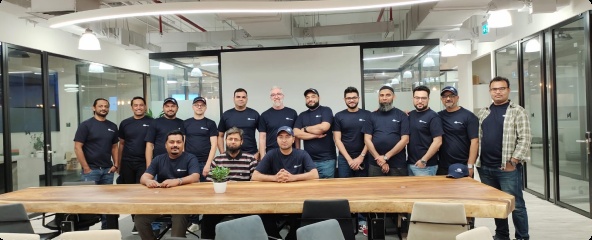
Cloudways’ about page now reports over 102,000 customers and a team spanning more than 20 countries. Agencies, merchants, developers and publishers share a need for working websites, although their budgets and appetites for control differ. WP Engine and Kinsta compete for managed WordPress buyers; SiteGround and Hostinger offer broader hosting alternatives. A direct cloud server remains another option for teams prepared to maintain it.
Start with one site and a stopwatch
Cloudways makes sense when a supported application needs cloud capacity and the team values help with operations. A team requiring unrestricted infrastructure customization should examine the managed boundaries closely. A small static site with simple needs may struggle to justify the extra service. Autoscaling also deserves a spending estimate before a campaign brings the crowd.
The sensible evaluation is pleasantly dull. Move one representative site first. Test forms, payments and scheduled tasks. Restore a backup. Check how support handles a real question. Compare the resulting bill, including extras, with the work your team previously carried. Keep the original setup available until the rehearsal earns your confidence.
Cloudways’ wager is that enough businesses would rather spend an afternoon improving a website than rescuing its server. For those businesses, the relevant unit of hosting is partly a gigabyte, partly a request, and partly an hour returned to the person who had better things to do.