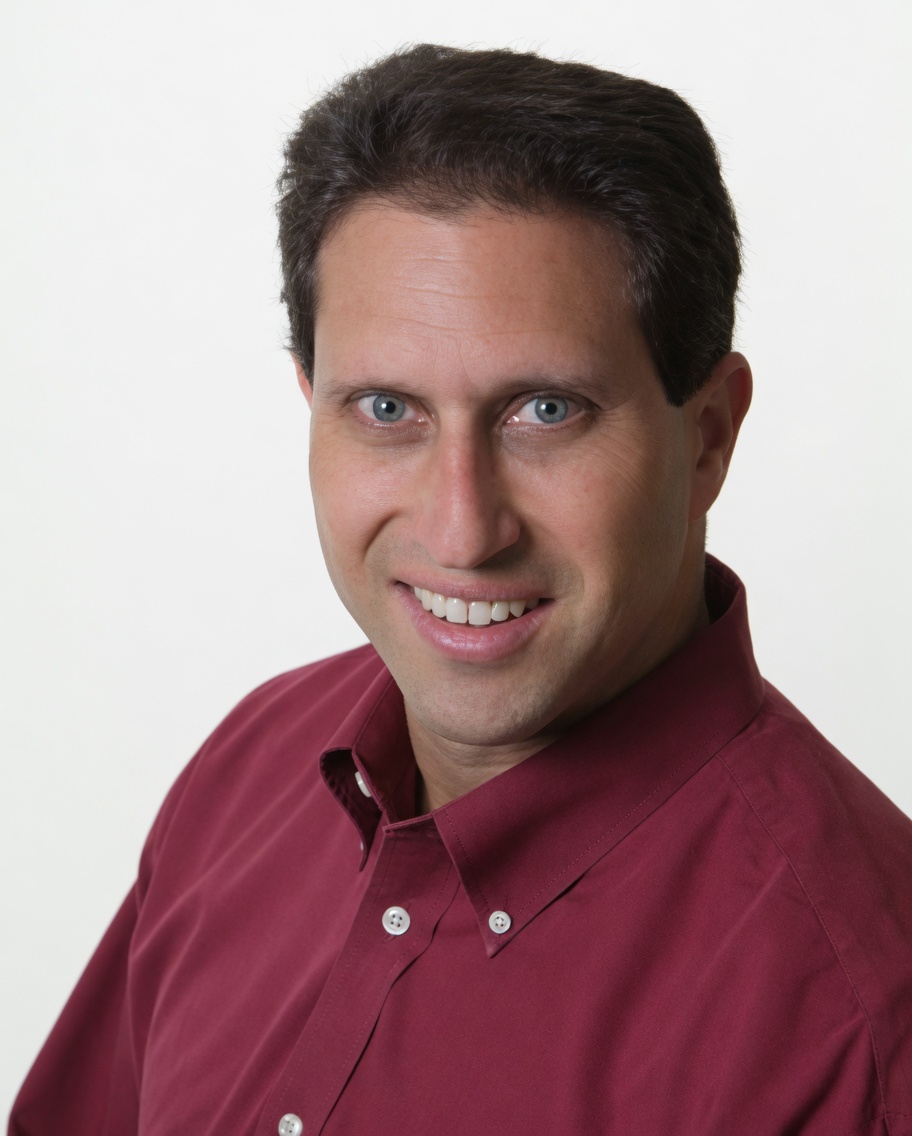
The Quiet Architect of Cybersecurity's Golden Era
Before Palo Alto Networks was the most valuable cybersecurity company in the world, someone had to be in the room making the deals that would get it there. That someone was Chad Kinzelberg. He joined when the company still had something to prove, ran corporate and business development through the IPO and well beyond, and watched an $18 billion market cap materialize from what was once a scrappy bet on next-generation firewalls. That's not luck. That's pattern recognition built over decades.
Kinzelberg's career reads like a map of Silicon Valley's greatest hits, minus the mythology. He started at CompuServe when the internet was a rumor, moved through Akamai when content delivery was a revolution, then stepped into Guardent and VeriSign's cybersecurity arm at a moment when the industry was still inventing its vocabulary. At VeriSign, he didn't just show up - he tripled the revenue growth rate of a flagship multi-hundred million dollar business. The method: new products, sharp acquisitions, and the relentless pressure of someone who understood that security was never just a technology problem. It was a market problem.
The Attack Surface Management market holds immense potential, and I see IONIX as an innovator within it. As ASM shifts from niche to mainstream, IONIX is leading the next generation by focusing on what customers really need - advancing from simple asset discovery to exploitability-based prioritization.
- Chad Kinzelberg, on joining IONIX's Board of Directors, 2024Between the big corporate roles, he took a detour that most executives only talk about. He became a CEO. Santa Cruz Networks, an Internet video startup in the peak chaos of dot-com fever, was named by Fortune Magazine as one of the "Twelve Coolest Companies." The company did not survive the bust. Kinzelberg survived it just fine - and emerged with the scar tissue that makes someone genuinely useful to the founders who come after them.
Prior to his cybersecurity chapter, he was CMO at two public software companies: Delrina, which was acquired by Symantec, and Caere, which eventually became Nuance Communications. These were not brand-building exercises. These were full-contact commercial operations at companies going through transformation, and Kinzelberg was steering the revenue ship while everyone else was figuring out what the company was becoming.
In 2015, Kinzelberg joined Equinix, the digital infrastructure company that had quietly become the central nervous system of the modern internet. Over ten years, as a key sales leader, he was part of one of enterprise tech's most sustained growth runs: from $2.7 billion in annual revenue to $9.2 billion. When he announced his retirement from Equinix at the end of March 2026, he called it "one of the greatest honors of my professional life." That's not boilerplate. That's what ten years of compounding trust and delivery sounds like.
All through this, Kinzelberg was accumulating another kind of work: the board seats and advisory roles that allow an operator to remain relevant without becoming the operator anymore. ForgePoint Capital. HackerOne. Momentum Cyber. Yubico. AccessData. Warburg Pincus. Glilot Capital Partners. In 2019, Andreessen Horowitz named him Advisory Partner, a role he holds today. In early 2024, IONIX - an attack surface management startup that had just closed a $42 million Series A - put him on its board. His bet on IONIX is precise: he believes the ASM market is shifting from niche to mainstream, and that IONIX's focus on exploitability-based prioritization puts it ahead of the wave.
What makes Kinzelberg's advisory value concrete is the specific vocabulary he brings. He talks about helping portfolio companies build "customer acquisition machines" - not a metaphor, but a system. He's been the CMO, the SVP of Corp Dev, the CEO, the Chief Sales Officer. He knows what breaks at each stage because he was the one holding the wrench when it broke. The founders who get access to that kind of operator-pattern-matching aren't getting advice. They're getting a decade of compressed mistakes, handed back to them with a solution already attached.
The arc is unusual in Silicon Valley, where most careers run in one direction - operator to investor, or investor who never operated. Kinzelberg has run the loop multiple times. He built companies, sold companies, advised on the deals that made companies, and then joined the firm - a16z - that is arguably the most influential force shaping what companies get built next. His career is not a single thesis. It's thirty-five years of being positioned correctly at the moment before the moment becomes obvious to everyone else.