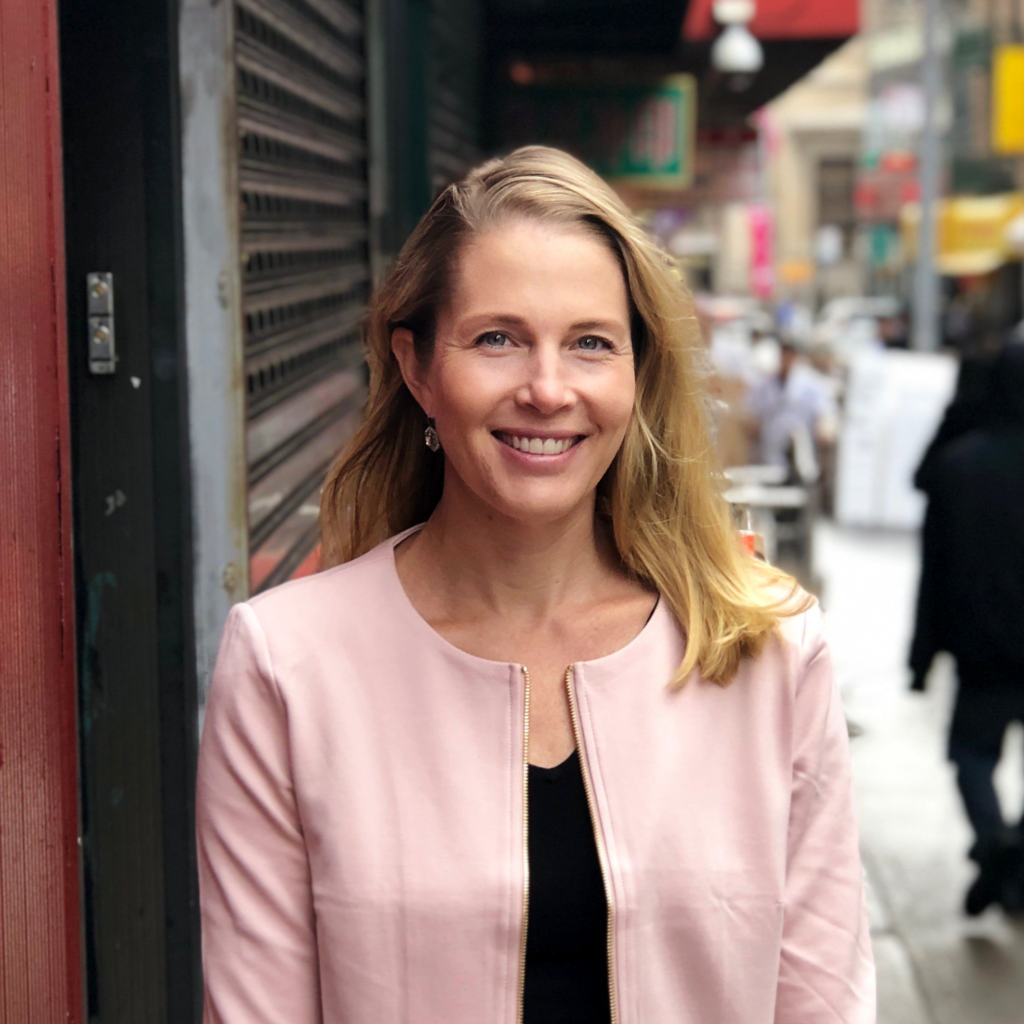
An operator who knew the business cold, then stepped up to run it
Casey Powers did not arrive at Climb Credit's corner office by parachute. She got there the long way, through the operations of the company itself. In February 2022, after three years as Chief Operating Officer, she was named Chief Executive Officer of the New York fintech, an inside promotion rather than an outside hire. That distinction matters. When Powers took over, she already knew where every wire ran.
Climb Credit sits in a corner of finance that most large lenders avoid. It finances career-focused and vocational education, the bootcamps and technical programs that train people to become web developers, data scientists, and UX designers. Its borrowers are often mid-career switchers, people with uneven credit histories who are betting on a new skill to change their earning trajectory. The traditional lending question, "what does your credit score say?", tends to shut those people out. Climb asks something different: what will this education actually be worth to the person taking it?
That reframing is the heart of the company, and Powers has spent years operationalizing it. Climb partners with schools whose programs show a strong return on investment, then structures financing so that students of many credit profiles can access it. The model only works if the underwriting is disciplined and the school partnerships are real. Building that machinery was, in large part, Powers's job as COO. Running it is her job now.
The line she used when she took the job says something about how she leads. Rather than positioning herself as the person who would fix everything, Powers publicly credited Angela Prince, the CEO before her, as a mentor and role model, and framed her own tenure as the next chapter of a story already underway. It is a generous way to handle a leadership transition, and a telling one. Powers came up as the person who made things work behind the scenes, and she stepped forward without erasing the people who came first.
Her path into education finance was not a straight line. Powers began her career in investment banking, the traditional Wall Street starting point, then earned a Master of International Affairs in Economic and Political Development from Columbia University's School of International and Public Affairs between 2008 and 2010. That degree, focused on development rather than a standard MBA track, hints at the direction she would take. Instead of climbing the banking ladder, she moved into mission-driven fintech, holding strategy, operational, and financial roles at several startups before landing at Climb. By the time she became CEO, she had assembled more than 15 years of experience across financial services and emerging fintech companies.
What ties her career together is a conviction about who deserves access. Powers has become a vocal advocate for skills-based hiring, the idea that employers should evaluate candidates on demonstrated ability rather than only on the credential of a four-year degree. It is not an abstract position for her. Climb finances exactly the kind of alternative training that skills-based hiring rewards, and the company has watched its partner-school graduates go on to fill real roles that companies struggled to staff. Powers has pointed to Climb's own team, many of whom came from non-traditional backgrounds, as living proof of the thesis the company lends against.
The early results of her tenure suggest the internal-promotion bet paid off. On Comparably, where employees rate their leaders anonymously, Powers holds a CEO approval rating of 91 out of 100, drawn from dozens of Climb employees, placing her in the top 5% of similarly sized companies. Culture scores like that are not decorative. For a company whose whole premise is that people are worth more than their paperwork suggests, having employees who believe in the person at the top is close to a proof of concept.
Powers has also become part of the broader conversation about women in fintech, appearing in industry features that spotlight female leaders in a field that remains heavily male at the executive level. She tends to keep the focus on the mission rather than herself: expanding access to affordable, career-focused education, closing workforce gaps by connecting employers with talent from alternative pathways, and proving that a lender can serve underserved borrowers responsibly rather than predatorily.
That last point is where the stakes sit. Education finance carries a heavy history, and the difference between a company that widens opportunity and one that traps people in debt comes down to underwriting discipline and honest partnerships. Powers's answer is to anchor everything to return on investment, to fund programs that genuinely improve earning potential and to structure repayment around what borrowers can realistically manage. It is a narrower, harder business than blanket lending. It is also the reason Climb exists.
For now, Casey Powers is doing what strong operators tend to do when handed the top job: running the company she already understood better than almost anyone, and pushing its mission a little further out into the world. The résumé says investment banking, Columbia, fintech. The work says something simpler. She is trying to make it possible for more people to pay for the education that changes their lives, and to be judged, when they show up to work, on what they can actually do.