Company Profile · Health · AI · Hardware
Cardiosense
The heart sends a warning weeks before it sends you to the hospital. Cardiosense built the thing that finally listens.
The heart sends a warning weeks before it sends you to the hospital. Cardiosense built the thing that finally listens.
Most cardiac data arrives after the ambulance. Cardiosense moved the clock.
In a clinic exam room, a patient with heart failure unbuttons a shirt and a clinician presses a small patch to the chest. A few minutes later, a number appears - the pressure inside the patient's heart - and it was read without threading a catheter through a vein. That number, pulmonary capillary wedge pressure, used to require a trip to a cath lab and a sterile gown. Cardiosense turned it into a bedside reading.
This is the company as it stands in 2026: a 38-person, Chicago-based health-tech outfit with an FDA-cleared wearable called CardioTag, a machine-learning platform that reads raw heartbeats, and a single stubborn idea - that worsening heart failure should be visible early, not discovered in an emergency room. In July 2025 the FDA cleared the device. The hard part, naturally, was the decade before that.
Six million Americans. A $70-billion-a-year bill. And a disease that mostly announces itself too late.
Heart failure doesn't fail all at once. Fluid backs up, pressure climbs inside the heart, and for days or weeks the body quietly compensates - until it can't, and the patient lands in a hospital bed gasping for air. By 2030 the condition is projected to cost the US health system more than $70 billion a year, much of it from hospitalizations that arrive after the window for a gentle correction has closed.
The gold-standard measurement of that rising pressure - PCWP - has always been invasive. You measure it with a right heart catheter, which is exactly as pleasant as it sounds and not something anyone does weekly at home. So the most useful early-warning number in cardiology was, for practical purposes, locked behind a surgical procedure. Clinicians were flying with the instrument bolted shut.
Four founders bet that the heart's faint vibrations carry the signal - if you can teach a machine to hear it.
Cardiosense's wager started in a research lab. Co-founder and chief scientist Omer Inan had spent years at Georgia Tech on seismocardiography - the study of the tiny mechanical vibrations a beating heart sends through the chest, the cardiac equivalent of a seismograph reading tremors. Pair those vibrations with the electrical signal (ECG) and the optical blood-flow signal (PPG), the founders reasoned, and a model might infer what's happening to pressure inside the heart from the outside.
The founding team - Amit Gupta, Andrew Carek, Omer Inan and Mozziyar Etemadi, drawing on Northwestern and Georgia Tech roots - turned that into a company. The bet was not subtle: replace a catheter with a sticker and an algorithm. The kind of claim that gets you politely doubted at conferences, right up until the data shows up.
Today the company is led by CEO Eric Meizlish, with John D. Martin, MD as Chief Medical Officer and Arezou Azar, PhD heading regulatory and compliance.
From a lab idea to a cleared device - the unglamorous middle, abridged.
Cardiosense forms in Chicago, carrying seismocardiography research out of academia and toward the bedside.
Co-led by Broadview Ventures and Hatteras Venture Partners, with Laerdal Million Lives Fund, OSF Ventures, UnityPoint Health Ventures and Portal Innovations.
FDA grants Breakthrough Device Designation to its early heart-failure detection algorithm; clinical validation work expands.
CardioTag cleared as a Class II device - the first multimodal wearable capturing ECG, PPG and SCG at once.
New SEISMIC-HF I analyses presented at TCT 2025 and the AHA 2025 Scientific Sessions; data published in JACC: Heart Failure.
CardioTag does the listening. The AI does the translating.
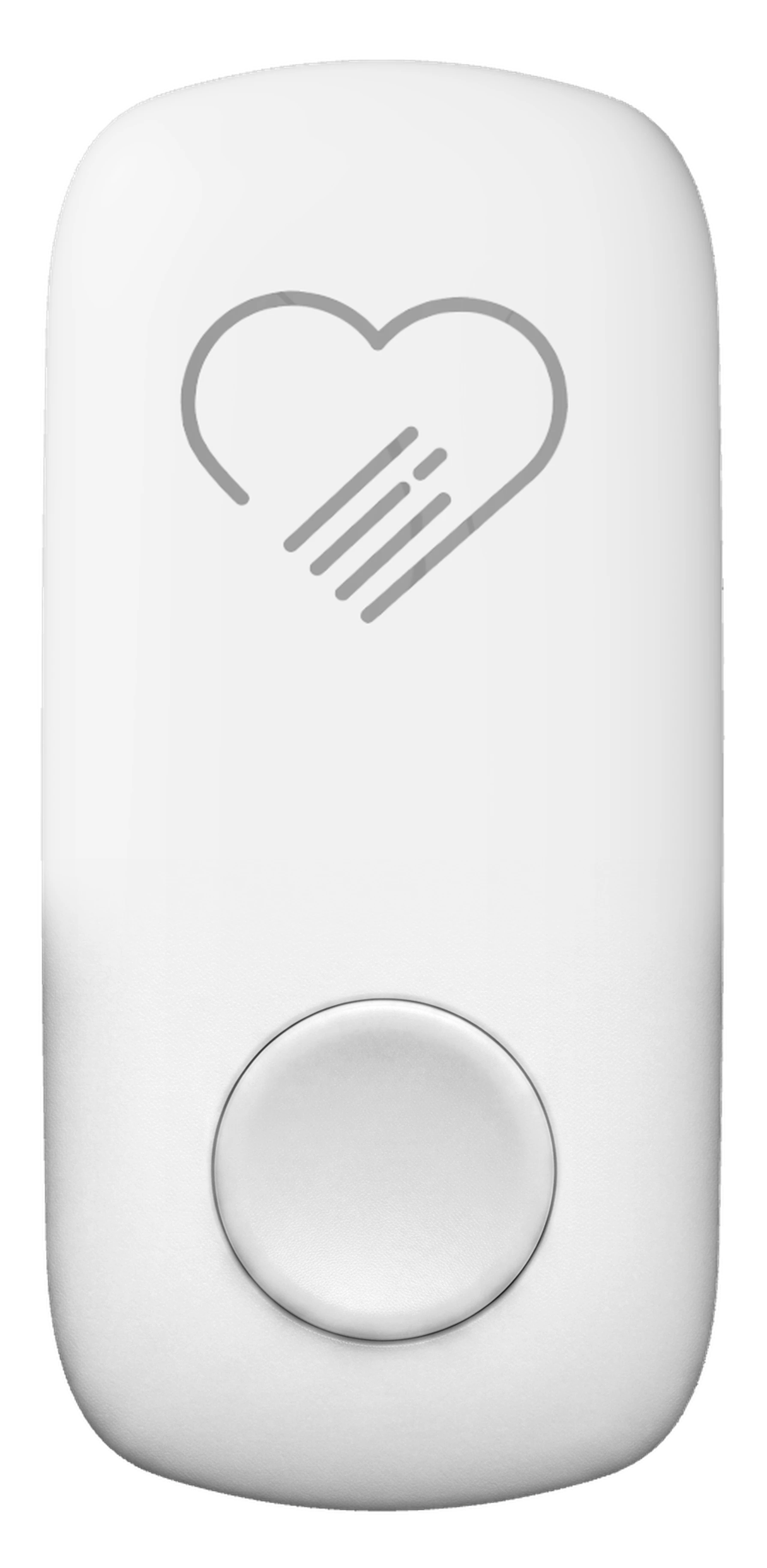
CardioTag is, in plain terms, a multimodal sensor worn on the chest. What makes it unusual is that it records three different cardiac signals simultaneously: the electrical (ECG), the optical (PPG), and the mechanical vibration of the heartbeat itself (SCG). Cardiosense says it is the first wearable to capture all three at high fidelity at once - which matters, because the magic isn't any single signal, it's how they line up.
FDA 510(k)-cleared wearable sensor capturing ECG, PPG and seismocardiogram signals from a single chest-worn patch.
Machine-learning analysis that turns those raw waveforms into a noninvasive estimate of cardiac filling pressure.
The deep-learning engine building digital biomarkers to flag early cardiovascular changes and guide therapy.
The point of all this is a measurement clinicians can take at the bedside, in clinic, or eventually at home, in minutes - and according to the company, detect rising pressure up to 30 days before a crisis. The catheter measured the same thing once, in a procedure room. CardioTag aims to measure it on a Tuesday, in a paper gown nobody had to put on.
Skepticism is healthy. So is a 310-patient study in a peer-reviewed journal.
A bold claim in medicine is worth exactly nothing without evidence, and regulators are not famous for their sense of romance. So Cardiosense ran SEISMIC-HF I - a prospective, multicenter study enrolling 310 patients with heart failure with reduced ejection fraction, each undergoing right heart catheterization. The catheter gave the ground-truth PCWP; the question was whether the algorithm could match it from the outside. The results were published in JACC: Heart Failure and presented through 2025 at TCT and the American Heart Association's Scientific Sessions.
Bars are scaled for readability, not to a shared axis - different units, same argument: the cost is enormous and the warning comes early.
The backers were similarly unsentimental and equally convinced. The $15.1M Series A drew not just venture firms but strategic health-system investors - OSF Ventures and UnityPoint Health Ventures - the kind of money that wants to actually deploy a device, plus the Laerdal Million Lives Fund and Chicago's Portal Innovations.
Not a gadget for the worried well. A tool for the people most likely to crash.
Cardiosense states its mission plainly: revolutionize heart failure care through noninvasive monitoring of cardiac filling pressure, so clinicians can act before decompensation, not after. The competition it's measured against is telling - implantable pressure sensors like Abbott's CardioMEMS and Endotronix's Cordella, devices that already prove early pressure data prevents hospitalizations. Cardiosense's pitch is to deliver that signal without an implant.
That's a meaningful difference in who gets monitored. Implants are reserved for the sickest; a wearable patch could, in principle, reach far more of the six-million-patient population. The mission isn't to invent a new measurement - it's to democratize an old one.
Return to that clinic, a year or two on. The patch goes on, the number comes up, and this time it's trending the wrong way - a week before the patient would have felt a thing. The clinician adjusts a diuretic, sends the patient home, and the hospital bed that would have been needed stays empty. No drama. That's the point: the best version of this technology is the one where nothing happens.
Cardiosense has cleared the gate that kills most medical-device startups - the FDA said yes. What remains is the long, decidedly less photogenic work of commercial deployment, reimbursement, and convincing busy clinicians to trust a patch with a number they once trusted only to a catheter. The company that started by betting the chest wall already knew the answer now has to prove that knowing it early is worth changing how cardiology works. The heart, for its part, has been sending the message all along.