BREAKING Brad Peters sold Birst for $580M, then started over SCOOP ANALYTICS raises $3.5M seed - 2024 "The difference between a search bar and your own Gartner analyst" Morgan Stanley M&A Oracle Birst Scoop Three companies, one obsession: data for everyone BREAKING Brad Peters sold Birst for $580M, then started over SCOOP ANALYTICS raises $3.5M seed - 2024 "The difference between a search bar and your own Gartner analyst" Morgan Stanley M&A Oracle Birst Scoop Three companies, one obsession: data for everyone
Founder · Builder · Analytics Lifer

Brad Peters

He built one of the first cloud BI companies, sold it for $580 million, and decided it still wasn't good enough. Now he's building the analyst, not the dashboard.

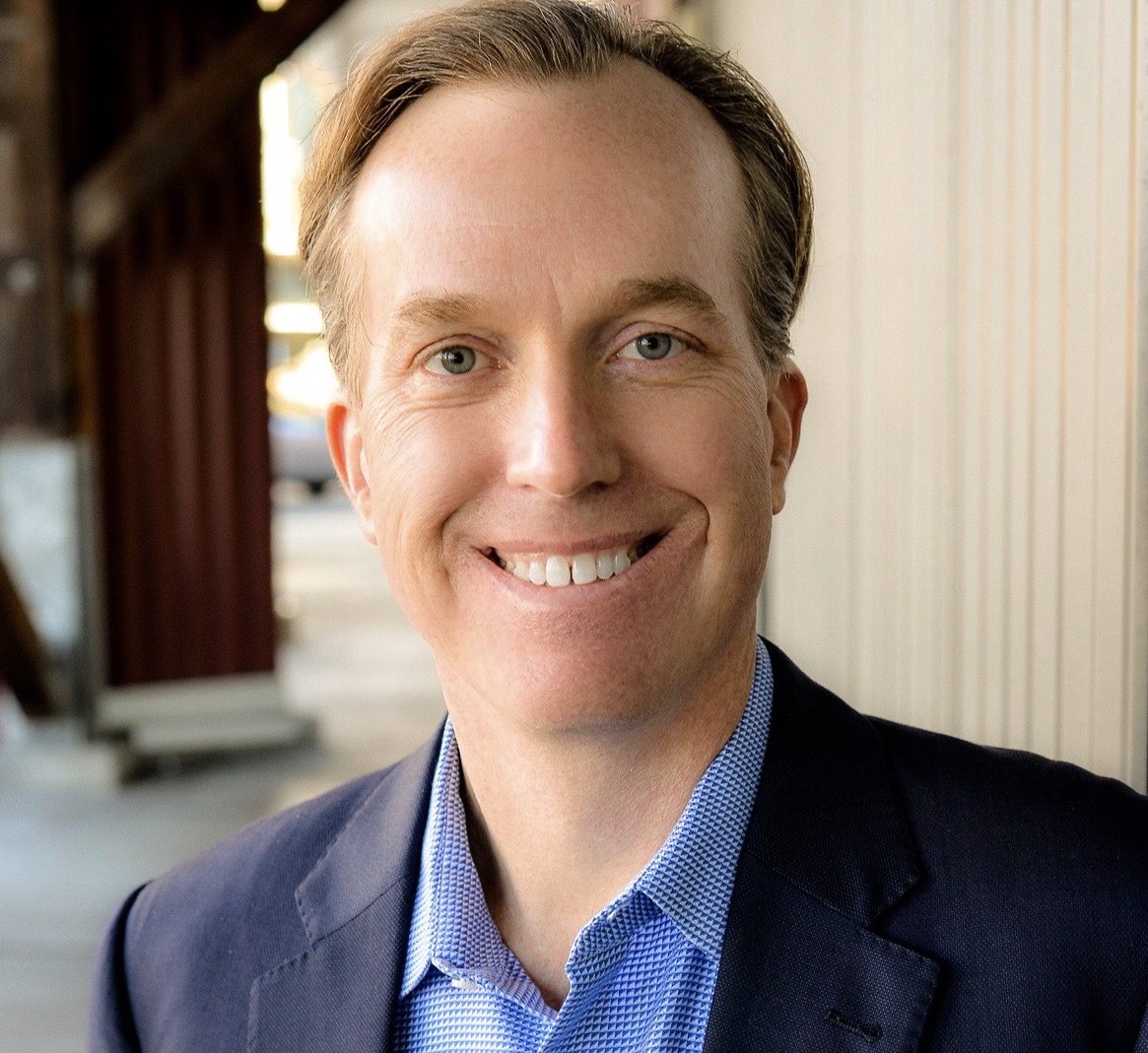
Brad Peters, founder and CEO of Scoop Analytics
Still chasing the same idea, take three
$580M
Birst exit to Infor
3
Analytics companies
20+
Years in data
$3.5M
Scoop seed, 2024
The story so far

A man who keeps rebuilding the same conviction

Brad Peters has spent more than two decades trying to solve one stubborn problem: most people who need answers from data have no idea how to get them, and the tools built to help them quietly assume otherwise. He is now the founder and CEO of Scoop Analytics, a San Francisco startup that connects to the apps a business already runs on, investigates the data on its own, and hands back the story - no SQL, no data warehouse, no waiting on the IT queue.

The pitch is deceptively simple. "It's the difference between giving someone a search bar and giving them their own Gartner analyst," Peters says. Where a generation of business-intelligence software asked users to know which questions to ask, Scoop tries to ask the questions for them. It tests hypotheses, hunts for root causes, and surfaces the patterns a busy operator would never have time to chase.

That conviction did not arrive overnight. It is the third act in a career that has circled the same idea - put real analytics in the hands of ordinary business people - from three different angles, each time with better technology and the same itch.

The insight that started Scoop

After years of building BI platforms, Peters noticed something his industry kept getting wrong. "Business users weren't struggling with how to query data," he realized. "They didn't know what questions to ask in the first place." Dashboards answered questions. Nobody was helping people figure out which questions mattered.

So Scoop took an unfashionable shape. Rather than another drag-and-drop dashboard, Peters describes a layer that stitches together workflow engines, expert systems, and large language models to automate the deep, plodding work of investigation. He has a favorite way of explaining it: "If I took a tape recorder and recorded everything you thought as you looked at your BI reports, we stick that into the system so it could do that on your behalf."

It turns an analyst who's just trying to keep their head above water into a strategic thinker.

- Brad Peters, on what Scoop is for

From Morgan Stanley to the Magic Quadrant

Peters did not start in software. His first job was on Morgan Stanley's mergers-and-acquisitions desk in New York, a finance education that taught him how value gets made and sold. The pull of building, though, was stronger than the pull of advising. He moved west and into product, helping found and lead the analytics line at Siebel Systems - the work that became the backbone of Oracle's OBIEE family, a product line later valued around a billion dollars. At Oracle he ran point as Senior Director of Analytics.

Then came the bet that defined him. Around 2004 he co-founded Birst, convinced that enterprise analytics was about to be remade by the cloud while incumbents were still shipping software on discs. He led Birst for over a decade as chairman, chief product officer, and CEO, and pushed it into the Gartner Magic Quadrant as a recognized leader. In 2017, Infor acquired Birst for $580 million. Peters stayed on as SVP and GM of Analytics and Business Intelligence, running the products with full profit-and-loss responsibility until 2019.

Explaining Birst's "networked BI" was its own kind of challenge, and Peters described it with characteristic bluntness: it sometimes felt "like describing colour to blind people." People would see five charts, he said, and assume they were five unrelated things - missing the fabric of data underneath that "can tell 1,000 more stories." That frustration, the gap between what the data could say and what people could see, is the thread that runs straight into Scoop.
The arc

A career told in four pivots

1990s · WALL STREET
Starts out as an M&A investment banker at Morgan Stanley in New York.
EARLY 2000s · SIEBEL
Helps found and lead the analytics product line that becomes the basis of Oracle's OBIEE family.
MID 2000s · ORACLE
Serves as Senior Director of Analytics, running the BI platform and analytical solutions.
2004 · BIRST
Co-founds Birst, betting early that the cloud will remake enterprise analytics.
2005-2017 · LEADERSHIP
Leads Birst as chairman, CPO and CEO; pushes it to Gartner Magic Quadrant leader status.
2017 · EXIT
Infor acquires Birst for $580 million.
2017-2019 · INFOR
SVP and GM of Analytics & Business Intelligence, with full P&L responsibility.
2021 → NOW · SCOOP
Founds Scoop Analytics; raises $3.5M seed in 2024 led by Ridge Ventures.
The thesis

Every time the tools got simpler, the market doubled

Peters likes to size the prize plainly. He pegs business analytics at a market worth more than $50 billion - and he has watched it grow in lurches, not lines. "Each time there was a radical simplification of those tools, the market has broadly doubled," he has said. Spreadsheets did it. Self-service dashboards did it. He is betting an AI analyst that anyone can drive does it again.

His read on the current moment is refreshingly skeptical for a founder selling AI. "Right now there is this sense that only AI products, and generative AI in particular, are interesting," he notes - and he means it as a caution, not a sales line. The value, in his telling, is not the demo. It's whether a non-technical person walks away with an answer they could not have gotten before.

One early customer, he says, used Scoop's process insights to crack a problem their own data team had tried and failed to solve for over a year - with no implementation work required. That, for Peters, is the whole point.

Spreadsheet
wave 1
Self-serve BI
wave 2
AI analyst
wave 3
Each radical simplification roughly doubles the market. Illustrative, per Peters' framing.
In his own words

Eight lines that explain how he thinks

"Scoop makes it extremely easy for anyone with spreadsheet skills to access, combine and use data to bring data stories to life."

On the mission

"Business users weren't struggling with how to query data - they didn't know what questions to ask in the first place."

On the real problem

"If I took a tape recorder and recorded everything you thought as you looked at your BI reports, we stick that into the system."

On automation

"It's like describing colour to blind people... underneath is a fabric of data that can tell 1,000 more stories."

On networked BI at Birst

"Companies traditionally had to spend months setting up data warehouses just to give people 'self-service' capabilities that were ultimately very limited."

On the old way

"Right now there is this sense that only AI products, and generative AI in particular, are interesting."

On the hype cycle
The party trick

He pitched investors a slide deck. Then he hit escape.

Ask Peters for his favorite Scoop moment and he tells one about a room full of investors. He walked them through what looked like an ordinary presentation - charts, a narrative, the usual. At the end, he pressed the escape key. The whole deck dissolved to reveal that it had been running live on Scoop the entire time, every number wired to real-time data. The story they'd just watched wasn't a mock-up. It was the product, performing.

It's a small bit of theater that captures the larger bet: that the line between "a report about your business" and "your business, talking back to you" should disappear. For a founder who started on a trading-and-banking desk and ended up arguing with how humans read charts, it's a fitting magic trick.

The way he builds

A product visionary who distrusts his own industry's hype

Peters describes himself as a product visionary, someone who brings concepts to market before they gain broad adoption. That can be a lonely place to stand. He has lived through enough technology cycles to recognize the pattern: a new capability arrives, the marketing races ahead of the reality, and the people who were promised "self-service" are left holding a tool that still needs an expert to operate. His career is, in part, a long argument against that gap.

It shapes how he talks about AI. He is building with large language models, but he refuses to pretend the model is the product. The model is a component. The product is whether a regional manager at a retail chain, or an operator at a property-management firm, can ask a vague human question and get an answer they trust without learning to code. "Companies traditionally had to make large investments and spend months setting up data warehouses just to give businesspeople self-service data analytics capabilities that were ultimately very limited," he says. Scoop's wager is that the warehouse, the SQL, and the data-engineering bottleneck can all be pushed out of the user's way.

There is a quiet philosophy underneath the engineering: that institutional knowledge - the things a seasoned analyst checks by instinct - can be captured and run automatically, on everyone's behalf, all the time. Scoop calls the idea Domain Intelligence. Peters frames it as turning what one expert knows into something the whole organization gets to use, proactively, without anyone having to ask.

What he's chasing now

The near-term goal is unglamorous and exact: make sophisticated analysis available to every business user without a data team, without SQL, and without a months-long setup. Scoop connects to the operational apps a company already uses, investigates the data on its own, tests hypotheses, finds root causes, and tells the story back. The investors backing that vision include Ridge Ventures, Engineering Capital, and Industry Ventures, with Ridge partner and former CIO Yousuf Khan on the board.

Khan's summary of the bet is tidy: "Scoop's mission to deliver data analytics in a form factor that doesn't require a data team is making the dream of self-service business intelligence a reality." It is, notably, the same dream Peters chased at Birst and at Oracle before it - only the technology has finally caught up to the ambition. For a founder who has rebuilt this conviction three times, that is the part that seems to keep him in the chair.

Worth knowing

Five things that make him hard to file

01

He started in finance, on Morgan Stanley's M&A desk, before ever shipping a line of analytics software.

02

A National Science Foundation Fellow at UC Berkeley, with a research background touching Bayesian learning - long before AI was fashionable.

03

Technology he helped create still lives on inside Oracle's OBIEE, a product line valued around a billion dollars.

04

He sold Birst for $580 million, then chose to start over rather than coast.

05

He believes the next doubling of the analytics market belongs to whoever makes the data team optional.

06

His co-founders and engineers are largely enterprise-analytics veterans - people who, like him, have seen how BI breaks at scale.

Follow the trail

Where to find him