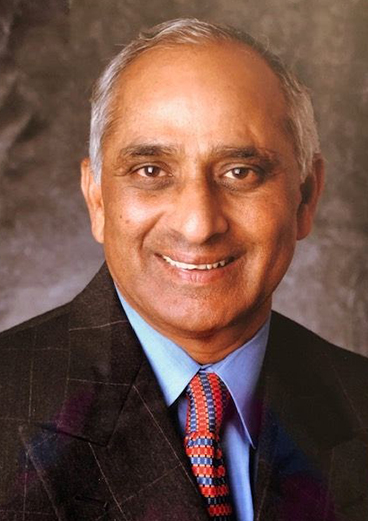
What he does now
Ventureast manages one of the longest-running early-stage funds in India. Bobba is its General Partner for life sciences and healthcare - the partner who has seen a biologic from molecule to FDA approval, who knows how a cleanroom is laid out, who can read a CMC filing without reaching for a translator. That is rarer than it sounds. Most India-based VCs in healthtech come at the sector from the spreadsheet side. Bobba came at it from the floor.
He sits on the boards of Portea Medical (home healthcare), Richcore (now Sea6 Energy / Laurus, biologics manufacturing), Sparsha Pharma, BioServe, Diabetomics, Melior Pharma, and Cancer Genetics India. Each is the kind of company where the question is not "can the founders sell?" but "can the molecule actually be made?" Bobba is the partner who can answer that question without phoning a friend.
On the side, he runs DigiLife - Ventureast's vehicle for digital health and life sciences crossovers. The thesis is straightforward: Indian healthcare is a structural mess of unmet need, and the founders who will fix it will look more like operators than software jockeys. Funding the operator class is what he is best at.
Where he came from
Born in Andhra Pradesh, India. Trained as a pharmacist at Andhra University, where he graduated with a gold medal. Migrated to the United States in 1972, then collected an MBA at Fairleigh Dickinson University in New Jersey - the unglamorous, practical option for a young immigrant who wanted to learn the business side of medicine without quitting the lab.
He started at Warner Lambert. Then ran it - five plants, roughly two thousand staff, the kind of mid-career posting that looks small on a resume and enormous in person. From there he was sent to Indonesia to be President of Warner Lambert's local operation, then jumped to Centocor as Executive Vice President of R&D and Operations. Centocor was, in the 1990s, where modern monoclonal antibody medicine got built. Bobba's group helped produce Reo-Pro and Remicade - two drugs that did not just succeed commercially, they changed what was possible.
The American CEO years
Between 1995 and 2000 he ran Molecular Biosystems as President and CEO. The company was NYSE-listed; its big bet was the first ultrasound contrast agent, a quiet but durable advance in diagnostic imaging now sold by Mallinckrodt. He moved on to Diosynth - a division of Akzo Nobel - as EVP, then to Aradigm Corporation as Senior VP of Operations, working on inhaled drug delivery.
You can read the timeline two ways. One: a CV full of restless lateral moves. Two: a deliberate tour of every interesting corner of life sciences - small molecules, biologics, contract manufacturing, diagnostics, drug delivery. By the time Ventureast asked him to come over to the buy side, he had already done the sell side from almost every angle.
The pivot back to India
Migration is rarely a one-way street. By 2007 he was back in India, sort of - Bay Area home base, Bengaluru office, frequent-flier status earned the old-fashioned way. He joined Ventureast as a General Partner with a specific mandate: build the life sciences book. India in 2007 had cheap engineering talent, expensive capital, and very few investors who could distinguish a viable biotech business plan from theatre. Bobba could. He invested accordingly.
That portfolio now looks less like a typical VC's collection and more like the table of contents of an Indian healthcare textbook. Home healthcare (Portea). Genomics (BioServe, Cancer Genetics India). Diabetes diagnostics (Diabetomics). Sterile manufacturing (Sparsha). Biologics (Richcore). The bets are not the loudest in the room. They are the most legible to anyone who has actually built one.
The man off the clock
His own bio at DigiLife begins, with cheerful disregard for VC convention: "Pharmacist, Philanthropist and a farmer (model farm in India growing soybeans currently)." That is a sentence written by someone who has stopped trying to seem important. He sits on the board of The Forgotten International, a non-profit working on extreme poverty. He manages the endowment committee at his temple in Livermore, California. The soybean farm is a real soybean farm - a model operation in India intended to demonstrate sustainable smallholder practices.
A theme emerges: every project, whether biotech or board service or agriculture, is about taking something complicated and making it run. Bobba is, in the truest sense, an operator. The venture title is a recent ornament.
How he invests
Ask the founders who have taken his check and the same words appear. Patient. Hands-on. Quiet. Will read the science. Will visit the plant. Will not pretend to know what he does not. The Ventureast playbook under his stewardship is long-cycle: invest at seed or Series A, stay through multiple rounds, sit on the board, push for exits only when the company is genuinely ready. In an industry that has trained itself to think in 24-month sprints, that approach reads either as quaint or as quietly subversive. With life sciences, where regulatory clocks ignore venture fashion, it is also the only one that works.
His sectors, in his own words and his portfolio's: life sciences, healthcare, digital health, biotech, food and agriculture, cleantech, deeptech. The unifying thread is that the businesses underneath are real - things that get manufactured, regulated, audited, deployed in hospitals. Software is welcome, but not the whole story.
Why this matters
India is in the middle of a healthcare buildout that will define the next thirty years. The capital flowing into it has gotten louder, but the operating depth behind that capital is shallow. Investors like Bobba - who can walk a founder through the actual chemistry, the actual regulatory pathway, the actual cleanroom design - are not common. He is a category of one in a category that does not yet have a name. Operator-investor is the closest English gets.
His career is also a quiet rebuttal to the idea that immigration is a single arc. He left India in 1972 to learn pharma in America. He brought what he learned back. That round trip is its own kind of return on investment.