Arthur
Kaneko
A career spent switching between the operator's chair and the investor's seat. Now he's sitting on the investor's side again, but the chair is one he built himself.
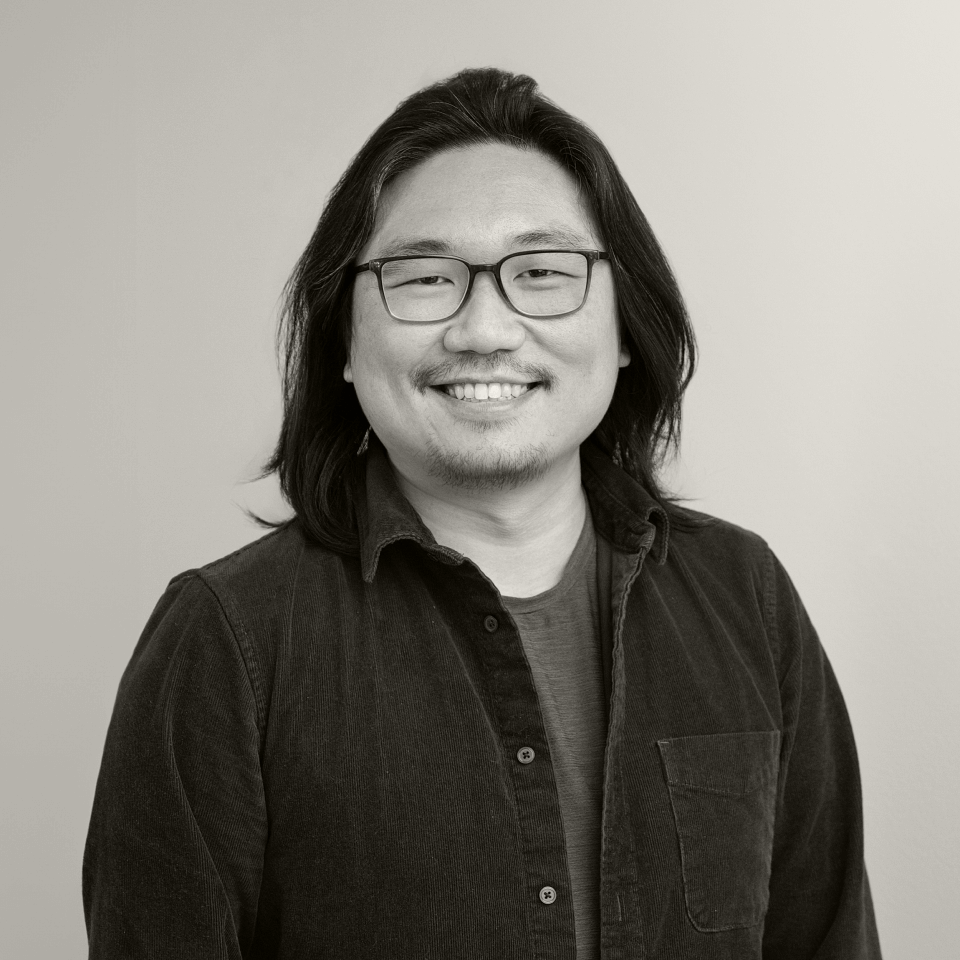
The new partner in the back row
A career spent switching between the operator's chair and the investor's seat. Now he's sitting on the investor's side again, but the chair is one he built himself.
The pitch is shorter than the average investor deck. A few investments. Held for a decade. No theatrics. That's the entire premise of Coreline Ventures, and Arthur Kaneko has spent fifteen years getting to the point where he can say it without flinching.
Coreline introduced itself in October 2025. Four co-founders, a sliver of a portfolio, and a thesis that reads almost stubbornly traditional in a market that has spent the last few years optimizing for speed and volume. The firm makes a small number of early-stage, high-conviction investments across the United States and Japan, and commits to founders for what Kaneko likes to call "the often decade-plus it takes to build a truly transformative business."
It is not a vibes-driven sentence. It is the sentence of someone who spent ten years running a company and learned, in the unglamorous middle stretch, exactly how lonely a CEO can be when the investors who showed up at the term sheet quietly drift to the next thing on the roadmap.
The other Coreline partners - Osuke Honda, Kenichiro "Ken" Hara, and Matthew Bonner - bring their own decades of investing and operating across the Pacific. The firm's logo wall already includes Freee, Sansan, CADDi, Enechain, 10X, MagicMoment, EvenUp, Brigit, and Playground. These are not throwaway names. Several are public, several are on the ramp.
What Kaneko personally brings to that team is the part the deck cannot say with a straight face. He has been an analyst at one of the most respected cross-border venture firms. He has been a product manager at a startup that didn't make it. He has been a CEO for ten consecutive years through a real estate downturn, a pandemic, and a market reorder. He knows what a 9pm board call sounds like when the runway is shrinking. He knows what the founder hears in the silence afterwards. The Coreline pitch is that this matters. He thinks the next decade of venture will reward firms that can hold that kind of context.
Before Coreline, there was RealScout. Kaneko took the CEO seat in July 2014 after meeting the founder while sourcing deals at DCM Ventures. The startup, a collaborative home-search platform for real estate agents and their clients, was not the kind of company that gets written about on Friday afternoons. It was the kind of company that survives by understanding agents, brokers, MLS quirks, and the moods of a generation of buyers who would rather text than call.
He ran it through a rebrand, through the buildout of the Buyer Graph platform, through the COVID-era market that briefly turned every real estate prediction into a punchline. In January 2025, RealScout co-founder Andrew Flachner returned to the CEO role. Kaneko, by all accounts, handed off the keys cleanly. The next chapter was already in front of him.
From 2010 to 2014, Kaneko was an Investment Vice President at DCM Ventures. He sourced deals, ran diligence, advised portfolio companies through M&A conversations, and helped lead fundraising for the firm's own funds. DCM was already cross-border in its DNA - the firm has long invested in the US, China and Japan - which means Kaneko's training was multilingual from the first day. His native Japanese and his elementary Mandarin were not party tricks. They were the working language of the work.
Before DCM, his first job out of Stanford was a product manager seat at Togetherville, a Bay Area startup building a social network for kids and their parents. The company didn't survive the consumer social winnowing of the early 2010s. He has cheerfully called the entire idea of being an entrepreneur "a glamorous or sexy thing to do" a misconception. He learned to ship product, then learned to fund product, then learned to run a company that ships product. He says he prefers it that way.
Kaneko's mother is Chinese. His father is Japanese. He grew up between worlds in a way that is hard to invent later. At Stanford he studied International Relations and Economics, with stints at the Roosevelt Institute, FACES, Stanford in Washington and Stanford in Beijing. He considered, briefly, becoming a diplomat. Silicon Valley caught him on the way out the door.
All four Kaneko brothers attended Stanford. The family - and this is one of those facts that explains a lot once you know it - is led on the maternal side by Agnes Chan, the Hong Kong-born singer who became one of the most recognizable pop figures in 1970s and 80s Japan. Three decades ago, when Chan returned to work after maternal leave and brought her infant son Arthur to the workplace to breastfeed, Japan erupted into a national debate that newspapers called the "Agnes Controversy." It was, in retrospect, one of the early public conversations about women, work, and motherhood in Japan. The infant in that story is now writing investment memos in Redwood City.
Coreline's stated investment areas are B2B software, vertical AI, fintech, and a small ribbon of consumer applications. The firm avoids the "spray-and-pray" muscle memory that defines a lot of the seed market. The portfolio is intentionally small, the holding period is intentionally long, and the contact between partner and founder is, by design, intentionally constant.
That last part is where Kaneko's RealScout decade matters most. He has personally led engineering teams without a computer science degree - one of his old colleagues praised his "flexibility and capacity to quickly and deeply understand complex issues" while doing exactly that. He's run sales orgs through downturns. He's hired heads of product. He's fired heads of product. He'll tell a founder that a customer-engagement metric is moving for the wrong reasons before the founder finishes loading the chart. The argument, in essence, is that operators make better investors when they're willing to admit how much they didn't know in the chair.
He likes to quote the same line about entrepreneurship in interviews: "You lose 80% of the time and win 20% of the time." It is not a humblebrag. It is a working theory. Founders he likes are the ones who internalize the math without flinching from it. Founders he avoids are the ones who pretend the 80% never happens.
Coreline's compact, high-conviction model is the structural expression of that idea. You cannot afford to be casual about the 20% if the portfolio only has a few seats. You also cannot abandon the 80% if you intend to be in the relationship for a decade. The whole firm is built to make the math survivable for everyone in the cap table.
He lives in Oakland. He cooks - a habit he says he picked up from both parents - and he and his wife spend weekends moving around the variety of landscapes California puts within driving range. He has skied since he was a kid. He has written for Inman, the real estate trade publication, when he had something to say and not before. Public Arthur Kaneko is restrained on social media; the LinkedIn announcement that introduced Coreline was the first post on his account in a long while, and he said so directly in the post itself - the decade at RealScout, he wrote, kept him "completely heads down."
The new role gets him out of the building. The plan, as he describes it, is to be deliberately, almost annoyingly available to a few founders who are building things he believes will compound for years. He has done the math. He has done the decade. He's ready to do another one.
Coreline points to past investments backed by its team across multiple prior firms:
We're doing something simple yet difficult at Coreline: building a global venture capital practice that excels at the basics, no gimmicks, no shortcuts.
- On the Coreline thesisMy goal is to be the person you call when you need a reliable, nuanced, realist perspective when you run into a problem or opportunity.
- On the GP job descriptionHard work doesn't guarantee success. But every successful person works hard.
- Elite+ MagazineI didn't really choose the real estate industry, but it was interesting in terms of old-fashioned business.
- On joining RealScoutYou lose 80% of the time and win 20% of the time.
- On running a business, repeatedlyIt's been many months in the making, but I'm thrilled to announce my new role.
- LinkedIn, October 2025, after years of silenceNative English. Native Japanese. Elementary Mandarin. The Pacific bridge is also a working language.
His infant self made national news in Japan in the 90s. A footnote in social history. A small story he now answers about politely.
Picked it up from both parents. The kind of habit that survives ten years of being a CEO.
One of the few hobbies he names in interviews. Stanford is close to Tahoe. The math worked out.
The real estate trade press. A small archive of practical, opinionated columns from the RealScout years.
Studied International Relations at Stanford with that path in mind. Silicon Valley intervened.