The first thing Anu Goel had to manufacture was belief. In 1994, the Seattle engineer had a modest catalog, a young company and a proposition that sounded suspiciously convenient to airline buyers: some replacement aircraft parts could cost less than the original manufacturer's version and still satisfy the Federal Aviation Administration. The technical work was demanding. The commercial work required something more awkward. Goel had to explain the category while selling the product.
He spent a lot of time pursuing airlines. A buyer might consider one part, perhaps two, from a supplier few colleagues knew. Parts Manufacturer Approval - PMA in the industry's thicket of initials - did not yet carry an intuitive meaning for every person across the table. Goel's early pitch therefore doubled as a tutorial: here is the approval, here is the fit, here is the saving, and here is why trying a small supplier does not mean treating safety casually.
“I spent a lot of time pursuing the airlines.”Anu Goel, recalling JPE's early customer work
It is easy to narrate a company backward from the transaction announcement. The finish makes the beginning look inevitable. Goel's beginning was not. He had an engineering degree, experience at Boeing and family context - his father had also been a Boeing engineer - but none of that could make a skeptical airline place an order. Trust arrived in increments. One approved part worked. One buyer returned. The catalog acquired another line.
Engineering was the family language
Goel studied mechanical engineering at Washington State University and later earned an MBA from Carnegie Mellon University. Between education and entrepreneurship came Boeing, the same company where his father had worked. Aviation was familiar territory, but JPE represented a different angle on it. Rather than build the aircraft, Goel would work in the long, unphotogenic life after delivery - the years of replacement, inspection, repair and recurring cost.
He co-founded Jet Parts Engineering in Seattle in 1994. A few years later, he bought out his colleague. The company focused on alternative solutions for aircraft components that were hard to source. This was a useful wedge because an aircraft operator cannot ignore an unavailable part. A plane is a glamorous machine assembled from thousands of deeply practical obligations.
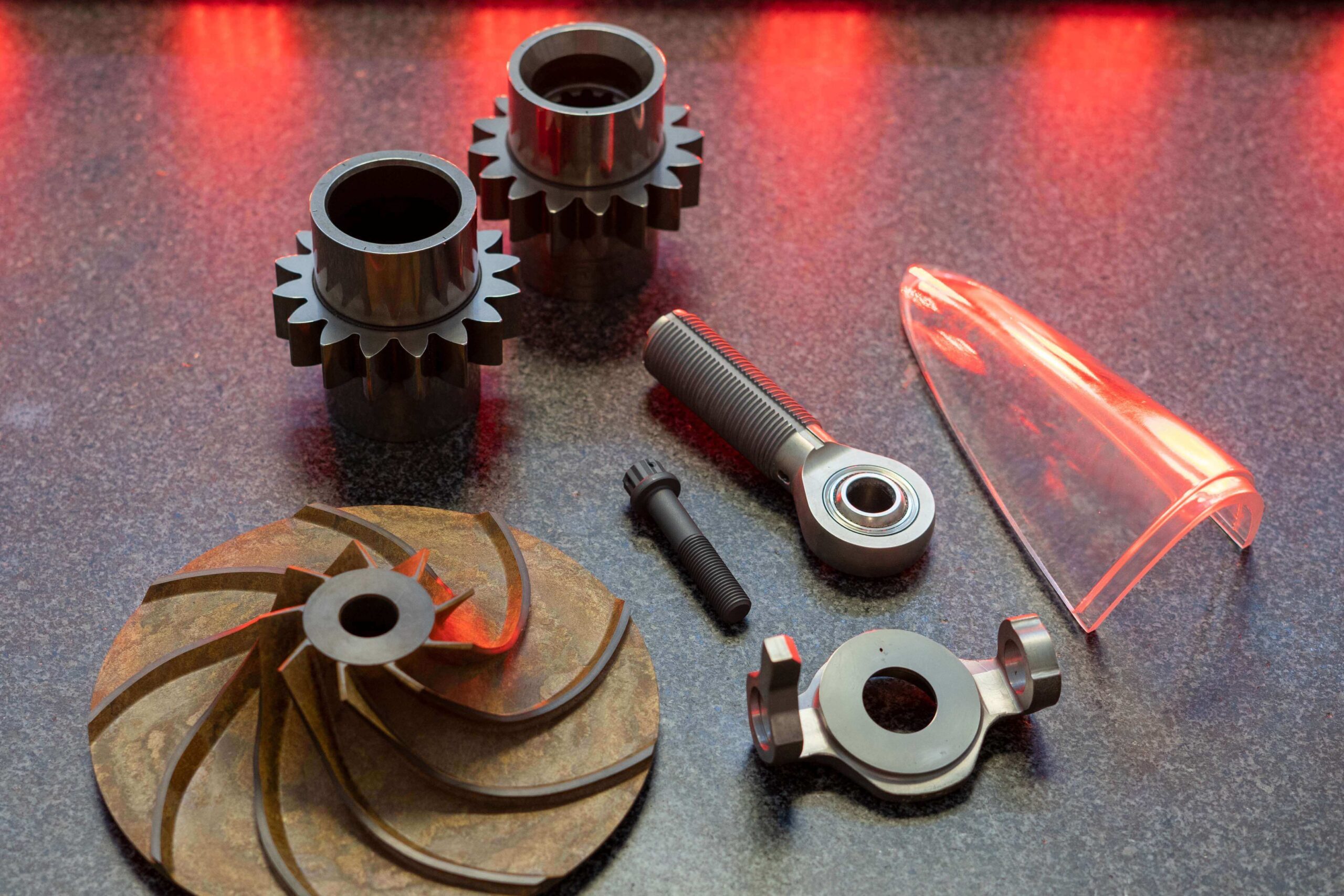
PMA parts became the core of JPE's proposition. They are FAA-approved replacements made by someone other than the original manufacturer. For an airline or maintenance organization, they can provide another source, shorter lead times and lower prices. JPE later added Designated Engineering Representative repairs, which use FAA-approved technical data to restore components that might otherwise be replaced, and maintenance, repair and overhaul services.
The crisis budget with one protected line
By 2020, JPE was no longer a tiny experiment. It had partnered with Vance Street Capital in a 2018 recapitalization, with Goel retaining a material ownership position and continuing to run the business. Then the pandemic emptied schedules and punished aviation. JPE had also just acquired two companies - Aero Parts Mart and AeroSpares - exquisite timing if your taste runs to dark comedy.
Goel's management team made difficult decisions early. Yet Vance Street urged the company not to strip away the machinery of future growth. Cut where possible, the guidance went, but keep R&D running and keep engineers employed. JPE followed it. When airlines began flying more and hunting again for maintenance savings, the company had a larger basket of products ready for them.
“We got through it by making decisions quickly.”Goel on navigating the aviation downturn
The choice reveals the operating idea underneath JPE. Engineering was not decorative overhead. It was inventory before inventory - the capability that would become approved parts, repair processes and future revenue. The spreadsheet might record a salary today and miss the catalog line two years later. Goel and his partners chose to keep looking two years later.
Buy the next customer problem
JPE's acquisition history reads less like a shopping spree than a map of adjacent headaches. Aero Parts Mart contributed a regional-aircraft PMA catalog. AeroSpares brought pressure sensors and switches. Airline Component Parts and Northeast Aero Compressor widened the repair operation. Mitchell PMA added products and design capacity. Percival Aviation moved into aircraft interiors. Cima Aviation added fuel and hydraulic component repairs.
The 2020 integrations offer a small clue to Goel's method. He described Aero Parts Mart and AeroSpares as easy bolt-ons because the businesses resembled JPE. Sales teams could combine quickly. The development pipelines were left to continue their own work. Centralize the customer surface; do not trample the specialist engine producing the next idea.
A catalog learns to acquire
Selected additions to JPE's aircraft-aftermarket portfolio
By the end of 2023, JPE's EBITDA had risen about 500 percent during the Vance Street partnership. The number belongs to the company, not solely to Goel, and the distinction matters. His comments repeatedly redirect attention to the management team, engineers and acquired operators. “At the end of the day, it's the people who are going to solve the problems,” he said when discussing industry gatherings. The line is not poetry, but it is an accurate description of aircraft maintenance.
The exit was a transfer of altitude
In January 2026, Vance Street announced an agreement to sell JPE and Victor Sierra Aviation Holdings to TransDigm for approximately $2.2 billion combined. TransDigm completed the acquisition in April. The pairing mattered: JPE served commercial, regional and cargo operators, while Victor Sierra concentrated largely on general and business aviation. Together they brought a broad set of proprietary aftermarket parts and services into a much larger aerospace owner.
Goel thanked Vance Street for helping JPE expand its footprint, products, brands and engineering capacity while maintaining the entrepreneurial culture built by employees. It was the sort of exit statement that quietly summarized the strategy: more capability, more geography, same operating temperament.
The announced $2.2 billion price covered Jet Parts Engineering and Victor Sierra Aviation Holdings together. No separate valuation was announced for JPE.
Then came a change that makes the next act unusually legible. In July, John Benscheidt became JPE's president and assumed day-to-day responsibility across the portfolio. Goel moved from longtime CEO to chairman, reporting into TransDigm leadership and focusing exclusively on acquisition strategy. The founder who once asked airlines to take a chance on one or two parts now evaluates entire companies that might fit the platform.
“Building JPE from the ground up over the past three decades has been the work of my career.”Goel on moving from CEO to chairman in 2026
The transition also says something about succession. Benscheidt had been part of JPE's leadership since 2008, working across engineering, sales and operations and helping integrate acquisitions. Goel did not leave an empty cockpit and call it delegation. He handed daily control to an operator formed inside the business, then narrowed his own job to the activity that had become central to growth.
What the small catalog teaches
JPE's story does not offer a trick. Its lessons are more durable and less thrilling at parties. If buyers do not understand the category, the founder must teach. If engineering creates tomorrow's inventory, protect it through a downturn. If an acquisition fits, integrate the customer-facing pieces without suffocating specialist development. If a successor is ready, give the role a clean boundary.
There is also the elegance of choosing an unshowy problem. Aircraft components live inside a strict system where novelty must submit paperwork and performance must survive scrutiny. That can feel hostile to entrepreneurship. Goel treated the constraint as the setting. The FAA approval is not an inconvenience stapled to the business; it is part of why a credible alternative can matter.
Three decades after those early airline tutorials, Goel's aspiration is no longer hidden inside a broad CEO brief. He is looking for acquisitions that expand JPE's capabilities and portfolio. The unit has changed from a part number to a company. The old question remains: does this solve a real problem for an aircraft operator, and can the team make it dependable?
A founder can spend a career waiting for the glamorous moment. Goel spent his on the required one - the component an airline needs, the repair manual does not offer, the lead time that has become absurd. Aviation supplied the rules. He found the room inside them.