Person / Founder / Voice-First
Allan Guo
He thinks the keyboard is the last slow thing on a fast computer. So he is building the machine that puts it out of a job.
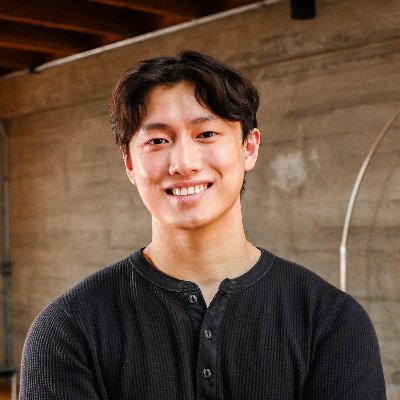 ALLAN GUO // CHIEF KEYBOARD KILLER
He thinks the keyboard is the last slow thing on a fast computer. So he is building the machine that puts it out of a job.
ALLAN GUO // CHIEF KEYBOARD KILLER
Open any app on your Mac. Say what you mean. Watch it land as clean, formatted text - the names spelled right, the jargon intact, the half-sentences tidied up. That is Willow, and Allan Guo is the co-founder and CEO who decided typing had overstayed its welcome.
Willow is an AI dictation app that writes anywhere on your computer. Email, docs, Slack, the prompt box of whatever model you are wrestling with at 2am - Willow listens and renders. Guo's company says it is more than forty percent more accurate than the dictation already baked into your laptop, and that the people who lean on it work roughly four times faster. Engineers at GitHub, designers at Canva, builders at Webflow already talk to their screens because of it.
The framing is deliberately provocative. On his LinkedIn, Guo's title is not CEO. It is Chief Keyboard Killer. It reads like a joke until you notice he means every word of it: billions of professionals still tap out their thoughts one key at a time to communicate with both humans and machines, and he considers that a bug worth a company.
Willow is a San Francisco outfit, part of Y Combinator's Spring 2025 batch, and in 2025 it pulled in $4.2 million led by BoxGroup. The cap table reads like a founder's dinner party. None of it, though, started as a voice company. It started as a healthcare company that nearly didn't survive itself.
"We dropped out of Stanford to build a healthcare startup."- Allan Guo, on how none of this went according to plan
Before Willow, before Stanford, there was a kid who kept starting things. An EDM music label. An app for the people who care for dementia patients. An e-commerce business aimed at moms. Most teenagers collect hobbies. Guo collected ventures, and the collecting never really stopped.
At Stanford he studied computer science and did research at the intersection of machine learning and neuroscience over at Stanford Medical - the kind of resume line that usually ends in a PhD, not a dorm-room exit. Then he and co-founder Lawrence Liu dropped out as freshmen to build a healthcare company, and the real education began.
What followed was the part no pitch deck brags about: more than ten pivots and a year of hard lessons. They built, they shipped, they watched it not land, they tried again. Somewhere in that grind they built a voice scribe - a tool that listened to doctors and turned the conversation into notes, freeing physicians from hours of paperwork so they could look at patients instead of forms.
That was the tell. The healthcare product was fine. The voice layer underneath it was the actual discovery. If voice could rescue a doctor from documentation, it could rescue anyone from a keyboard. They stopped iterating on the hospital and started building for everyone. Willow was the name they gave the realization.
Context-awareness keeps technical terms and proper names spelled right. A custom dictionary teaches it your industry's vocabulary - the acronyms your laptop's built-in tool butchers.
Smart formatting and automatic error correction turn the rambling way people actually speak into text that looks like you wrote it on a good day.
A personalization layer in beta adapts to your tone and style, so the output sounds like you - not like a transcript robot.
The claim Willow puts forward: 40%+ more accurate than the dictation built into your computer, and a 4x jump in speed for anyone who lives in email, docs and AI prompts. Mac-only, for now. A free trial, then the keyboard starts to feel slow.
The keyboard has had a remarkable run. The QWERTY layout was designed in the 1870s to stop mechanical typewriters from jamming, and we have been living inside that compromise ever since. Computers got a thousand times faster. The way we feed them words barely changed. Guo's wager is that the mismatch has finally become absurd: you can summon a paragraph from a frontier model in two seconds, then spend two minutes typing the prompt that asks for it.
Voice has tried this before and failed politely. The old dictation tools were accurate enough to be impressive in a demo and useless in real work - they couldn't spell a colleague's name, didn't know what an API was, and left you cleaning up so much that typing won by default. Willow's premise is that the model layer has finally caught up. Context-awareness, custom dictionaries and automatic formatting turn raw speech into something you can actually send, which is the difference between a party trick and a tool.
There is a reason this is a San Francisco, Y Combinator story. The earliest adopters of voice-first work are the people who already live in text all day and resent every keystroke - engineers, founders, salespeople, the AI-prompt power users multiplying by the month. Land them, the thinking goes, and the habit spreads outward the way every interface shift eventually does.
It is also why Guo's job title is a provocation and not a punchline. "Chief Keyboard Killer" sets a bar he has to clear in public. If Willow only makes dictation slightly nicer, the title looks silly. If it actually changes how people put words into machines, it looks like foresight. He has chosen to be judged against the larger claim.
"Billions of professionals still rely on a keyboard to communicate with both humans and machines."- The problem statement that became Willow
$4.2 million, led by BoxGroup, with Goodwater Capital, Burst Capital and Liquid 2 Ventures. Then the angels - the founders who built the products you already use.
Guo sat down for "Conversations with AI Engineers" to talk through building Willow - the pivots, the voice bet, and what a post-keyboard workflow actually feels like.
▶ Allan Guo - 19-yo YC Founder, Willow VoiceThe goal is not a better dictation tool. It is a world where voice is simply how you talk to a computer - and the keyboard is something you tell your kids about.- Willow's animating ambition, as Guo tells it