Profile / Biopharma Operator
Alex Martin
He has sat in nearly every chair in the biotech C-suite. At Abcuro, he finally took the head of the table.
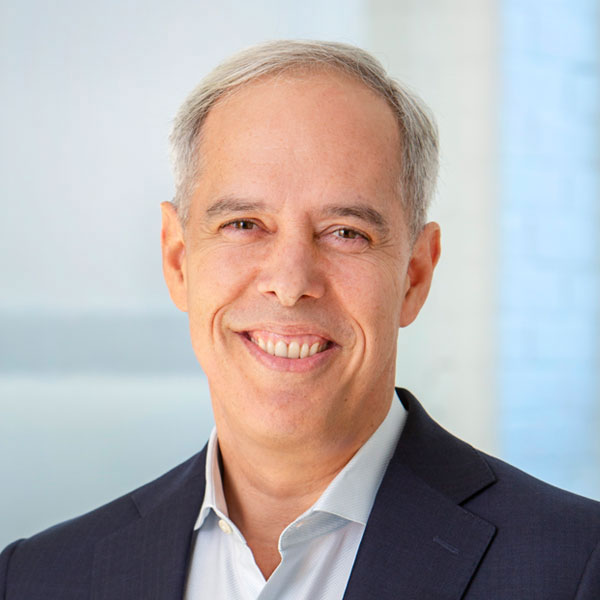
ALEX MARTIN — Chief Executive Officer, Abcuro, Inc. / Newton, Massachusetts
He has sat in nearly every chair in the biotech C-suite. At Abcuro, he finally took the head of the table.
Alex Martin runs Abcuro, a clinical-stage biotech tucked into a building on Chapel Street in Newton, Massachusetts, with a single, stubborn premise: there are some immune cells the body would be better off without, and almost nobody knows how to remove only those. Abcuro thinks it does. Its science targets KLRG1, a marker on the surface of highly cytotoxic T cells, and tries to delete the cells that drive certain autoimmune diseases and cancers while leaving the rest of the immune system standing. Martin's job is to turn that idea into a company that can finance it, run the trials, and survive the answer.
Most of immunology spent decades learning to add - add antibodies, add checkpoints, add signals. Abcuro's pitch is the opposite. Its lead candidate, ulviprubart, is a monoclonal antibody designed to selectively deplete the worst-behaved T cells rather than blanket-suppress the whole system. The first target disease is inclusion body myositis, a progressive muscle disorder with no approved therapy. The drug earned FDA orphan designation, and Abcuro pushed it into a Phase 2/3 trial called MUSCLE.
In March 2026, the company presented the readout at the Global Conference on Myositis in Lisbon. The headline number did not land where the company wanted - the trial missed its primary endpoint across the full population. But a pre-specified subgroup of patients with less advanced disease showed a 50% slowing of progression versus placebo, and the safety profile held up. That is the kind of result that separates operators from cheerleaders. Reading it correctly, financing the next move, and keeping a team intact through a mixed result is precisely the work Martin has spent thirty years learning to do.
Continued support from all of our investors validates our vision for the potential that ulviprubart may have as a novel treatment for progressive and devastating diseases.
In February 2025, Abcuro announced a $200 million Series C. New Enterprise Associates led it. Foresite Capital came in new. The existing roster reads like a who's-who of life-science capital: RA Capital, Bain Capital Life Sciences, Redmile, Samsara BioCapital, Sanofi Ventures, Pontifax, Mass General Brigham Ventures, BlackRock funds, and more. Total funding across the company's life crossed $400 million.
This is the part of the job that is easy to underrate. A first-in-class antibody is a scientific claim. A $200 million round is a vote of confidence in the person asking for it. Martin had spent decades building the kind of track record that makes that vote less of a leap - which is the whole point of a track record.
Martin did not arrive at the corner office by elevator. He took the stairs, one C-suite title at a time. He started in marketing and business development at SmithKline Beecham, learning how drugs get sold before learning how they get built. At Novartis he ran global business development and licensing - the deal side, where pipelines are bought and bartered.
Then the operator's tour. He was Chief Financial Officer of BioXell, which was acquired by Cosmo Pharmaceuticals. He was Chief Operating Officer of Intercept Pharmaceuticals. He ran Realm Therapeutics as CEO, and it was acquired by ESSA Pharma. He ran Palladio Biosciences as CEO, and it was acquired by Centessa. By the time he reached Abcuro in October 2022, there was hardly a job in the building he hadn't done somewhere else first.
The curious detail: he started as a political science and government major at Cornell. The pivot to the business of medicine came later, by way of a Harvard MBA. A person who studied how power and institutions work, then spent a career applying it to molecules and balance sheets.
Running one biotech is rarely the whole story for someone like Martin. He chairs the board of Veralox Therapeutics and sits on the board of ESSA Pharma - the same company that once acquired one of his. He coaches and mentors other senior executives, the kind of quiet work that does not show up in a press release.
And he teaches. He is a guest lecturer at Wharton and at Columbia Business School, on biotech, entrepreneurship, and the dark art of raising capital. There is a certain logic to a man who has closed round after round standing at the front of a classroom to explain how it is done. The lesson is rarely the slide deck. It is usually the scar tissue.