The red lipstick looked right at the trial. Then the bride went home and kept thinking about it. In a review posted in March 2013, Brittany described choosing a bright red, liking the result and gradually losing her nerve. Sharyn Scully invited her back to try other colors. They settled on something more neutral.
It is an ordinary little episode, which makes it useful. Nothing had gone wrong with the application. The first thing to wobble was the customer’s confidence in her own choice. A photograph of the finished makeup would have missed the entire transaction: the weeks of reconsideration, the message, the return visit.
A Touch of Color, Scully’s beauty studio in Monroe, Connecticut, works in this territory between a requested look and a person’s comfort wearing it. Wedding beauty has an awkward deadline. There is time to experiment beforehand; on the morning itself, there are other people waiting to do their jobs.
A room becomes part of the appointment
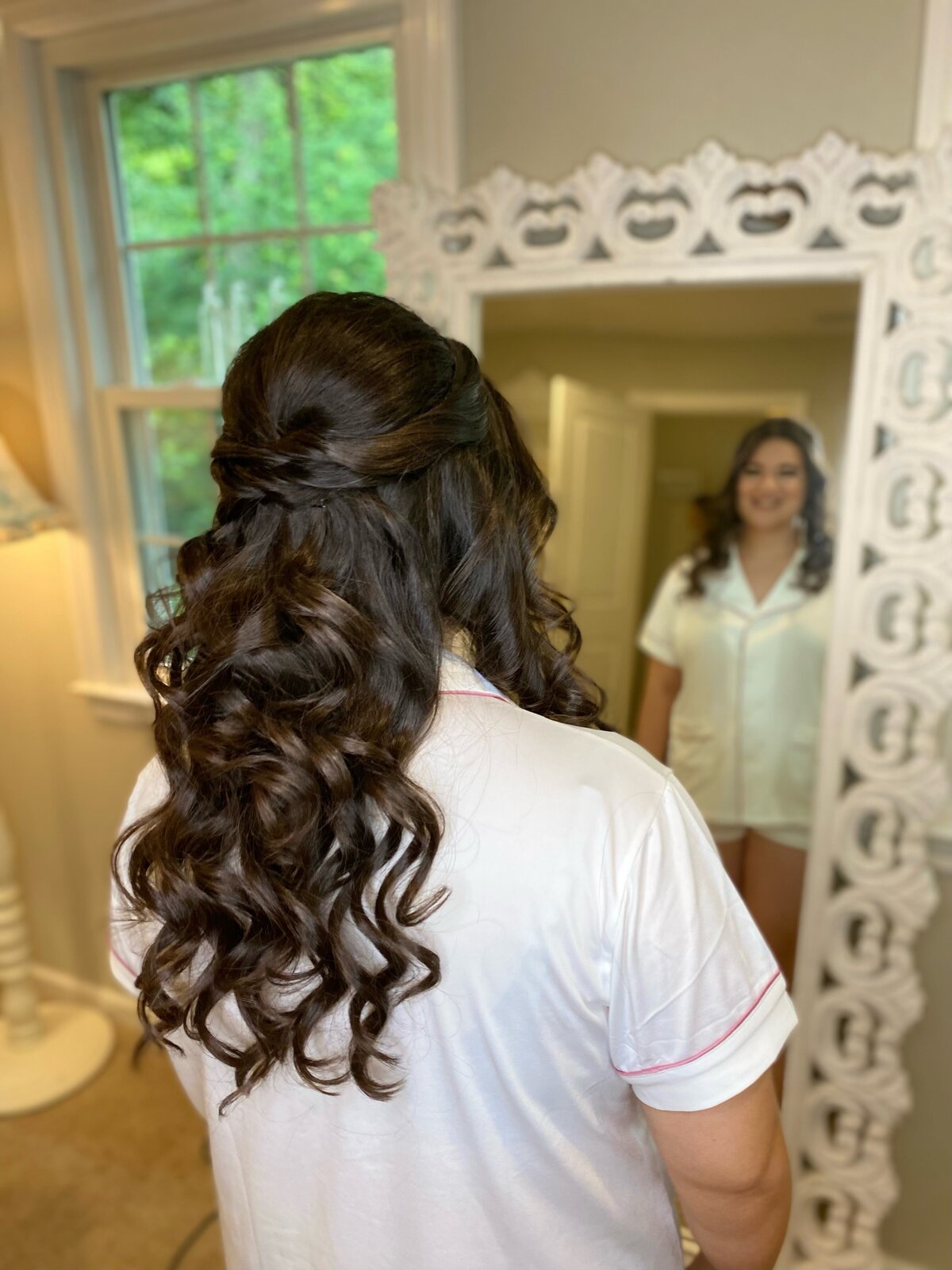
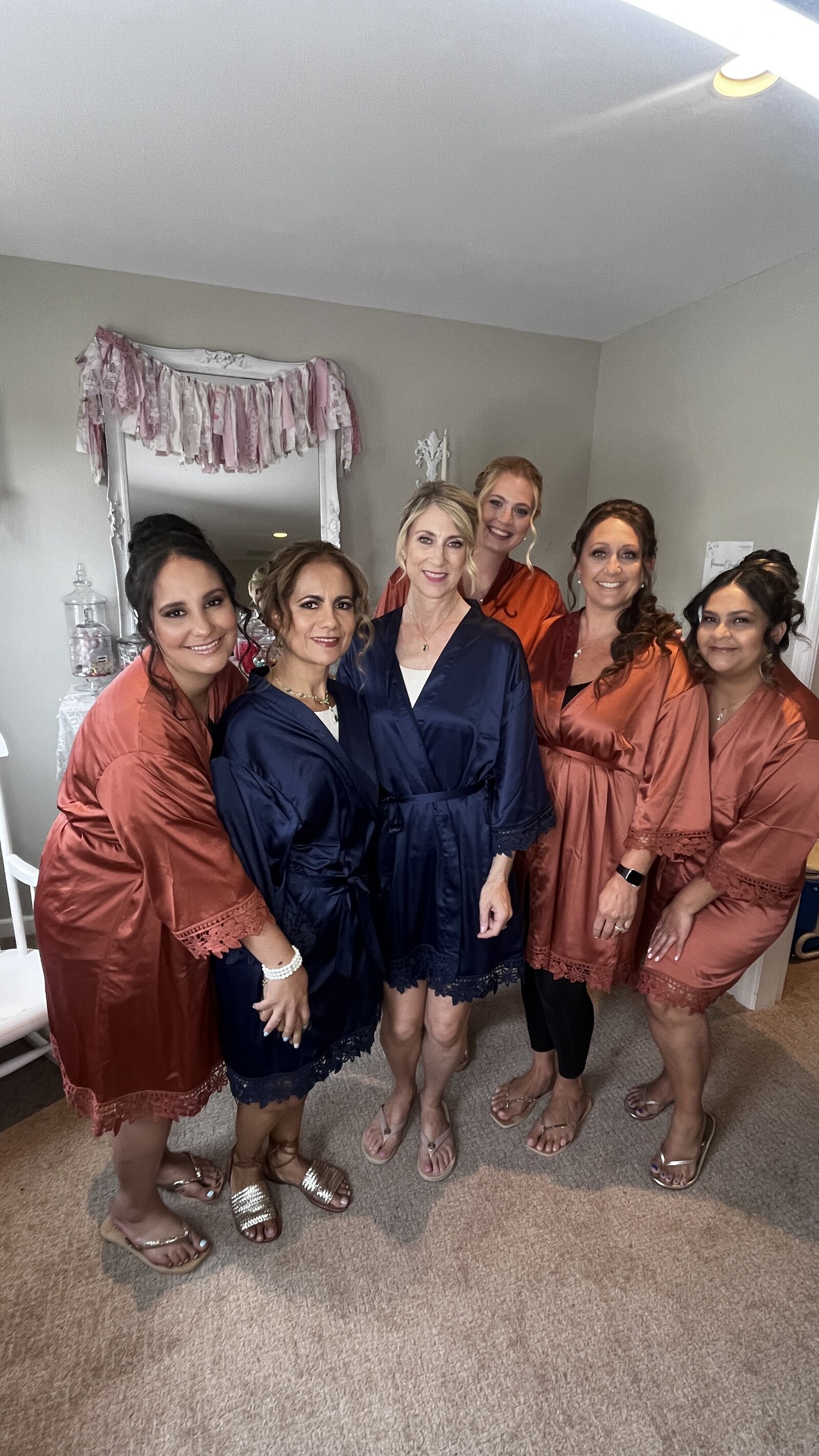
The studio’s Love Loft gives that morning a physical address. It has a private bathroom, dressing screens and space for the wedding party to gather while hair and makeup happen around them. Among the listed extras are a dress steamer, a gown hanger and crystal glasses. Someone has thought about the gown after it leaves its bag.
Qualifying group bookings include the room during their scheduled services. Extra time costs $100 an hour. The studio lists a 20-person maximum. Those conditions make the proposition fairly concrete: a place to assemble, get ready and leave together, with a defined window of use.
That is a meaningful distinction when comparing a studio with a traveling artist. An artist can come to a hotel; a salon can supply the room. A Touch of Color offers both options through its studio and traveling bridal team. The choice becomes partly about where the rest of the morning will happen.
The cost of another voice
The published bridal menu lists Rose Garden at $800 and English Garden at $1,200. Bridal-party hair and makeup is listed at $270. These are menu figures, subject to the booking agreement and extras.
One particularly revealing extra is third-party coordination: $100 an hour per additional point of contact beyond the bride. The policy covers the correspondence and scheduling work introduced by other people’s involvement. It is easy to imagine why such work takes time, but the policy itself does not document a particular disaster. It shows what the business now chooses to price.
Published third-party coordination fee, per additional contact beyond the bride. Approval and payment are required before extended coordination.
There is also a practical wrinkle: the site’s pages give different retainer amounts. A couple should have the applicable amount confirmed in the written agreement. The signed booking needs to settle what a collection of webpages leaves ambiguous.
For another service business, the transferable idea is to name the person who can approve changes and explain how extra coordination will be handled. That will work more comfortably for some clients than others. A bride who expects her planner to conduct every conversation should resolve that arrangement before booking.
A salon with two booking rhythms
Scully is the central contact for weddings. Everyday hair appointments follow a different route. The hair page introduces Morgan and Colleen as independent stylists and directs customers to them for schedules, services and prices. One salon name contains more than one working arrangement.
The recruiting page makes this clearer. It advertises chair leases as well as freelance bridal assignments. The freelance offer describes payment per service plus gratuity and asks applicants to bring their own equipment and transportation. Flexibility sits alongside expectations about punctuality and communication.
For customers, this matters more than the organizational label. Book a regular color appointment with the stylist responsible for it. Send bridal details through Scully. The studio’s own FAQ repeatedly returns to keeping wedding information together, which suggests that a shared record is part of how it intends to deliver the service.
“if we arrive on time we are late”The studio’s motto, as printed in its bridal FAQ
The line has the bluntness of someone who expects to unpack a kit. The FAQ also describes collecting final participant numbers and organizing a schedule. The useful work starts before the first brush touches a face.
The appointments before, and after, the wedding
The business has accumulated reasons to visit outside the ceremony itself. A community-contributed account published in 2018 described an earlier expansion into full-service hair, followed by microblading. It reported that Scully completed training with Brow Design International in December 2017. Those are specific additions to the menu, rather than evidence of some overnight transformation.
There have been less predictable uses of the space, too. A sponsored Fairfield County Mom visit in 2019 described a children’s party in the earlier Shelton loft: edible necklaces, crafts and musical games. It is a historical glimpse of a salon testing what else a group might come together to do.
Today, bridal skincare memberships give customers a schedule extending back from the wedding date. The Signature plan runs for three months at $150 a month; Luxe runs for six at $199. Each includes recurring facial appointments, with different extras. The business implication is straightforward: a customer associated with one event can purchase a series of visits.
The studio also identifies itself as a FarmHouse Fresh affiliate and offers ongoing facial memberships under that skincare name. Permanent jewelry adds another group occasion: customers can arrange parties at the salon or elsewhere, choosing chains and charms. These services give existing clients additional reasons to return without requiring another wedding.
Permanent makeup occupies a different corner of the menu. The studio offers eyeliner, brow and lip services, with consultations and procedure-specific requirements. It belongs in the customer’s planning conversation as a separate appointment, with its own preparation and follow-up, rather than an impulsive extra on a busy wedding morning.
What the trial really tests
The alternatives are familiar: a neighborhood salon, a freelance bridal team, a specialist brow studio, a hotel room arranged separately. A Touch of Color brings several of those decisions into one relationship. Its appeal depends on whether the customer wants that combination, can meet the group-booking conditions and is comfortable with the coordination rules.
Brittany’s lipstick story offers a modest test for any such purchase. Leave enough time between trying a look and committing to it to discover how you feel after the appointment. Ask who handles revisions. Establish where everyone needs to be, and when. These are things a reader can copy without buying a single service.
The trial has done useful work when it uncovers a preference that a photograph alone cannot explain. In this case, the bride’s second choice was the one she wanted to wear. The business had made space for her to find it.
Explore the studio
Browse the work, compare the current offers and read the booking details.