The Story
A second opinion for the prescription pad
Somewhere in America right now, a patient is taking a drug that fights the one in the next bottle. Nobody meant for it to happen. A cardiologist made one call, a nephrologist made another, a pharmacist filled both, and the spreadsheet that could have caught the collision never existed. Yoona Kim built that spreadsheet. Then she taught it to think.
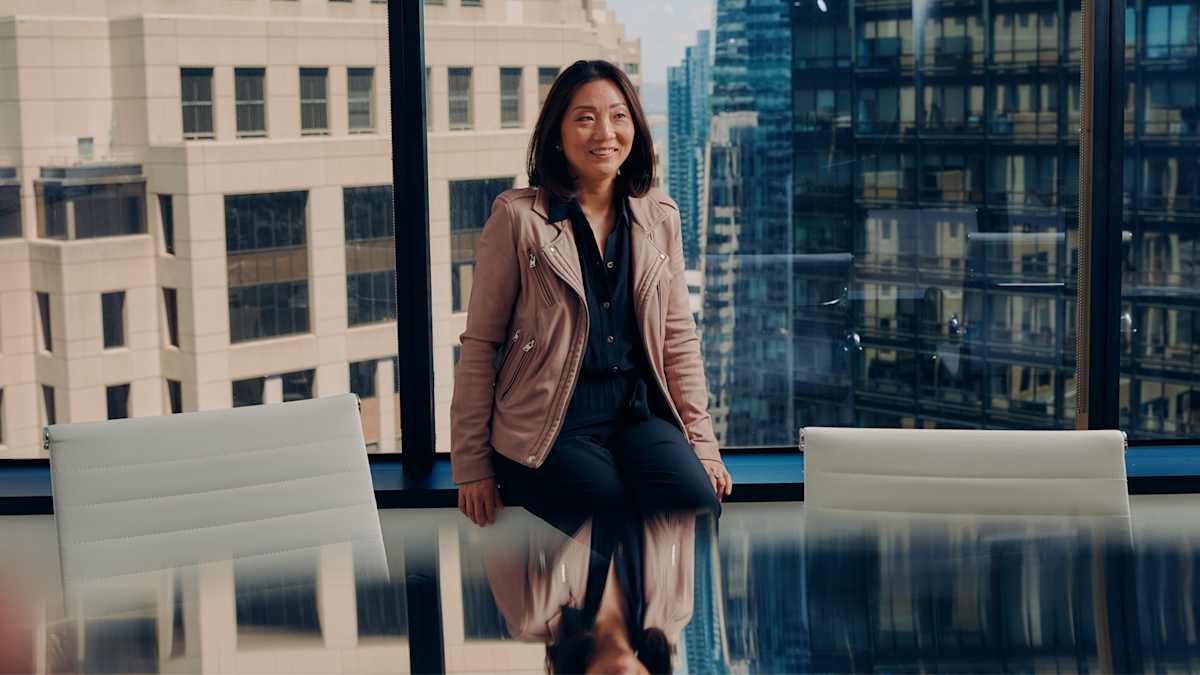
Kim is the co-founder and CEO of Arine, a San Francisco company that calls what it does "medication intelligence." The phrase is doing a lot of work. Arine's platform reads clinical records, socioeconomic signals and behavioral data, then tells health plans and clinicians which patients are on the wrong regimen and what to do about it - before the emergency room visit, not after. The company says its software now informs care for more than 25 million people across 40-plus health plan clients.
The number that animates her is uglier and bigger: roughly one in every six U.S. healthcare dollars, about $528 billion a year, gets spent cleaning up the consequences of suboptimal medication use. Kim has described medication-related problems as the single largest area of waste in the entire system. Most founders chase a flashy frontier. She went looking for the most expensive thing hiding in plain sight.
The consequences of medication mismanagement are severe - it is the largest area of waste in the healthcare system.
— Yoona Kim, on why she started Arine
Her route there was almost suspiciously deliberate. She wanted to help people get healthcare, so she started by analyzing healthcare cost trends. To understand the drugs, she went to pharmacy school. To understand whether interventions actually pay off, she earned a PhD in health economics. By the time she founded Arine in 2017, she had assembled, one degree at a time, exactly the toolkit the problem demanded. Most people pick a lane. Kim collected the whole road.
Before Arine she ran clinical modeling and analytics at Proteus Digital Health, building the health-economic case for a digital medicine pioneer, with earlier stops doing health-economic and value work tied to Mercer, Novartis and Gilead. The throughline is consistent: turn messy clinical reality into a model someone can act on.
Then she made the move that defines the company. She paired with Penjit "Boom" Moorhead - a nuclear physicist whose specialty is automating complex systems - and made him CTO. A pharmacist-economist and a physicist is not the obvious startup duo. It is, however, a fairly precise description of the problem: medicine that is both deeply human and absurdly complex. Each founder covers a side the other can't.
What Arine refuses to be is a chatbot with a stethoscope. The platform is built to be regulatory-grade - the keyword cloud around the company runs to HITRUST certification, CMS Star Ratings, value-based care and risk stratification, not viral demos. Kim has been openly skeptical of healthcare hype. Asked about Mark Cuban's much-celebrated pharmacy disruption, she offered that there is "no silver bullet" for the pharmacy value chain. Coming from someone selling AI software, that is a notable thing to say out loud.
Look closely at what the platform is actually hunting for and the ambition comes into focus. Polypharmacy, where a patient stacks so many prescriptions that the drugs start arguing with each other. Duplicate therapy, where two prescribers unknowingly treat the same thing twice. Dosing that is too high, too low, or wrong for that particular body. Harmful interactions that no single doctor was positioned to see. Arine pulls from a complex ecosystem of clinical, socioeconomic and behavioral data and assembles the picture none of the individual prescribers had. It is less a smarter pharmacy and more a system that finally connects the dots between them.
The socioeconomic part is the piece most software ignores, and it is the piece Kim insists on. A treatment plan can be clinically flawless and still fail because the patient can't afford the copay, can't read the label, can't get a ride to the pharmacy, or simply doesn't trust the system that wrote it. Arine treats those social determinants as data, not as excuses - factoring the things that block an otherwise sound regimen into the recommendation itself. The drug only works if the human actually takes it. That sounds obvious. Most of healthcare technology behaves as if it weren't.
The results she points to are the unglamorous kind that move budgets: clients reporting more than 40% reductions in hospitalizations and double-digit savings on the cost of care. The mechanism is a shift in tense - from reactive to preventative. Catch the drug interaction, the dangerous dose, the adherence gap or the social barrier early, and the expensive crisis simply never arrives.
Kim has also been pointed about who gets left behind. She has discussed at length how racial health disparities and medication non-adherence feed each other, and how AI - built carefully - can narrow rather than widen the gap for Black, Latino and Asian patients. At Arine she built a company where roughly half of leadership roles are held by women, which in healthtech is less a talking point than a quiet rebuke.
The validators have arrived on schedule. Arine landed at #236 overall and #5 in the AI category on Inc.'s 2024 fastest-growing companies list. In 2025 the World Economic Forum named it a Technology Pioneer, and Inc. put Kim and Moorhead on its Female Founders 500. That June, the company closed a $30 million Series C with Kaiser Permanente Ventures and Town Hall Ventures - investors who buy outcomes, not buzzwords.
What makes Kim worth watching is the restraint. She is not promising to reinvent medicine. She is promising that the medicine you already have might finally be the right one. In a field addicted to the next molecule, that is a strangely radical pitch: the cure may already be in the cabinet - it just needs to be the correct one, at the correct dose, for you. Patients will never see her name on a bottle. They will, if she is right, simply end up in the hospital less.