A band hit a wall. The wall became a company.
In 2011, Yoni Bloch and his bandmates wanted to make a music video you could steer - a video that branched, that let the viewer choose where the story went. They went looking for the software to build it. There wasn't any. So they wrote it themselves. That software became eko.
Today Bloch runs eko out of 235 Park Avenue South in New York, and the pitch has sharpened but not changed: video should be something you do, not just something that happens at you. eko's engine stitches many possible paths into one seamless clip, so a cooking video can adjust to your diet, a travel guide can follow your interests, and a shopping video can respond to what you actually want to see. The company has leaned hard into AI-driven, choice-driven, shoppable video for direct-to-consumer brands and retailers - the practical, revenue-shaped version of a very old idea about interactive storytelling.
The idea has real muscle behind it. eko is backed by Sequoia Capital, Intel Capital, NEA, MGM, Sony, Samsung, and Eric Schmidt's Innovation Endeavors, and has raised on the order of $62.5 million since it started. In 2018, Walmart signed a $250 million joint venture with eko to build interactive content for both entertainment and retail - a retailer the size of a small country deciding that Bloch's format was worth a serious bet.
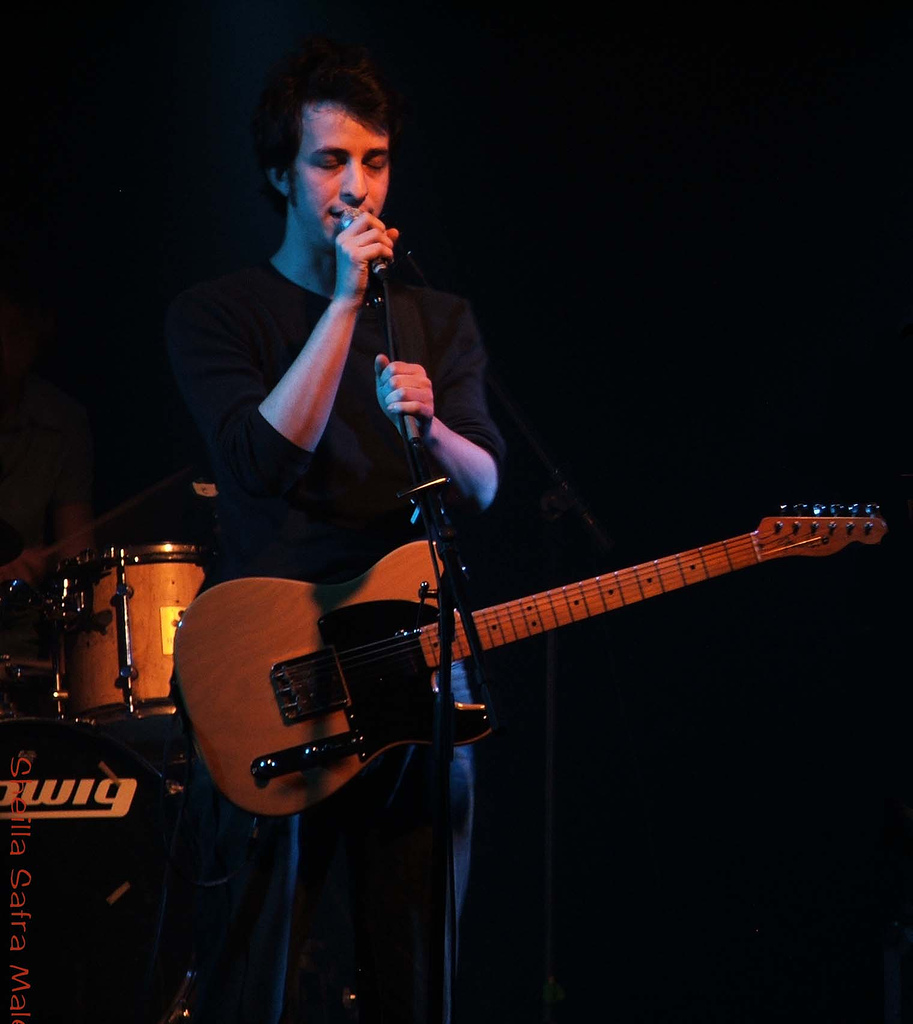
Before any of this, Bloch was a musician, and a well-known one at home. He grew up in Beersheba, moved to Lehavim at 17, and started early on everything - piano lessons at six, guitar and drums self-taught, songwriting at fourteen. He also taught himself to program as a kid on a Commodore 64, a detail that reads like foreshadowing. The two halves of him, the songwriter and the coder, are the reason eko exists at all: it took both to invent a way of building video that no one had built before.
His break came through Bama Hadasha, an early website for aspiring Israeli artists, where the daughter of a record-label chairman found his songs and got them onto the radio. His debut album, Ulay Ze Ani ("Maybe It's Me"), landed in 2004. Hergelim Ra'im ("Bad Habits") followed in 2007, including a Hebrew adaptation of Poe's "Annabel-Lee." A third record, Al Mi Ani Oved, arrived in 2008 with its own film. He produced tracks for some of Israel's biggest artists and sat as a guest judge on the fifth season of the country's Kochav Nolad - the Israeli American Idol.
Then came the video that couldn't be made. When eko - first called Interlude - turned its branching technology loose on the music world, the results traveled fast. The company built the interactive video for Bob Dylan's "Like a Rolling Stone," a song that had gone 48 years without an official one. You could flip across channels inside the track, each one lip-syncing the lyrics. Time named it the clip of the year. From there, Bloch's team worked with Coldplay, Wiz Khalifa, Led Zeppelin, CeeLo Green, and Aloe Blacc, and with brands like Intel, Pepsi, Coca-Cola, Subaru, NBC, Fox, ESPN, and Disney.
That sentence is the whole thesis, and Bloch didn't find it in a lab. He found it on stage, watching crowds respond to being given a choice. His argument is that interactivity does something linear video can't: it turns attention into participation, and participation into a kind of loyalty. eko's more recent framing pushes that further - content that "gets to know you by your choices," personalizing itself in a way that feels less like surveillance and more like a good host reading the room.
eko began life as Interlude, co-founded with Barak Feldman and Tal Zubalsky, and grew up across three cities - Tel Aviv, Los Angeles, and New York - before settling its headquarters on Park Avenue South. The through-line across every stage has been a single stubborn conviction: the viewer should get to choose. The company's early years were built on the spectacle of it, the music videos and the brand campaigns that made people say "wait, how did it do that." Its more recent years have been built on the usefulness of it - the parts of the business where interactivity quietly earns its keep. Bloch has pointed to cooking videos that adapt to a viewer's diet, travel guides that reshape themselves around what a person actually cares about, and applications in education, tourism, sales enablement, and HR. The common thread is the same one that made the Dylan clip travel: give people a stake, and they lean in.
What changed the temperature of the business was retail. eko's pivot toward shoppable, choice-driven video puts the format where the money is - product pages, D2C brands, and the long, awkward gap between watching something and buying it. If a shopper can explore a product the way a viewer explores a branching story, the theory goes, the video stops being an ad and starts being a storefront. That is roughly the logic Walmart bought into, and it is the version of interactive video most likely to end up in front of ordinary people whether or not they ever hear Bloch's name.
He is candid about the size of the wager. Asked how committed he is to interactive video winning, Bloch put it plainly: "I'm betting my life on it - let's say that." He compares the shift to the jump from silent film to talkies. It took time. It felt unnecessary to plenty of people while it was happening. And then, quite suddenly, the old way looked like a museum piece. Whether he is early or exactly on time is the open question of his career. What isn't in doubt is that he saw the direction before most, and built the tools to get there - and that he is still, a decade and change in, arguing the same case with the conviction of a man who has already spent his savings on being right.
I'm betting my life on it - let's say that.
There is a way to humanize the whole experience by getting to know you by your choices.
The future of video entertainment is interactive.
Creators need to change how they're thinking about video.
Bloch on the new age of interactive storytelling
A conversation with The Future of Storytelling on why the audience should hold the remote.
▶ Watch on YouTube