From a Commodore 64 in Gujranwala to 1,000+ engineers across three continents — quietly one of Pakistan's most consequential tech builders.
CEO, Arbisoft · Lahore, Pakistan
Born in Gujranwala, in Pakistan's heartland of Punjab, Yasser Bashir grew up in a household that valued burning the midnight oil — whether in classrooms or workplaces. He was one of eight siblings, all professionals, shaped by parents with a quiet belief in hard work and curiosity. It was not a bookish, austere childhood. There was imagination. There was play. And then, one day, there was the Commodore 64.
I was 10 when my father bought me and my brother a Commodore 64. In the little town I grew up in, we were among the only three families that owned a computer.
— Yasser Bashir, to TechCrunchThat beige, clunky, glorious machine changed everything. In a town of almost no computers, the Bashir household flickered with 8-bit light. Yasser was hooked — not just on games, but on the idea that machines could be made to do anything you imagined. He would ride that spark all the way from Gujranwala to LUMS, and from LUMS to Stanford.
At the Lahore University of Management Sciences, he was part of the inaugural batch of computer science graduates — Class of 1997. From there, a stint in industry, then Stanford University's Management Science & Engineering program (MS, 2003–2005). Along the way, he worked at Align Technology, OrthoClear, and the Stanford/NASA Biocomputation Center. A career in solving hard problems was taking shape.
In 2007, together with a handful of colleagues, Yasser co-founded Arbisoft — because he loved solving a variety of computing problems rather than being confined to one vertical. What started as three people is now one of Pakistan's most consequential tech companies, with offices across Lahore, Texas, Australia and Malaysia.
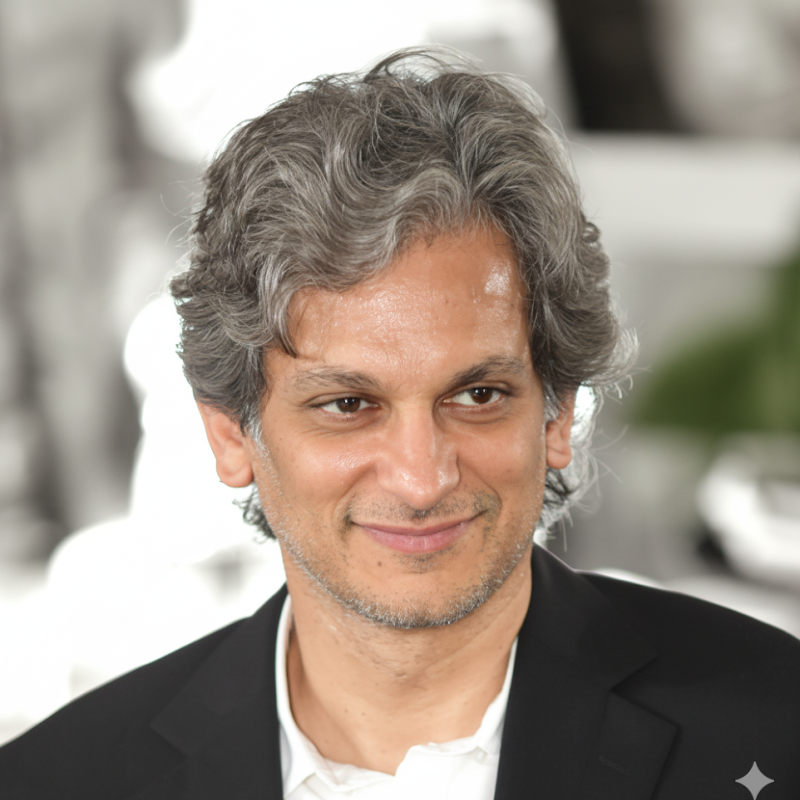
How reporters describe him when they meet the CEO leading 1,000 engineers. "Soft-spoken and very cerebral" — with restraint that breaks only when he talks about Arbisoft's early days.
Arbisoft's client list reads less like a services company and more like a tour of the internet's most-used products.
He has the charisma that could sell ice cubes to Eskimos and the technical expertise that makes him the envy of the team he manages. He successfully keeps a humble grass-roots connection with the engineering heartbeat.
I chose them based on their extraordinary CEO, Yasser Bashir. He's a visionary, a hands-on technology leader, and a fantastic people manager.
People who have worked with Yasser will say without a doubt that he is the best in every aspect — technically astute, brilliant with business processes, excellent communicator. Extremely nice human being. Always fun to work with.
Arbisoft has been my most trusted technology partner for over 15 years. They have great teams, great positive attitudes and great communication. Unique methods of recruiting and training — the results demonstrate that.
Reporters who meet Yasser in person consistently note the same thing: he is quiet, measured, dressed casually — until the conversation turns to Arbisoft's early days. Then the restraint breaks. The shy smile becomes animated. The engineer-who-hates-sales reveals he's been doing sales calls for 18 years and closing 3-of-6 every time.
He reads Reinventing Organizations and takes it seriously. He believes companies should be run on trust and blameless retrospectives. He models organizational philosophy on Teal principles while simultaneously running one of Pakistan's most commercially successful tech firms. Make that make sense. (It does, actually.)
Openness and transparency are fundamental enablers of the trust our clients have in us. When we make mistakes, we are open about sharing them and learning from them so that they are not repeated.
It's crucial to demonstrate that you are not only capable of delivering what a potential client needs, but that you can also be counted on to deliver it.
Being an engineer by profession, I hate doing sales — but I also realize that it comes naturally to me.
I called this the decade of the Pakistani founder. Unicorns started by Pakistani-origin founders used to happen once a decade. In just the last five years, ten companies hit the billion-dollar mark.