The company that wants to prove you are human - and then forget everything else about you.
Are you a real person? Five years ago that was a strange thing to ask. Now it's the price of entry.
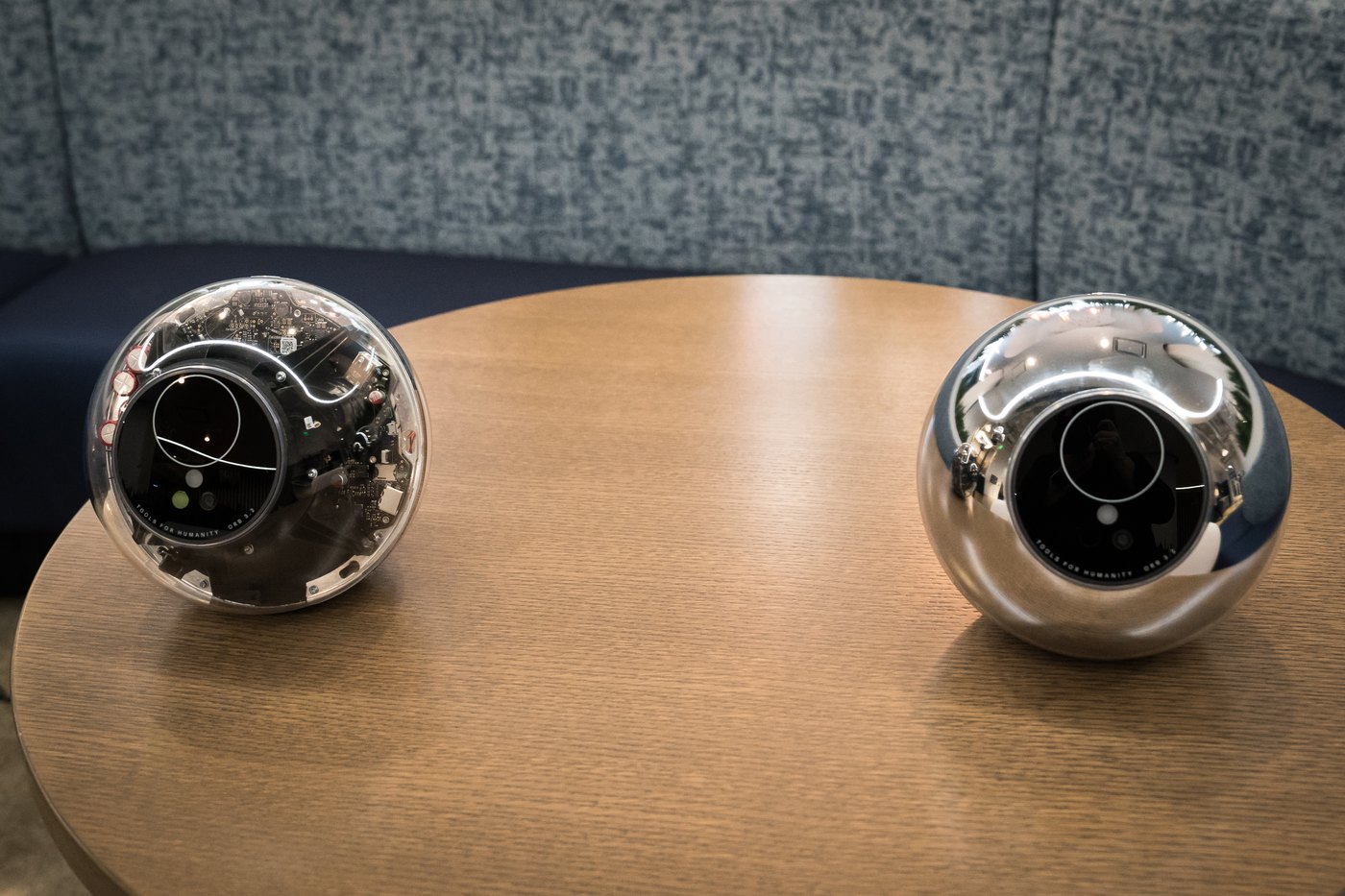
Walk into a World pop-up in Austin or Miami and the first thing you meet is a silver orb the size of a bowling ball. You look into it. It studies your irises for a moment, issues you a private credential called World ID, and deletes the picture. You walk out as the same anonymous person you were - except now you can prove, anywhere online, that you are a unique human being and not a script.
This is World, the project formerly known as Worldcoin, built by a company called Tools for Humanity. It has verified roughly 25 million people across 160-plus countries, runs its own blockchain, and counts Sam Altman among its co-founders. Its product is almost philosophical: a way to say "I am one specific human" without saying which one.
There is a certain irony in a co-founder of OpenAI noticing that the internet is full of convincing fakes.
The founders' bet rests on one uncomfortable observation: as AI gets better at sounding human, "is there a person on the other end?" stops being rhetorical. Spam, fraud, fake accounts, manipulated votes, bot-stuffed dating apps - all of them get easier when machines can pass for people. The usual fix is to demand more personal data: your name, your face, your documents. World's founders thought that trade was backwards.
Their question was sharper: could you prove personhood without proving identity? Could a dating app confirm you're a real, single human without learning your address? Could a vote count one person once without a government ledger of who voted? The answer they chose was biometrics plus cryptography - scan something unique to you, throw the scan away, keep only a math proof.
"A reliable and anonymous way to authenticate humans online."
Started in 2019, before "deepfake" was dinner-table vocabulary.
The team split its roots between San Francisco and Munich and spent years on the unglamorous part: designing custom hardware, the Orb, that could read an iris reliably enough to guarantee uniqueness, then handle the data in a way privacy advocates might tolerate. It was a strange thing to build in a software-eats-everything era. It is also the part competitors have found hardest to copy.
The hard problem was never the blockchain. It was convincing the world that a sphere reading your eyes could be the privacy-friendly option.
An ID, a wallet, a chain, and a token - stitched into one loop.
An open, permissionless protocol that gives you a reusable "proof of human." Built on zero-knowledge proofs, so an app learns you're a unique person - never which person.
The iris-scanning device that does verification from images of your eyes and face, then deletes the raw images. Core parts of its software are open source.
A pocket-sized verifier that takes the Orb out of the pop-up and into the field. Shipping begins in 2026.
Hold WLD, stablecoins and other assets, send gas-free payments, message privately, and manage your verified World ID - all in one place.
An Ethereum Layer 2 on the OP Stack that prioritizes transactions from verified humans and hands real people a gas allowance.
The network's native token, distributed to verified humans and used for payments, rewards and governance across the ecosystem.
"The Orb verifies you are a unique human without knowing anything else about you."
A skeptic's favorite question - "but does anyone actually use it?" - has a chart-shaped answer.
Numbers are one kind of proof. Logos are another. World ID is being wired into dating, gaming, payments and commerce by partners who all share the same headache - too many bots, not enough humans.
Twenty-five million eyeballs is a network. The harder question is whether it becomes the place every app sends you to ask, "are you human?"
It has not been a frictionless march. Regulators from Kenya to Spain to South Korea have probed or paused the Orb over biometric privacy - the standing tension in a company that asks for your irises and promises to forget them. World's answer has been to open-source Orb software and lean on zero-knowledge proofs. Whether that satisfies the world's data authorities is still being decided, one jurisdiction at a time.
Stripped of the token charts, World's ambition is civic. If proof of human becomes a shared utility, it could underpin fairer online votes, bot-free communities, and - the founders' long shot - a path toward inclusive economic participation that doesn't first demand your identity papers. The protocol is open and permissionless by design, so the people who use it are meant to own a piece of it.
"Proof of human is essential, and it's going mainstream."
That is either the most important plumbing the internet hasn't built yet, or a solution still hunting for the moment the world agrees it has the problem. World is betting the moment is arriving - and is manufacturing Orbs in Texas as though it already has.
Return to that pop-up in Austin. You looked into a sphere, it confirmed you were real, and it forgot your face on purpose. A few years ago that scene would have read as science fiction, or surveillance, or both. Today it reads as a wager that the most valuable thing you can prove online is simply that you exist - once, uniquely, and on your own terms.
World may be early. It may be controversial. But it has turned a thought experiment about personhood into hardware, a network, and 25 million verified humans who walked out the door exactly as anonymous as they walked in. In the age of convincing machines, that turns out to be a surprisingly radical thing to offer.
SOURCES INCLUDE: WIKIPEDIA, WORLD.ORG, TECHCRUNCH, TIME, FXSTREET, CRYPTOSLATE, BEINCRYPTO, FINTECH MAGAZINE. FUNDING, USER AND REVENUE FIGURES ARE APPROXIMATE AND DRAWN FROM PUBLIC REPORTING.