He walked into health insurance knowing none of the rules. Then he started rewriting them.
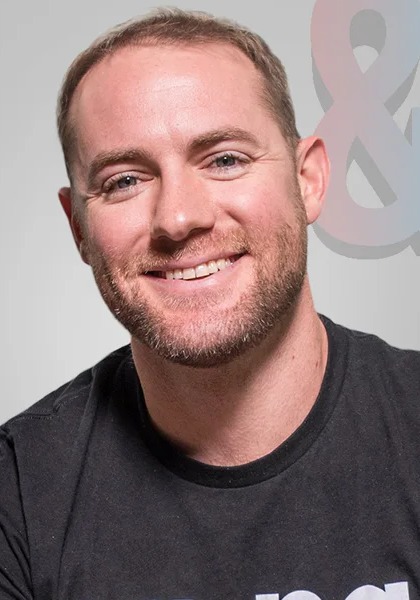
The face of a man who gives himself sixty minutes of meetings a day - and a t-shirt instead of a tie.
Will Young runs Sana, the Austin health plan that tells small businesses a thing legacy insurers never do: here is exactly what your plan costs, and here is the waste we cut out to get there. He did not arrive from inside the system. He arrived from outside it, and he counts that as the advantage.
Sana is a tech-enabled health plan built for companies with five to five hundred employees - the firms too small to matter to the carriers, too big to ignore the bill. The pitch is Fortune-500 benefits at a price a fifteen-person shop can actually carry, roughly twenty to thirty percent under the market. The mechanism is unglamorous and exact: vertical integration, software that processes claims, enrollment that does not require a translator.
Young did not set out to be a healthcare CEO. He studied International Relations at Stanford, spent a stretch at Peking University through the overseas program, did business-development work at Google in Los Angeles, and earned an MBA from Harvard Business School. The detour that mattered came in between - at Justworks, the New York payroll and benefits startup, where part of his job was selling health insurance to small businesses and watching them drown in it.
The future is already here, it's just not evenly distributed.— William Gibson, the line Will Young keeps coming back to
Young and his co-founder Nathan Hackley got the idea where most good ones start - in frustration. At Justworks they kept selling plans that customers could not afford and could not navigate. Neither founder came from healthcare. When a system is that broken, Young argues, ignorance is leverage: you get to reason from first principles instead of inheriting everyone else's bad assumptions.
So Sana started from the question almost nobody asks out loud: what would health insurance look like if you designed it for the member instead of the carrier? The answers - transparency, fewer middlemen, software where there used to be fax machines - became the company.
His current obsession is structural. He has floated the idea of an "Open PPO," a marketplace that strips out the redundant contracting between doctors and insurers, the overhead nobody asked for and everybody pays for.
Own more of the stack, cut the layers that quietly inflate every premium.
Process and price claims with technology, not a phone tree and a backlog.
Members and employees treated like people, with prices they can actually read.
A marketplace to delete the redundant contracting between providers and insurers.
Series B co-led by Trust Ventures and Gigafund. Bars scaled to round size.
For someone running a fast-scaling startup, Young guards his calendar like a finite resource - because it is. He caps himself at roughly an hour of meetings a day and writes down his priorities before he opens email, so the day's agenda is his, not his inbox's. He calls himself naturally cautious, then adds the correction he wishes he'd learned earlier: take the calculated risk sooner.
The discipline extends past the office. He turns Slack and email off during personal time and treats mental wellness as more load-bearing than extra hours at the desk. Sana grew anyway - proof, in his telling, that always-on is a choice, not a requirement.
As the company scaled, his job inverted. Early on he generated the ideas. Now he filters them, builds consensus, and allocates resources to people better at the doing than he is. To stay honest about what's actually happening, he skips levels - regular customer interviews, check-ins with junior employees - so the view from the top isn't the only view he gets.
Transparency. Treating our members and employees like human beings. Building better designed products and services, cutting out waste.
We're excited to use this funding to bring Sana and reliable, affordable health care to more small businesses.
Raised by entrepreneur parents, with dinner-table conversations about strategy. First principles came early.
Sana spent more than a year finding and refining its way to its first customer. He treats persistence as a feature.
An International Relations major who studied in Beijing before pivoting into tech, then healthcare.
Cites "The Five Dysfunctions of a Team," and runs his notes and priorities through Roam Research.
Investors warned against it. Sana went fully remote in 2018 and scaled that way regardless.
In new markets, around 40% of customers are small businesses that never offered coverage before.
Will Young sits down for "The Mid-Point" to talk about building Sana, the case for first-principles thinking, and what it takes to take on incumbents.