BREAKING Will Pacio is teaching restaurants to talk to their own data Per Se opening line → Spice Kit → Pared → Expo Moneyball for the back of house Clients: Burger King · KFC · Popeyes · Cava Thomas Keller talked him into starting a company $10M Series A From Toledo, Ohio to a unified restaurant dashboard BREAKING Will Pacio is teaching restaurants to talk to their own data Per Se opening line → Spice Kit → Pared → Expo Moneyball for the back of house Clients: Burger King · KFC · Popeyes · Cava Thomas Keller talked him into starting a company $10M Series A From Toledo, Ohio to a unified restaurant dashboard
Founder · Operator · Restaurant AI

Will Pacio

He doodled pork buns in a Stanford biology class. Two decades later he is the co-founder and CEO of Expo - the AI platform that lets a restaurant owner ask, in plain English, how last Tuesday actually went.

Co-Founder & CEO, Expo ex-Per Se ex-Thomas Keller Restaurant Group Founder, Spice Kit & Pared
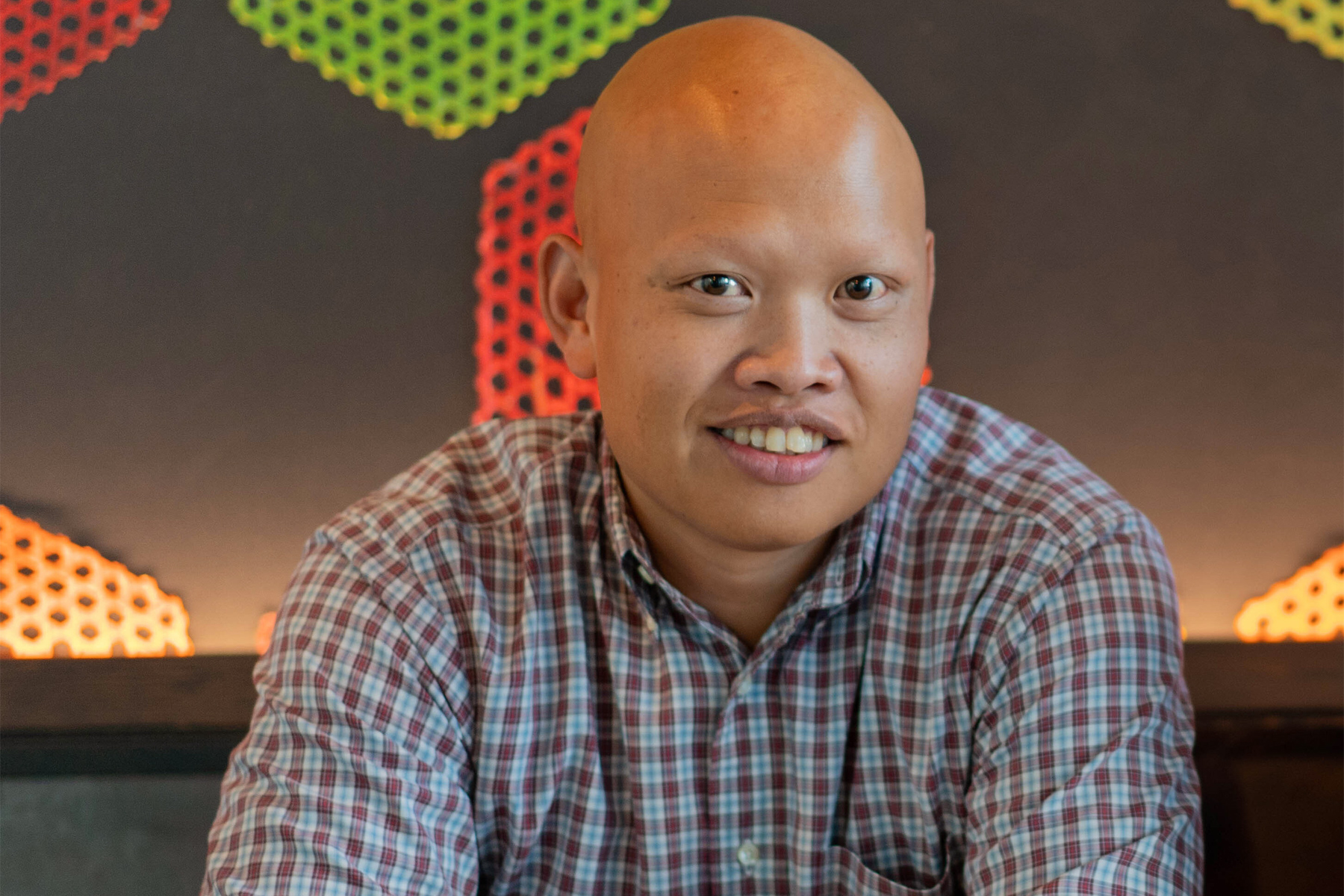
Will Pacio, co-founder and CEO of Expo
The cook who kept the receipts.
The dispatch

A restaurant that answers back

Walk into the back office of a 40-location burger chain and you will find a manager hunched over six browser tabs and a spreadsheet that updates whenever someone remembers. Point-of-sale here. Inventory there. Labor in a third tool. Guest reviews scattered across the internet. Pacio's whole pitch is that this is insane, and that it does not have to be.

Expo, the company he runs from North Texas, vacuums those scattered systems into one dashboard and then does the strange and useful thing: it lets a non-technical owner have a conversation with the data. Through an MCP connection, an operator can open Claude or ChatGPT and simply ask why food cost spiked on the east side last week. No analyst. No Tableau license. No IT ticket.

The framing he likes is Moneyball - the Oakland A's trick of beating richer teams with better numbers. Restaurants run on instinct and a knot in the stomach. Pacio thinks they should run on what the receipts say. His clients, names like Romano's Macaroni Grill, Burger King, KFC, Popeyes and Cava, suggest a lot of operators agree.

But he is careful about the machine. "Just because AI can be used," he has said, "doesn't mean it's up for the task." The man spent years on Thomas Keller's line; he knows the difference between a tool that helps and a tool that gets in the way of dinner service.

Technology that augments your people, not replaces them. - Will Pacio, on Expo's first principle
6-10
disconnected systems per operator
20+
hours/week lost to spreadsheets
$10M
Series A raised
1
dashboard to rule them all
The wrong turn that was right

He was supposed to be a doctor

Toledo, Ohio. A household where the path was paved in stethoscopes - his father and his sister both became physicians, and Will was next in line. He studied psychology at Stanford, worked as a researcher at the Veterans Administration Hospital in Palo Alto, and filed his medical school applications like a dutiful son.

Then he knocked on the back door of a restaurant. Left Bank, in Menlo Park. He asked Chef Christopher Floyd for work, unpaid, and got three months of chopping onions one hundred pounds at a time and shucking oysters until his hands learned a new language. That was the end of medicine.

Telling his parents was, in his words, "a brutal conversation" with "a lot of yelling." He bought peace by promising to get an MBA after culinary school. "But, of course," he says, "I never did get the MBA." Instead he enrolled at the French Culinary Institute in New York and talked his way onto the opening team at Per Se - by his own admission "probably the only guy who had no professional experience."

The doubt did not last. When his parents flew in for a nine-course lunch at Per Se, the verdict arrived between courses: "Wow, he works here?"

"I was probably the only guy on that opening team who had no professional experience."
"A brutal conversation. A lot of yelling. But, of course, I never did get the MBA."
The receipts

From the line to the dashboard

2002

Leaves the lab coat behind

Graduates Stanford with a psychology degree, works at the VA Hospital in Palo Alto, then trades med school for a back-door kitchen apprenticeship.

2003

French Culinary Institute

Trains in New York, then connections through French Laundry's sommelier and Chef Jonathan Benno open the door to Per Se.

2004

Per Se opening team

Commis to Chef de Partie on the launch crew that earns Michelin 3 stars and a New York Times 4-star rating. Fourteen-hour shifts, six to seven days a week.

2008

Founds Spice Kit

With Chef Fred Tang (ex-Ritz-Carlton), builds a fast-casual concept serving "authentic but accessible" Asian street food in the Bay Area. Earlier he ran IT for the Thomas Keller Restaurant Group, standardizing recipes across properties.

2015

Co-founds Pared

With Dave Lu, launches a marketplace matching restaurants to on-demand kitchen workers - born from his own staffing headaches. Thomas Keller, an early backer, talked him into starting it.

2020

Pared becomes Expo

Amid the pandemic, pivots from staffing to data and relocates operations to North Texas.

2023

Moneyball, in Dallas

D CEO profiles his bet that multi-unit restaurants should run on analytics, not gut feel.

2025

The conversational layer

Expo repositions around AI, letting owners chat with their business data through Claude and ChatGPT via MCP.

Three companies, one obsession

Make restaurant life easier

01 / SPICE KIT

The operator

A fast-casual chain selling pillowy pork belly buns and banh mi. The first time the restaurant was his to win or lose - and the first time the back-office chaos became personal.

02 / PARED

The marketplace

An app that let restaurant workers pick up shifts across a rotating cast of kitchens. Ran in New York, Philadelphia, San Francisco and D.C., filling thousands of shifts a day.

03 / EXPO

The brain

One dashboard for POS, inventory, labor and guest feedback - now with an AI layer operators can simply talk to. The fix for the problem he kept living through.

Why it lands

The 100-year kitchen, on a screen

The Expo team likes to say it carries a century of collective restaurant experience. That is not a vanity stat. It is the reason a product built by ex-cooks does not feel like software designed by people who have never been yelled at during a Friday rush.

Past work from the team and its circle has shown up in CNBC, Bloomberg, Nation's Restaurant News and The New York Times. The advisor list reads like a hospitality-and-tech crossover: Thomas Keller (TKRG), Jeremy Stoppelman (Yelp) and Gokul Rajaram (DoorDash, Square).

Where the busywork hides

Typical multi-unit operator, before Expo
Spreadsheets
20+ hrs/wk
Disconnected tools
6-10 systems
Data entry
daily
Real-time view
rare

Illustrative, based on Expo's stated problem framing.

From the margins

The strange specific

Stanford

He doodled pork buns during biology class. The future was on the page; he just had to read it.

The audition

One hundred pounds of onions at a time, three months unpaid, oysters by the case. That was the price of admission, and he paid it gladly.

Per Se, birthday edition

He cooked staff meal on his birthday - a cream of cabbage soup he still calls underseasoned. The detail he keeps is the flaw.

First foie

Junior year, Fifth Floor in San Francisco, under Laurent Gras. The meal that rewired what he thought food could be.

The push

Thomas Keller did not just invest in Pared. He talked Pacio into starting it in the first place.

Toledo

Grew up where you couldn't get real Asian food. Spice Kit was, in part, a homesickness solved with a menu.

In his own words

On the machine, and the meal

"Rushing into AI without a clear plan can hurt trust, but a thoughtful, intentional approach can unlock incredible possibilities."
"Just because AI can be used, doesn't mean it's up for the task."
"Technology that augments your people, not replaces them."
"But, of course, I never did get the MBA."