The first plan was dignified. Experts would write an encyclopedia, other experts would review it, and the public would receive a free, carefully polished result. Jimmy Wales called the project Nupedia. Larry Sanger was its editor-in-chief. After its first year, this formidable machine had produced twelve articles. The trouble with a gate is that someone must stand beside it all day.
In January 2001, Wales and Sanger opened a wiki to help the expert project gather drafts more quickly. Volunteers could make changes directly. Wikipedia was meant to feed Nupedia; within a few years, Nupedia was gone and the feeder had become the meal. The decisive change was procedural: publish a useful version, let people improve it, and keep a record of every revision.
- Wikipedia is free to read and built by volunteers, with the nonprofit Wikimedia Foundation running the infrastructure.
- Its public edit history, citations and discussion pages make disagreement visible rather than hiding it behind a finished entry.
- Readers fund most of the foundation; paid data services help large platforms reuse Wikimedia material at scale.
The queue was the problem
Nupedia's review process was sensible if the goal was to prevent mistakes before they appeared. It was less useful if the goal was to describe an entire world while that world kept moving. Wikipedia reversed the sequence. A page could begin imperfectly and then attract repairs, references and argument. Its early growth did not prove that crowds are invariably wise. It proved that a large, open group can move faster than a small committee when contributions are easy to make and easy to revise.
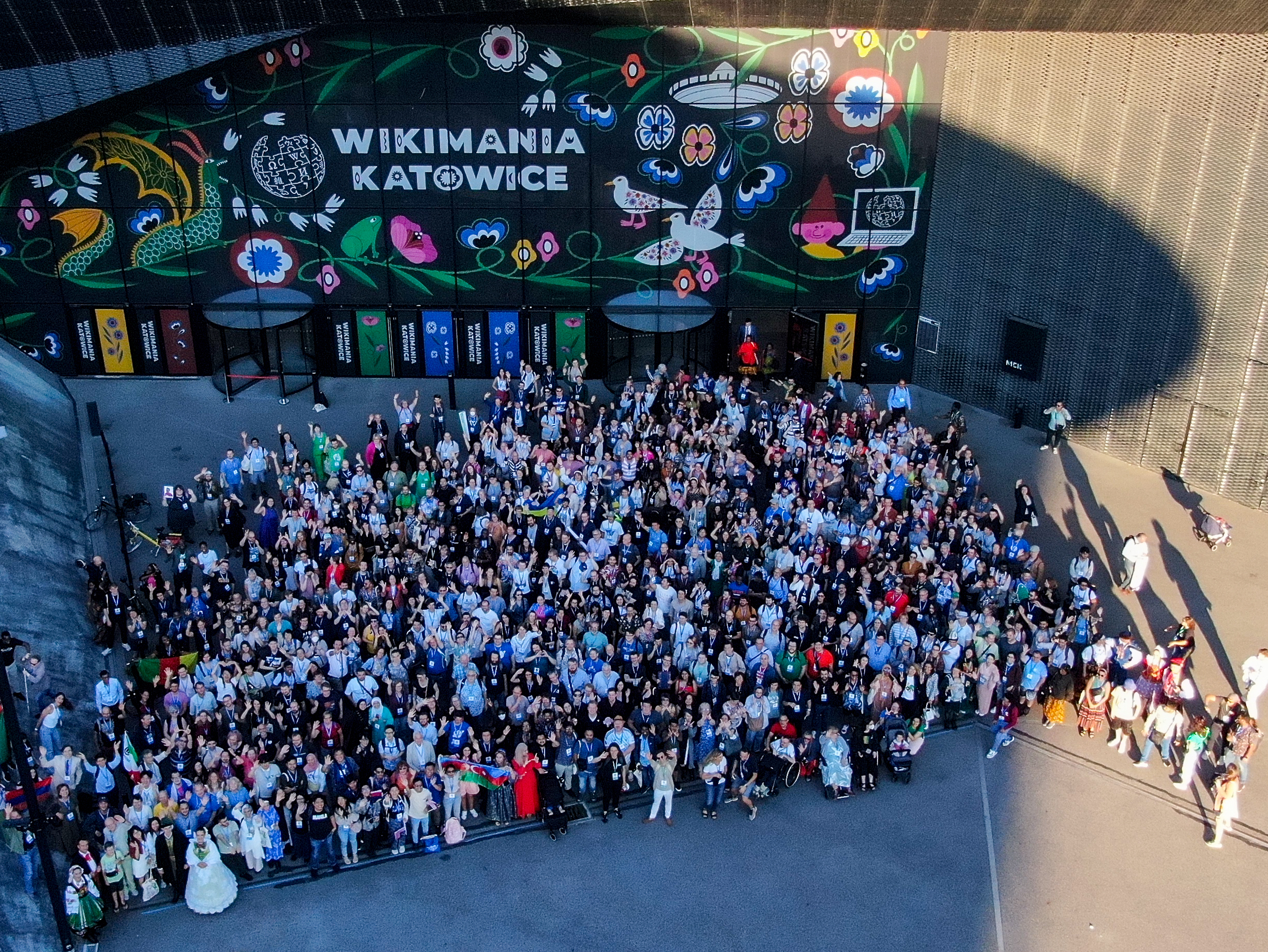
The English edition crossed two million articles in 2007. By its twenty-fifth birthday in January 2026, Wikipedia held more than 65 million articles across over 300 languages. The Wikimedia Foundation reported nearly 15 billion page views and almost 250,000 registered editors making at least one edit in a typical month. Those figures describe many communities, not one giant newsroom. Each language edition has its own editors, habits and gaps.
The unfinished page is the product
Readers come for a fast introduction to a place, a concept, a person or a dispute. Students use it to find a subject's outlines; journalists and researchers often use its references as paths toward original material. The mobile apps let people save articles to read without a connection. Developers can use the openly licensed content and the software behind it. What Wikipedia offers all of them is a starting point that can be examined: a bibliography at the bottom, a revision history behind the text, and often a talk page full of the arguments that shaped it.
That machinery gives Wikipedia a different kind of authority from a conventional encyclopedia. Britannica can present a named expert's finished account. A search engine can point at many accounts. An AI assistant can compress them into an answer. Wikipedia instead shows the working draft of a community's agreement, including its seams. It asks editors for verifiable claims, reliable published sources and a neutral point of view. On contentious pages, these standards can mean long debates, reversions and restrictions on who may edit. The open door has hinges, locks and an unusually public logbook.
The same edit button that made Wikipedia possible is the one its volunteers must keep learning to govern.Twenty-five years of a useful tension
The tension appears when people try to add a company biography, settle a political argument or correct a fast-moving story. A true claim without an acceptable published source may still be removed. A new contributor may meet a thicket of rules and experienced editors. Wikipedia is not a place where every personal experience becomes a reference entry. Its strength depends on enough editors having the patience to apply standards without making participation impossible.

Free to read is a financing decision
The Wikimedia Foundation, created in 2003, hosts Wikipedia and other Wikimedia projects. It does not sell a reading subscription or fill article pages with conventional advertising. Its fiscal 2025 audited accounts show $184.1 million in cash and financial contributions and $8.3 million in Wikimedia Enterprise contract revenue. Total foundation support and revenue was $208.6 million; expenses were $190.9 million. These are foundation-wide accounts, not a revenue figure for Wikipedia as a stand-alone company.
Who pays for free?
Wikimedia Foundation fiscal 2025, US dollars. Bars show shares of $208.6m total support and revenue.
Enterprise is an interesting accommodation with the companies that consume Wikimedia data. Its APIs offer on-demand articles, regularly updated snapshots and real-time changes at a scale suited to products that cannot rely on someone manually visiting a web page. In January 2026, Wikimedia Enterprise named Amazon, Meta, Microsoft, Mistral AI and Perplexity as partners, joining a list that included Google. The encyclopedia remains freely readable. The paid service sells a more dependable way to take in its data.
When the answer leaves the website
This arrangement has a catch. Search engines, voice assistants and AI products can answer a question with information drawn from Wikipedia without sending the questioner to Wikipedia. The foundation's 2026–27 plan explicitly addresses declining search referrals and page views. Fewer visits can mean fewer chances to recruit an editor or persuade a reader to donate. A good answer delivered elsewhere may make the original less visible precisely when its maintenance matters most.
Wikipedia's response is both technical and social: improve reading and editing, seek direct visits, defend infrastructure from abusive scraping, and ask reusers to give the source proper visibility. None of that can be done by code alone. The difficult resource is an editor who knows a subject, can cite it, and is willing to argue politely with a stranger about one sentence.
There is a practical lesson here for anyone building a knowledge product. Lower the cost of a first contribution. Preserve the trail of changes. Make disputes inspectable. Then budget for moderation and for the people who will explain the rules to the next wave of contributors. This works when a community has shared standards and a large supply of published evidence. It works less well for private facts, urgent judgments that cannot wait for consensus, or subjects with few accessible sources. Wikipedia's useful imperfection is that it admits the world is still writing the entry.
Keep wandering
Explore the encyclopedia, the volunteer movement and the tools behind the pages.