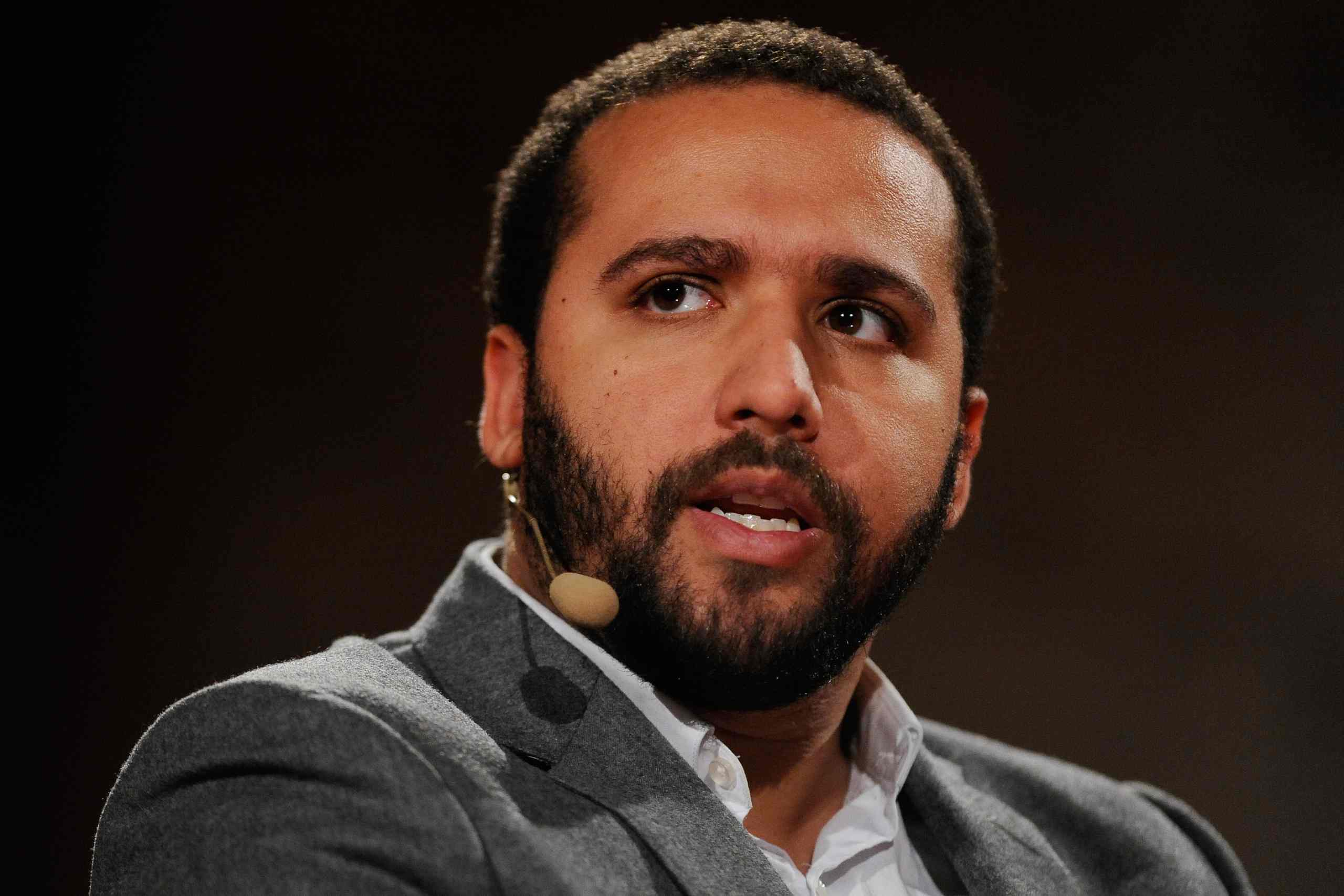
The Journalist Who Counted the Uncountable
Wesley Lowery does not practice journalism as a performance of neutrality. He practices it as a reckoning with truth. And for the better part of a decade, that truth - documented, databased, cross-referenced, and published - has made people in power deeply uncomfortable.
He is best known for a single, radical act: he counted. While the U.S. government had no systematic record of how many people were killed by police each year, Lowery and his Washington Post colleagues built one. The Fatal Force database tracked every fatal police shooting in America in real time, starting in 2015. The first year yielded nearly 1,000 deaths. The government's official estimate had been around 400. The gap between those two numbers - between what authorities acknowledged and what reporters actually found - became the story of a generation.
For that work, Lowery and the Fatal Force team won the Pulitzer Prize for National Reporting in 2016. The same year, they won the George Polk Award and the Peabody Award. Three of journalism's highest honors in a single year, for a database that proved something many Americans already felt in their bones.
"Being objective doesn't mean balanced nor neutral. I am not seeking balance because objective reality is not balanced."
- Wesley LoweryArrested at a McDonald's. In Ferguson.
August 13, 2014. Wesley Lowery was charging his phone at a McDonald's in Ferguson, Missouri - the de facto press staging area during the protests following the police killing of Michael Brown. He had been reporting all day. Police entered and ordered reporters to leave. Lowery began packing up while filming on his phone. An officer told him to stop recording. He kept going. He was arrested, shoved against the soda machine, and hauled out.
He was held without being booked, then released. Charges were filed the following year and dropped in May 2016 after he and fellow reporter Ryan Reilly agreed not to sue St. Louis County. The incident became a flashpoint for press freedom in America - journalists worldwide condemned it, editorial boards denounced it, and Lowery wrote about it at length in his first book.
He was covering the most important story of a generation - and the police arrested him for having the nerve to film it. The soda machine he was shoved against became, improbably, a small monument to the exact tension between power and the press that his entire career has been built to interrogate.
Writing the History as It Happened
Lowery's 2016 debut, "They Can't Kill Us All," is the rare book that manages to be simultaneously a piece of rigorous journalism, a personal memoir, a history, and a work of cultural criticism - all without losing the thread. It takes the deaths of Michael Brown in Ferguson, Tamir Rice in Cleveland, and Freddie Gray in Baltimore and places them inside the arc of American racial violence, tracing the emergence of Black Lives Matter from a hashtag to a movement.
The title is a quote - the defiant call of protesters in the streets. The book became a New York Times bestseller and won the Christopher Isherwood Prize for Autobiographical Prose at the LA Times Book Prizes. It remains required reading in journalism schools and political science departments alike.
In 2022, he returned with "American Whitelash," a deeper and in some ways more disturbing chronicle: an examination of the white supremacist violence that emerged in the wake of Barack Obama's election - the backlash to progress, documented case by case, community by community. Where his first book traced uprising, the second traced the counter-surge.
Ferguson, Baltimore, and a New Era in America's Racial Justice Movement. Ground-level reporting from the birth of Black Lives Matter. Published by Little, Brown.
A Changing Nation and the Cost of Progress. Chronicles the rise in white supremacist violence following Obama's election - the hidden price of racial progress.
False Balance Is Not Objectivity
Lowery has been one of the most forceful critics of the "view from nowhere" school of journalism - the idea that reporters must present two sides with equal weight regardless of whether reality supports equivalence. His argument is precise: presenting falsehood alongside fact as if they are equal is itself a form of distortion.
"One of the biggest biases that we bring to any system or any structure is the assumption that the system in some way works as is," he has said. The Fatal Force database was, in a sense, the empirical proof of that argument: the assumption that police departments were accurately reporting their own kills turned out to be catastrophically wrong.
He named his Substack newsletter "Mosaic Theory" after a philosophy he articulated in a 2023 Columbia Journalism Review essay: the idea that more storytellers telling more stories create a mosaic whose total is greater than the sum of its parts. Individual pieces may be incomplete; together, they reveal something closer to the truth. It is, characteristically, a journalistic philosophy that is also a defense of diversity in the newsroom.
"Write down true things. If the act of writing down those true things changes the reality, that's an added plus."
- Wesley LoweryFrom College Blog to Pulitzer
Lowery started as most great journalists do - writing before he had the platform to justify it. At Ohio University, he ran a blog mixing reported analysis, media criticism, and cultural writing. He would later describe his Substack as a return to that voice. Between the blog and the newsletter, there was a decade that changed American journalism.
A reporting fellowship at the Los Angeles Times. Political reporting at the Boston Globe - the Aaron Hernandez trial, the Boston Marathon bombing manhunt, a mayoral race. Then in 2014, The Washington Post, and with it, the front row to a nation's reckoning with itself. His work at the Post spanned six years and produced some of the most consequential criminal justice journalism of the decade.
He left the Post in 2020, reportedly in part due to friction over the paper's social media policy - Lowery's direct, pointed commentary on race and journalism on Twitter had become a flashpoint. He joined CBS News as a correspondent, then The Marshall Project as contributing editor, then American University's School of Communication as associate professor and executive editor of the Investigative Reporting Workshop.
In early 2025, he resigned from American University following Title IX complaints and returned to independent journalism. His Substack, Mosaic Theory, continues. He remains affiliated with CBS News and The Marshall Project.
The Long Road
Reporting fellow, Los Angeles Times
Political reporter, Boston Globe - Aaron Hernandez trial, Boston Marathon bombing manhunt
NABJ Emerging Journalist of the Year. Joins Washington Post. Arrested covering Ferguson protests.
Fatal Force database launches - first real-time national tracker of police killings
Pulitzer Prize, George Polk Award, Peabody Award - all for Fatal Force. Publishes "They Can't Kill Us All."
Departs Washington Post. Joins CBS News as on-air correspondent.
Joins The Marshall Project as contributing editor and senior reporter
Publishes "American Whitelash." Elected Board Chair, Prison Journalism Project. Journalist in Residence, CUNY Newmark J-School.
Associate Professor and Executive Editor, Investigative Reporting Workshop, American University
Resigns from American University. Returns to independent journalism and Mosaic Theory newsletter.
The Hardware
Mosaic Theory
Lowery's Substack newsletter, Mosaic Theory, is the latest chapter in a publishing life that started with a college blog. The name comes from an intelligence analysis concept: individual pieces of information, each incomplete on its own, that together form a mosaic revealing something larger and truer than any single piece could show.
The newsletter mixes reported analysis, media criticism, and cultural writing - the same register that launched his career. It is, in his own words, a return to writing the way he wrote before he had an audience large enough to demand a different kind of performance.
He has been candid about the economics: a newsletter focused on the kind of long-form criminal justice reporting he does is not easily monetized at full-time scale. But it continues, and for readers who have followed his work since Ferguson, it remains one of the more honest windows into how a serious journalist thinks about the work.
"In some ways, our job as journalists is to monitor and referee not just the people but the process."
- Wesley Lowery