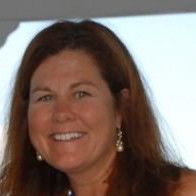
Wendelin Maners runs CSA Medical, a device company in Lexington, Massachusetts, whose signature product sprays liquid nitrogen through a bronchoscope at roughly minus 196 degrees Celsius. The technology is called the RejuvenAir System. The catheter is guided by software-driven dosimetry. The job, mostly, is to get it approved, funded, and into the hands of physicians without running out of time or money.
She has been President and CEO since December 2019. In 2024 she closed an oversubscribed $53 million Series D, co-led by TVM Capital Life Science and Yonjin Ventures, at a moment when medical-device money was not easy to raise. Before that, she brought the company's pivotal trial to full enrollment ahead of schedule, which is a sentence that is almost never true in clinical development.
"We're excited to bring new partners on board as we approach the next significant milestone of submitting the RejuvenAir system for regulatory approval."
That is the tone of the whole enterprise. Patient. Measured in milestones rather than quarters. It is a strange kind of company to lead, and Maners got the job in a way that most CEOs do not: she came up through the deal table, not the sales floor or the lab bench.
The career that ran backwards
Most executives climb toward the money. Maners started near it and kept moving toward the operating problem. She trained in finance at the University of Southern California's Marshall School of Business in the mid-1980s. From 2000 to 2003 she worked as an investment banker at Barrington Associates, the group that later became part of Wells Fargo Securities, sizing up healthcare companies for a living.
Then she crossed over to the buyer's side. At Boston Scientific, as Vice President of Strategy and Business Development, she spent the better part of a decade deciding which emerging technologies were worth acquiring. She led the diligence on the Advanced Bionics acquisition, which pulled Boston Scientific into implantable microelectronics. She led the negotiations for CryoCor, an endocardial cryo-ablation technology for atrial fibrillation. Across her business-development career she executed more than $3 billion in transactions.
Advanced Bionics. CryoCor. RejuvenAir. Three technologies most investors couldn't price, and one executive who kept showing up to price them anyway.
Notice the thread. Cryo-ablation. Cryospray. The habit of betting on hard-to-value technology, the kind that lives or dies on clinical evidence and careful timing. When you have spent years figuring out what a good idea is actually worth, you learn the most expensive lesson in the business before you ever have to sign for it yourself.
The return
Maners first joined CSA Medical in 2011, as Vice President of Emerging Therapies, developing new markets for the company's spray cryotherapy platform. She left in 2014 for MRI Interventions, where she ran sales, marketing, and clinical operations. Four years later she came back, this time as Chief Commercial Officer and President of the truFreeze line, and a year after that she took the top job.
People leave companies all the time. Fewer come back to run them. The round trip says something the resume alone does not: she never stopped believing the underlying technology was worth the wait.
"I believe that CSA Medical's Spray Cryotherapy device has tremendous potential to treat multiple disease states, drastically improve patient outcomes and reduce healthcare costs."
She said that back in 2011, on the day she first joined. More than a decade later, she is the one accountable for making it true. That is a rare thing in medtech, where founders, financiers, and operators are usually three different people. Maners has been all three, in sequence, on the same technology.
What the machine actually does
The RejuvenAir System is a proprietary interventional cryospray device. In plain terms: a specialty catheter, fed through a bronchoscope during a minimally invasive procedure, delivers a precisely metered dose of extremely cold liquid nitrogen to targeted airway tissue. The dosing is controlled by software so the cold is measured, not guessed. The device already carries a CE Mark in Europe, and the U.S. work is aimed squarely at FDA premarket approval.
Bronchoscope
→
Specialty catheter
→
Metered cryospray
→
Targeted airway tissue
Software-driven dosimetry • liquid nitrogen at approx. -196°C • minimally invasive, often outpatient
For an investor, the pitch is not the physics. It is the discipline: a measured dose, a repeatable procedure, a regulatory path with a European precedent already banked. That is exactly the kind of case a former dealmaker knows how to build, because she spent a career on the other side of it, poking holes in cases just like it.
Leading a company measured in milestones
The hard part of Maners's job is not the technology. It is time. A device company that lives on clinical trials and regulatory review runs on a clock that does not care about your enthusiasm. Enrollment can stall. Reviews can slip. Money can run out between milestones. The CEO's real product, in a company like this, is credibility, with investors, with regulators, and with the physicians who will decide whether the thing is worth using.
The oversubscribed Series D is the clearest evidence that she can sell it. So is the trial that filled ahead of schedule. Neither happens by accident, and neither happens without someone who understands, from the inside, exactly what a skeptical investor is looking for before they write the check. Maners was that skeptical investor, once. Now she is on the other side of the table, and she knows every question before it is asked.
There is a quiet lesson in her path for anyone who thinks the operating chair belongs only to people who came up through product or sales. Sometimes the best operator is the one who learned, first, what everything is worth.