Profile / The Operator
Warren Olsen
He runs a company named after a doctor. His job is to make sure the name keeps meaning something.
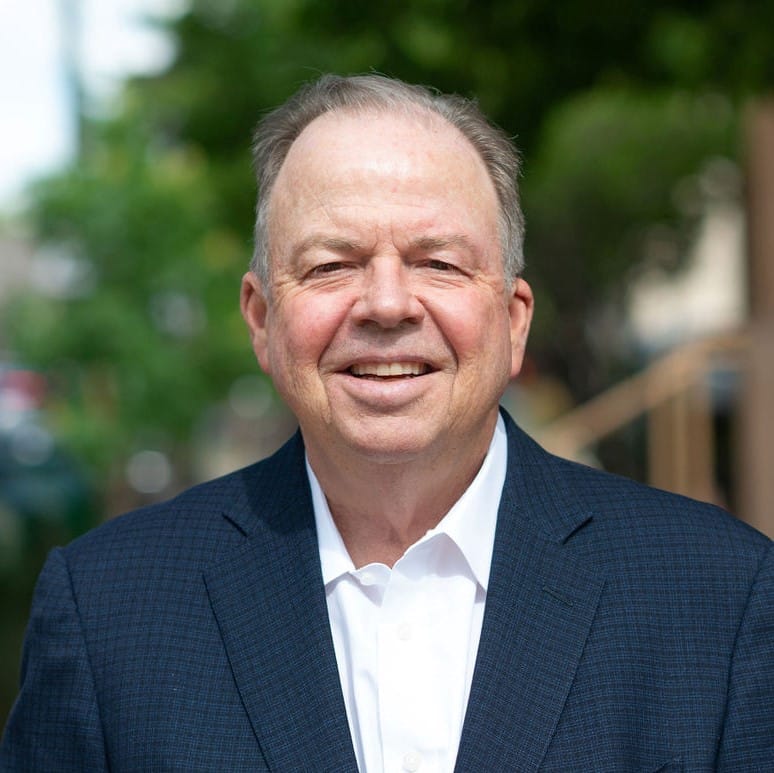
WARREN OLSEN. Chairman & CEO. The title is two words; the work is one - consistency.
He runs a company named after a doctor. His job is to make sure the name keeps meaning something.
Warren Olsen does not sell himself. He sells the thing most companies promise and few deliver - the same outcome on Tuesday that you got on Monday. As Chairman and Chief Executive Officer of Gallus Medical Detox Centers, the Denver-area behavioral-health company also known as Gallus Detox and Recovery Services, that is the entire assignment. Build a company that can repeat itself.
It is harder than it sounds. Most organizations are good once. They are good when the founder is in the room, when the first hire is still excited, when the brand is new enough to try hard. The trick - the actual job of a chief executive - is to make the good thing survive its own growth. To turn a single act into a system. That is the problem Olsen sits in front of every morning.
The company carries the surname of its founding physician, Dr. Patrick J. Gallus. That is not a small detail. When your brand and your standard are literally the same word, there is nowhere to hide. A weak day does not just disappoint a customer; it spends down a name. Olsen's role is to protect the spread between what the sign on the building promises and what happens inside it - and to keep that spread at zero.
He works from Colorado, where the company is headquartered in Littleton, just south of Denver. It is a lean operation, roughly forty-four people, the kind of size where the chief executive still knows the difference a single hire makes. In 2022 the company raised seed financing, the sort of milestone that changes the question a CEO has to answer. The question stops being "can this work" and becomes "can this work again, and again, and at a larger size, without getting worse."
That is the unglamorous middle of company-building, and it is where Olsen lives. Not the origin myth. Not the exit. The long, patient stretch in between, where the only headline is that nothing went wrong.
Start with a fact that sounds simple and is not: a company is a machine for repeating a good decision. The first time a thing goes right, you can credit talent, luck, a long night, a founder who cared. The hundredth time, you can only credit the system. Everything a chief executive does is in service of that second number. Warren Olsen runs a company whose whole reason for existing is to be the same on the days nobody is paying attention. The brand is built on it. The name on the door demands it.
Consider what changes when a company raises outside money, the way Gallus did in 2022. Before the round, a small organization can be carried by the founder's presence and a handful of believers. After the round, the math is different. There is a clock, a board, a payroll that does not pause, and a set of investors who bought a story about repeatability. The chief executive becomes the person responsible for converting a promising start into a durable institution. That conversion is mostly invisible. It is hiring well, saying no often, and refusing the shortcuts that would make a quarter look better and the name look worse.
There is also the matter of the surname. Plenty of companies are named after a place, a Latin root, or a word a branding agency invented. Gallus is named after a real person, its founding physician. When the company and the standard share a single word, the chief executive inherits a peculiar kind of accountability. You cannot rebrand your way out of a bad stretch. You cannot hide a weak quarter behind a clever logo. The reputation is the asset, and the asset has a face. Olsen's job, reduced to its bones, is to make sure that asset appreciates rather than erodes - one decision, one hire, one repeated standard at a time.
Geography matters too. Colorado, and specifically the Denver corridor, has become a serious home for behavioral-health and care companies, and Gallus plants its flag in Littleton on the metro's south edge. A headquarters is not just an address. It is a labor market, a culture, a set of expectations about how work gets done. Running a roughly forty-four-person company from that base means the chief executive is close enough to the work to feel its texture. At that size, leadership is not an abstraction delivered from a distant tower. It is in the building.
And then there is temperament, which may be the most telling thing of all. Some executives treat the company as a stage for themselves. Olsen reads as the other kind: the operator who would rather the company be famous than be famous himself. The public voice belongs to the brand. The press coverage, the social channels, the outward face - those carry the Gallus name, not his. He sits behind the standard he is paid to protect, which is exactly where an operator of his type tends to sit. It is not modesty for its own sake. It is a theory of the job. The leader who chases the spotlight often stops watching the standard, and the standard is the only thing that compounds.
The chairman's chair is about the decade, not the day. Where the company points, what it refuses to become, which doors it will not walk through for money. It is the role that says no when no is unpopular.
The chief executive's chair is about the next ninety days. Hiring, hard calls, the gap between the plan and the calendar. It is where strategy meets a Tuesday and one of them has to bend.
Holding both seats means arguing with yourself in public. The long view and the short view rarely agree. Olsen's work is to keep that argument honest instead of letting one side quietly win.
The company is named after the doctor who founded it. Translation: every employee shares one last name's reputation. That is pressure, and it is also a compass.
Headquartered in Littleton, a Denver suburb tucked against the foothills. Colorado is where the company plants its flag and where its standard is set.
Around forty-four people. Small enough that the CEO still feels each hire, large enough that the system has to do the remembering instead of one founder.
Founded by Dr. Patrick J. Gallus, the company begins as a clinician's standard of care. The hard part comes next: turning one person's standard into an organization that can keep it.
The company raises seed capital, the moment a good idea becomes a thing with investors, payroll, and a clock. Growth stops being optional and starts being managed.
As Chairman and CEO, Olsen leads the company from its Denver-area base, steering a roughly forty-four-person team and the brand that wears its founder's name.
Olsen runs a company, which means he runs a roster. The names below are the leadership Gallus puts forward publicly - the people who turn one standard into a repeatable one.
Some founders are a feed. Olsen is a function. The company has the public voice - the press hits, the social handles, the brand. The CEO stays behind the standard he is paid to protect. In an era of personal-brand executives, the choice to be quiet is itself a statement.
The flashy work is the launch. The real work is the hundredth repetition that looks exactly like the first. Olsen's job is the second kind, which never trends but always matters. It is the difference between a brand and a logo.
When a company carries a person's surname, reputation is not a marketing budget - it is the balance sheet. Every decision either deposits to that name or withdraws from it. Few CEOs operate with that ledger so visible.
Seed-stage to durable company is a multi-year walk, not a sprint. The CEOs who finish it tend to be the ones who never needed the applause along the way. Olsen reads as that type: patient, unhurried, allergic to noise.
Take a clinician-founded company. Grow it. And refuse to let growth dilute the one thing that made it worth growing - the consistency of what happens inside the building. That is the assignment Olsen has accepted, and it is a quietly ambitious one. Plenty of companies scale by lowering the standard a little at every step until the brand is a memory of itself. The harder path, the one worth writing about, is to scale and hold the line at the same time.
If he pulls it off, there will be no single headline for it. Just a company that, year after year, keeps the promise its name implies. For an operator, that is the whole prize.
Editorial profile assembled from public sources, including the company's own leadership materials. Where the public record is thin, interpretation is clearly framed as interpretation, not fact. Roles, location, team, and financing milestone are drawn from publicly available company information.