Founder / CEO / Beam Impact
Viveka Hulyalkar
She is rewiring brand loyalty so that the points you earn at checkout land in a nonprofit you actually believe in. The target is not small: ten billion dollars, redirected.
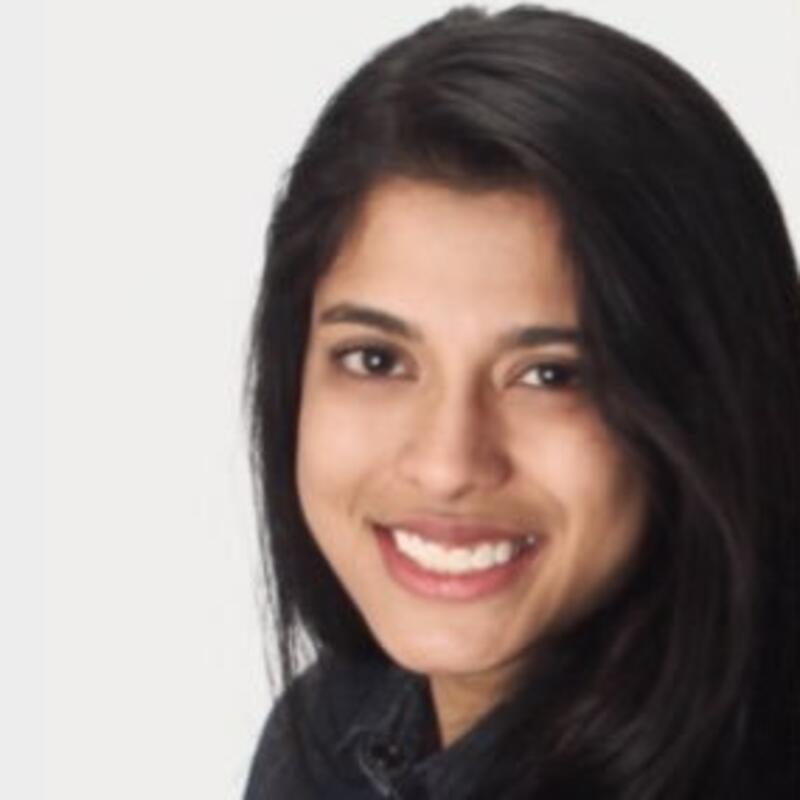
She is rewiring brand loyalty so that the points you earn at checkout land in a nonprofit you actually believe in. The target is not small: ten billion dollars, redirected.
The Dispatch
Ask most shoppers what their loyalty points are worth and they will shrug. A few cents off a future order. A free coffee, eventually. Viveka Hulyalkar looked at that same pile of points and saw something the retail industry had been mispricing for years: not a discount, but a vote.
Beam Impact, the company she co-founded in 2017 and runs as CEO, sits quietly inside the checkout flow of more than 130 mission-driven brands - names like Instacart, IKEA and Roots Canada. When you buy, a slice of the purchase (often around one percent) goes to a nonprofit you pick. It costs the shopper nothing. The brand foots the bill, and in return gets the one thing modern retention marketing keeps failing to buy: a young customer who comes back because they want to, not because they got a coupon.
That is the whole trick, and it is harder than it sounds. Hulyalkar's diagnosis is blunt, and she repeats it often.
The insight did not arrive in a brainstorm. It came from spreadsheets. Before Beam, Hulyalkar was a consultant at McKinsey & Company in New York, working with retail and advertising clients. Buried in the client data was a number that would not leave her alone: more than 70 percent of 18-to-34-year-olds said they would pay more for a brand that shared their values. Brands were spending fortunes chasing loyalty with price cuts, while a generation was practically begging to be loyal for a different reason entirely.
She found her co-founder, Alex Sadhu, through mutual friends. He had been a software engineer at Tinder. The two developed the concept virtually, building the early version of the idea before they had ever met in person - a detail that says a lot about how Hulyalkar operates. Conviction first, formalities later.
Beam launched as a way for people to donate a piece of everyday purchases to causes they cared about, at no extra cost. But Hulyalkar's framing was never charity. It was leverage. She talks about shopping the way an organizer talks about turnout.
To understand where the audacity comes from, rewind to Cleveland. Hulyalkar grew up there, the daughter of Indian immigrants who, in her telling, encouraged her to chase whatever compelled her. The encouragement took. She was selling bookmarks at five and ran a detective agency in grade school.
At fifteen she started an environmental nonprofit and decided it should partner with the Cleveland Cavaliers. Then she got the NBA to sponsor it. Within a year, the effort had installed roughly a million dollars of solar panels at local schools. Most teenagers cannot get a meeting. She got a basketball franchise and a national league to write checks - a preview of the exact skill Beam now runs on, which is convincing large institutions that doing good is also good business.
She carried that thesis through Brown University, where she graduated with honors and a degree in political science, and through earlier work tied to the NBA, the Clinton Global Initiative and the Government of India. By the time McKinsey handed her a window into how retailers actually think, she already knew what she wanted to do with the view.
Hulyalkar reads consumer behavior with a therapist's ear. Her customers, she argues, are not just price-sensitive. They are unsettled.
Beam, in that reading, is a relief valve. It takes the vague guilt of consumption and converts it into something legible: a dollar amount, a named nonprofit, a running tally of impact a person can actually see. "We wanted to create a way for people to stay engaged with the issues they care about every day," she has said, "and be reminded of their power to make a difference."
Investors got the memo. In 2022 Beam raised a $13.3M Series A led by Index Ventures, a round reported to have come together in roughly six days. The company has raised somewhere in the range of $15 million in total, and the partner roster - now north of 130 brands - has grown alongside it. The Forbes 30 Under 30 nod in the Social Impact category arrived in 2021, before the Series A, which is to say the recognition slightly preceded the receipts.
What Hulyalkar is really selling brands, underneath the donation mechanics, is a proof. She wants to settle an old argument inside boardrooms by making the spreadsheet say what she always suspected it would: that customers who give through a brand stick with it. Loyalty, measured in the only language retail respects.
The part that makes investors lean forward is the unit economics. A discount erodes margin and trains a customer to wait for the next markdown. Beam's donation does something different: it attaches a feeling to the transaction that the brand never has to repeat at a steeper rate next time. The customer remembers giving, not saving. For a category like direct-to-consumer retail, where the cost of reacquiring a lapsed buyer has climbed relentlessly, a loyalty mechanic that strengthens rather than cheapens the relationship is not a soft perk. It is a defensible line on the spreadsheet.
That is also why Hulyalkar is careful about the word "donation." She frames Beam less as a giving tool bolted onto commerce and more as infrastructure - a layer that sits between brand, shopper and nonprofit and keeps score for all three. Shoppers see their cumulative impact. Brands see which causes move their customers. Nonprofits get a recurring funding stream that does not depend on a year-end appeal. The platform's job is to make all of that legible enough that nobody has to take the impact on faith.
Every brand that joins makes the next pitch easier, and every cause that gets funded gives shoppers one more reason to look for the Beam logo at checkout. The roster has grown past 130 partners precisely because the value compounds: a customer who gives through one brand is primed to expect the option from the next. Hulyalkar's stated five-year horizon - a community of tens of millions of values-driven shoppers - is really a bet that this loop, once it is spinning fast enough, becomes its own engine. Get enough people used to spending with intent, and the brands have to meet them there.
She is also building the data layer underneath, tools meant to help brands find and keep the customers who care most. It is a quietly ambitious move. The donation is the visible product; the intelligence about who gives, to what, and how often is the part that could make Beam indispensable rather than merely nice.
It is a long game, and she knows it. The pitch fits on a sticker. The ambition behind it - to move ten billion dollars and turn a generation's anxiety into participation - does not.
Reporting drawn from public interviews and profiles including Only Proforma, Ulu Ventures, R/GA Ventures, MMA Global, Crunchbase, and Beam Impact press materials. Quotes reproduced as published. Where figures vary across sources (total funding reported between roughly $14.9M and $15.4M), the range is noted rather than resolved.
By The Numbers
The Arc
In Her Words
Retention marketing is broken and retailers are struggling to get young customers back in the door.
We should be using our voice with our dollars and putting our values in front of how we spend.
They would not only switch brands; they would even pay extra for a brand they believe is more socially responsible.
We wanted to remind people of their power to make a difference, every day.
The Three-Part Dream
Redirected from brands to high-impact nonprofits.
People in a community empowered to drive change.
Proof, in hard numbers, that corporate good builds real loyalty.
Where to find Viveka and Beam Impact next.