ANELLOVIRUS // The delivery vector nobody wanted 4 YEARS to primate data // AAV took ~15 $253.5M raised across rounds at Ring Therapeutics REDOSABLE // gene therapy's second shot MD · MBA · MRCOphth // triple-credentialed 2025 // Takes the plunge into PharmasMarket ANELLOVIRUS // The delivery vector nobody wanted 4 YEARS to primate data // AAV took ~15 $253.5M raised across rounds at Ring Therapeutics REDOSABLE // gene therapy's second shot MD · MBA · MRCOphth // triple-credentialed 2025 // Takes the plunge into PharmasMarket
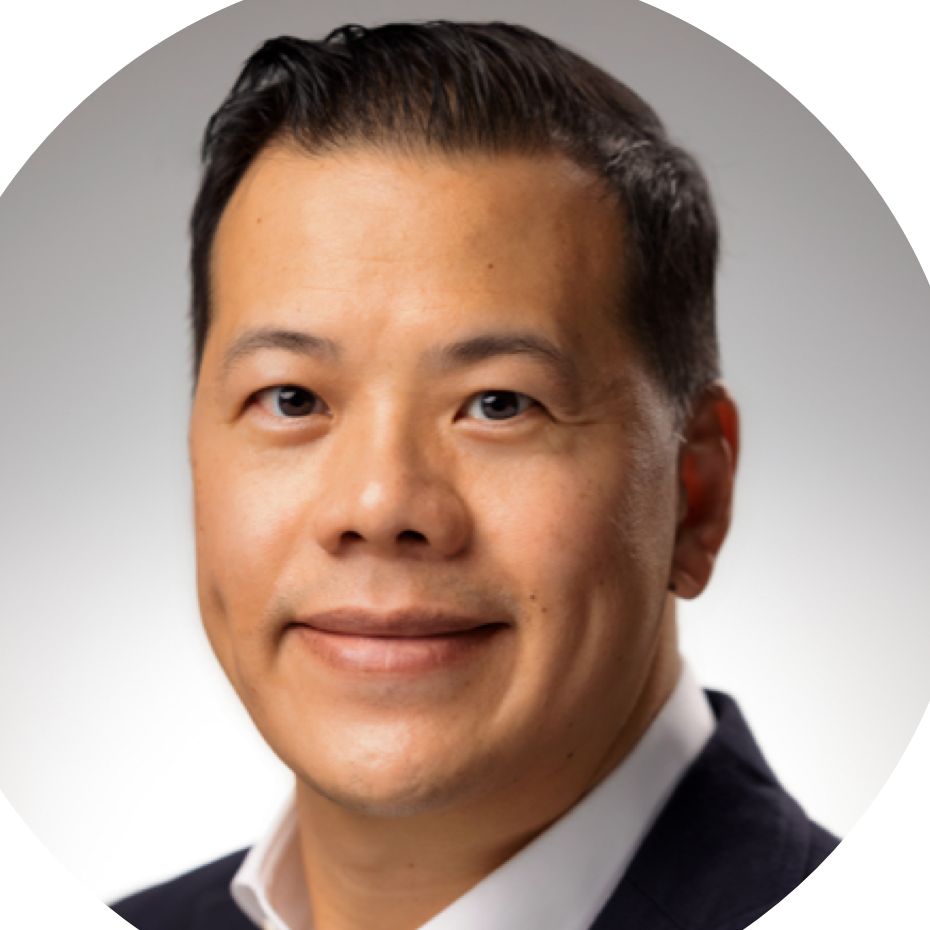
Tuyen Ong, physician and biotech executive
Tuyen Ong. Ophthalmologist by training, dealmaker by resume, and for four years the person answering for a virus that lives quietly in almost every human bloodstream.
Person / Founder / Scientist

Tuyen Ong

He picked the virus his field had written off as junk, then spent four years proving it could carry medicine - more than once.

CEO, Ring Therapeutics CEO-Partner, Flagship Co-Founder, PharmasMarket
Share LinkedIn Twitter / X Facebook Instagram
The Bet

Anelloviruses are in the blood of almost everyone. For 25 years, science shrugged. Tuyen Ong built a company.

Most viruses announce themselves. They make you sick, and then medicine spends decades learning to fight or reuse them. Anelloviruses do neither. They ride along in the bloodstream of the overwhelming majority of healthy people, cause no obvious disease, and for that reason were treated as biological background noise - not worth a career, let alone a company. Tuyen Ong looked at the same quiet virus and saw the thing gene therapy had been missing: a delivery vehicle the human immune system already tolerates.

From September 2020 to 2024 he was chief executive of Ring Therapeutics, the Flagship Pioneering company built on that idea. Ring's platform - branded Anellogy, with an assembly kit it calls AnelloBricks and a product it calls AnelloVector - tried to turn commensal viruses into programmable couriers for genetic medicine. The pitch was specific and unfashionable: not a virus engineered from scratch in a lab, but one borrowed from your own biology. Ong, a trained ophthalmologist with an MBA and two decades of rare-disease drug development behind him, was the person who had to make investors and regulators take it seriously.

He mostly did. Ring raised about $253.5 million across its rounds, including an $86.5 million Series C in March 2023 with T. Rowe Price, Invus, Kyowa Kirin, UPMC Enterprises and Flagship among the backers. And it hit non-human primate data in roughly four years - a timeline that, for the older workhorse vector known as AAV, historically ran closer to fifteen.
$253.5M
Total raised at Ring Therapeutics
~4 yrs
Foundational science to primate data
12 mo
Durable in-vivo gene expression shown
20+ yrs
Clinical & drug-development experience

"We set out to develop an entirely new vector system based on human commensal viruses - and we've achieved that goal at remarkable speed."

- Tuyen Ong, on publishing Ring's anellovirus platform

The Problem He Chose

Gene therapy's "one and done" was never really one.

The promise of gene therapy is seductive: a single dose that fixes a genetic defect for good. The catch is in the delivery. Traditional vectors like AAV work once, because the immune system learns them fast. Give a second dose and the body has already built antibodies to intercept it. Worse, many patients never qualify for a first dose at all - they walk into a trial already carrying antibodies from a past exposure and get turned away at the door.

Ong has said watching those patients be turned away is part of what pushed him toward Ring. His fix wasn't to make the immune system forget; it was to pick a vector it never reacts to in the first place. Anelloviruses are already tolerated. That opens the door to something the field talks about constantly and rarely delivers: vectors that are, in his words, "redosable, titratable in so many different ways." At a 2024 conference, Ring reported redosable delivery in the primate retina and gene expression that held for twelve months.

He is unusually plain about how hard the work was. Before any of that, he says, the team had to build the basic science from scratch - starting with the un-glamorous problem of finding a way to grow the viruses in a dish at all. "One of the challenges initially," he put it, "was really trying to find an in vitro system that allowed us to produce and propagate the anelloviruses."

Two Ideas He Keeps Returning To

The Death Star vector

Ong has described AnelloVector as working a bit like the Death Star from Star Wars: modular layers that click into place. Swap a layer and you change what the vector targets. It is a rare thing in biotech - a platform explained by a movie prop, and one that actually maps onto how the technology is meant to be assembled.

"Ring Therapeutics really is pioneering work on anelloviruses in the human virome."

On the commensal virome as an untapped toolbox

The Path Here

From the eye clinic to the virome.

A career built almost entirely on the hardest corner of medicine: getting a working gene into a human body and making it stay.

Pre-2015

Clinical and drug-development roles at Pfizer, Bausch & Lomb (later acquired by Valeant) and PTC Therapeutics - across genetics, ophthalmology and rare disease.

2017-2019

Chief Development Officer at Nightstar Therapeutics. Helped take the gene-therapy company public on NASDAQ and through its 2019 acquisition by Biogen.

2019-2020

Senior Vice President, Head of the Ophthalmology Franchise at Biogen.

Sept 2020

Named CEO of Ring Therapeutics and CEO-Partner at Flagship Pioneering, after a conversation with Flagship's Avak Kahvejian about harnessing anelloviruses.

March 2023

Ring closes an $86.5M Series C to push the Anellogy platform toward the clinic.

2024

Ring publishes its commensal anellovirus gene-delivery platform and reports redosable primate data with durable expression.

2025

"Taking the plunge..." - co-founds PharmasMarket, a pharma and biotech drug-development consultancy.

"This raise underlines our goal to progress the potentially transformative therapeutics from our platform towards the patients that need them."

- On Ring's $86.5M Series C, March 2023

The Operator

A builder who keeps starting things.

Ong is triple-credentialed in a way that reads like three different people: an MD from University College London, an MBA from NYU's Stern School, and MRCOphth membership in the Royal College of Ophthalmologists. The combination is the whole point. He can sit with the bench scientist working out how to propagate a virus, then walk into a board meeting and defend the spend. His resume runs through the companies that define modern rare-disease drug development - Pfizer, Bausch & Lomb, PTC, Nightstar, Biogen - and he carries board and advisory roles at firms like Vyluma and Rectify Pharma.

What connects it all is a taste for the problem other people avoid. Nightstar was a clean win: built, floated, sold to Biogen. The easy move after that is to coast. Instead he went to Flagship and picked the least obvious asset in the building, a virus most of his field considered a dead end. Getting it to primates faster than the industry standard vector reached the same stage is the kind of result that only looks inevitable in hindsight.

In September 2025 he posted two words on LinkedIn - "Taking the plunge..." - and stepped into a new venture as co-founder of PharmasMarket, a consultancy advising drug developers across clinical strategy, regulatory affairs and manufacturing. Twenty years in, and he is still starting things. That, more than any single molecule, is the tell about who he is.

Things Worth Knowing

The specifics.

01

Anelloviruses - the family Ring built on - are found in the blood of the vast majority of healthy people, and were long ignored precisely because they don't cause obvious disease.

02

His pitch got a virus most of the field considered a dead end to primate data faster than the standard AAV vector took to reach the same milestone.

03

He explains the technology with a Star Wars analogy: modular, click-together layers, like the Death Star.

04

He is MD, MBA and MRCOphth - a physician, an ophthalmologist and a business-school graduate in one person.

05

His current LinkedIn title lists him as CEO & Co-Founder at PharmasMarket.

06

Ring's backers included T. Rowe Price, Invus, Kyowa Kirin and UPMC Enterprises alongside founder Flagship Pioneering.

Watch & Listen

In his own words.

Quick facts: Tuyen Ong

Tuyen Ong is a physician-turned-biotech executive who spent four years as CEO of Ring Therapeutics, the Flagship Pioneering company trying to turn anelloviruses - harmless viruses that already live in nearly everyone - into a redosable delivery system for genetic medicines. Trained as an ophthalmologist at University College London with an MBA from NYU Stern, he built his career on gene therapy for rare eye disease at Nightstar, Biogen, PTC, Bausch & Lomb and Pfizer before betting on a virus most scientists had written off as biological junk. In 2025 he co-founded PharmasMarket, a drug-development consultancy.

Role
Co-Founder & CEO at PharmasMarket; former CEO at Ring Therapeutics
Organizations
PharmasMarket, Ring Therapeutics, Flagship Pioneering, Vyluma, Rectify Pharma, Biogen, Nightstar Therapeutics, PTC Therapeutics, Bausch & Lomb, Pfizer
Nationality
British
Education
MD, University College London, MBA, New York University Stern School of Business, Member (MRCOphth), Royal College of Ophthalmologists
Known for
Led Ring Therapeutics' commensal anellovirus platform (Anellogy) from foundational science to non-human primate data in roughly four years, versus about 15 years historically for AAV, Raised an $86.5M Series C (March 2023) with Flagship, T. Rowe Price, Invus, Kyowa Kirin, UPMC Enterprises and others; company raised ~$253.5M total across rounds, Oversaw preclinical demonstration of redosable viral vectors in primates and durable gene expression sustained over 12 months

Last updated: