Picture the most expensive group project in finance. A portfolio manager proposes a trade. A compliance rule checks it. A trader sends it to a venue. An operations team records it. A risk manager asks what it did to the portfolio. Five specialists, five systems, and - on a bad day - five versions of the truth. TS Imagine exists to make that chain feel less like passing a note down a crowded row.
The New York fintech company was created in May 2021 when Francisco Partners combined TradingScreen, a cloud execution and order-management specialist, with Imagine Software, a real-time portfolio and risk platform founded in 1993. Rob Flatley, a former Deutsche Bank and Bank of America Securities executive who had built and sold another market-infrastructure company, became chief executive of the new business.
The merger had an unusually legible product thesis. TradingScreen knew how orders traveled. Imagine knew what those orders meant once they landed in a portfolio. Put them on a common platform and an institution could connect intention, execution, compliance, profit and loss, and risk without asking a small army to reconcile the gaps.
The product is the handoff
TS Imagine now sells a family of enterprise SaaS products. TradeSmart is the execution and order-management system, spanning equities, fixed income, derivatives, over-the-counter instruments and crypto. It connects to more than 250 brokers and venues, with smart routing, FIX connectivity and pre- and post-trade compliance. RiskSmart+ serves buy-side portfolio and risk teams. RiskSmart X is aimed at banks, prime brokers and clearing firms. TS One packages portfolio management, execution, risk, compliance and operations into modules for investment teams that do not want to assemble the machinery themselves.
Then there is the newer infrastructure. PrimeOne, acquired from S&P Global in 2024, supports physical and synthetic prime finance. LoanSmart, launched after a 2025 asset purchase, handles securities lending, repo and collateral. These are not decorative add-ons. They push TS Imagine from the trader's screen into the financing and operational plumbing around the trade.
One trade, one operating line
Boring until the bank fails
Risk software has the public charisma of a fire door. Then smoke appears. During the two days after Silicon Valley Bank collapsed in March 2023, TS Imagine says its clients ran 15 billion stress-test scenarios. That figure explains the job better than a brochure can. A risk manager needs to shock currencies, rates, volatility, counterparties and asset prices while the market is still moving - not wait for an overnight batch to explain yesterday.
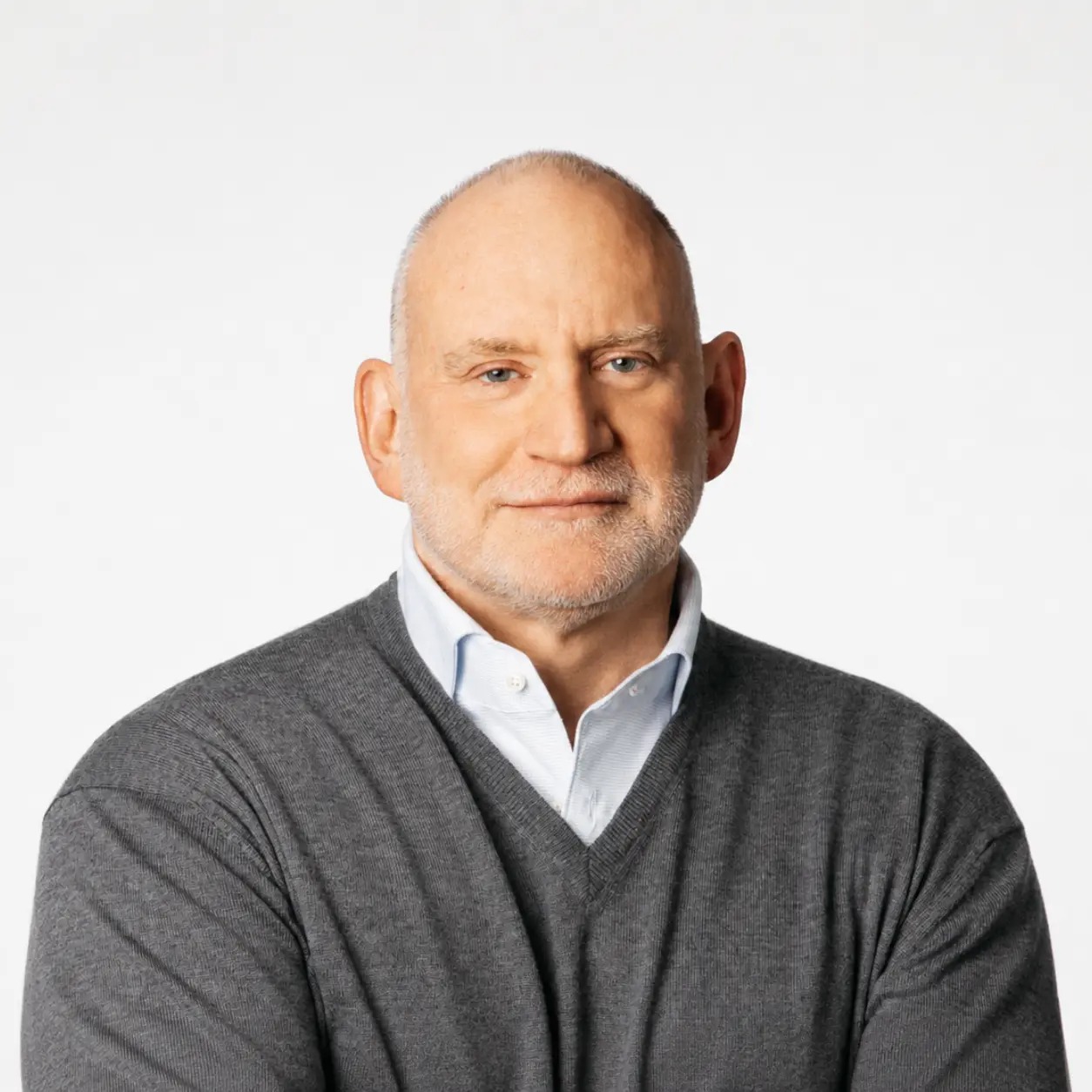
“Our clients need a consolidated view of their risk exposure ... paired with all of their transactional activity.”Rob Flatley, founder and CEO
RiskSmart's published scale includes 19,000-plus curves, more than 23 million listed instruments, 100-plus global markets and ten-plus asset classes. It carries historical scenarios from the dot-com bust and Lehman Brothers to COVID-19 and the 2025 tariff shock. The useful distinction is not merely more models. It is that the model can see the live transaction and portfolio around it.
Who buys the control room?
At the 2021 combination, TS Imagine said it served roughly 500 institutions with about 400 employees in 10 offices. Its current TS One material says 400-plus clients. The buyers range from hedge funds and asset managers to banks, brokers, pension funds, clearers and prime brokers. Public customer examples include CoinShares, Robeco, Société Générale, Varenne Capital, Blue Riband Group, Oasis and Farrer Capital Management.
Those customers are not all buying the same thing. CoinShares selected TS One for a relative-value equities hedge fund operating near the border of traditional finance and crypto. Blue Riband chose its portfolio-risk module, with the option to add services. Varenne wanted to automate execution. Société Générale used RiskSmart X for real-time risk and margin. The modularity matters: a younger fund can begin with risk, while a global bank can connect a much wider estate.
TS Imagine does not publish list prices. The honest answer to “what did it cost?” is a custom enterprise subscription, shaped by modules, users, instruments, data, connectivity and integration. There is, however, a public time comparison. The company says TradeSmart typically deploys in four to six months, versus 12 to 18 months or more for building on premises. The economic pitch is less “cheap software” than “stop paying for duplicate systems, hardware and reconciliation.”
What failed first?
No public case study describes a dramatic product failure. The recurring failure TS Imagine is designed around is quieter: fragmentation. Order systems know the order, risk systems know the exposure, and operations systems know the settlement, but their clocks and identifiers disagree. A standard FIX connection can carry trade messages, yet it does not by itself deliver live counterparty exposure, pre-trade cost analysis or a shared compliance view.
What changed minds was pressure at the seams. Managers expanded across asset classes. Bonds became more electronic. Regulators demanded stronger evidence of best execution. Smaller funds wanted institutional risk without institutional headcount. Platform 3.0, released in 2024 after three years of research and development, was the response: wider data coverage, Snowflake integration, more than 20 million instruments at launch, over 300 liquidity endpoints, automated routing, post-trade controls and AI applied to structured data.
That ordering is worth noticing. TS Imagine did not begin with a chatbot floating over messy records. It built a dedicated data function, merged sources and automated management before promoting AI-driven insights. In enterprise software, “clean the data, then add intelligence” is less exciting than a demo and much more reusable.
A merger has to survive itself
Combining product diagrams is easy. Combining product teams, client contracts and support habits is not. TradingScreen and Imagine Software arrived with mature code, loyal customers and different centers of expertise. TS Imagine spent its first year aligning the companies and their products, then hired across the organization as it expanded. The company said in 2022 that it had added 100 people during the first half of that year. Platform 3.0's three-year development window is another clue that the merger was treated as an integration program, not a weekend reskin.
Its public culture language leans toward curiosity and automation, but the more revealing detail is the personnel mix. Chief Strategy Officer Lance Smith co-founded Imagine Software and began his finance career as a quantitative specialist at Salomon Brothers. The leadership roster includes veterans of Goldman Sachs, Deutsche Bank and the original product teams. TS Imagine says it pairs former traders with technologists so product decisions begin with the pressure of a live desk. That is sensible positioning in a category where a beautifully designed button can still send the wrong order.
Industry awards supply external signals, with the usual caveat that awards are not uptime statistics. TS Imagine won 2023 HFM honors for both execution management and risk technology, and Risk.net named it integrated risk-management software of the year in 2026. More persuasive are the customer comments tied to specific work. Robeco described the platform as scalable for future portfolios. A Société Générale case study said the delivered risk system did what had been promised. Neither sounds like ad copy from a sneaker launch. In institutional software, that restraint is almost a love letter.
The playbook worth stealing
First, combine adjacent depth rather than accumulating random features. TradingScreen and Imagine Software each brought a specialist reputation and decades of market knowledge. Their overlap was the customer's workflow, not a fashionable category label. Second, build one data layer but sell multiple entry points. TS One, RiskSmart, TradeSmart and PrimeOne let the buyer start where the pain is sharpest. Third, turn services into product feedback. TS Imagine staffs technologists alongside former traders and risk practitioners, the people most likely to recognize a bad handoff before it becomes a failed trade.
Partnerships extend that playbook. SimCorp connects portfolio and order management to TradeSmart execution. Snowflake underpins the newer data layer. Temenos distributes TradeSmart through its exchange. OpenYield and Trumid widen fixed-income liquidity. Gentek.ai is working with TS Imagine on agentic workflows. None requires TS Imagine to pretend it should own every piece of the market.
Copy this
Join adjacent workflows. Normalize the shared data. Package modules by customer maturity. Measure deployment time. Keep domain experts close to product teams.
Skip this when
Your customer has one asset class, a clean modern stack, little integration pain, or cannot absorb a four-to-six-month deployment and enterprise change program.
Where it wins - and where it won't
The approach works best when complexity is already expensive: several asset classes, many venues, strict controls, global books and teams that spend too much time reconciling. It is less persuasive for a small, single-strategy desk whose specialist tool already works. A unified platform also creates concentration risk. Migration is organizational as much as technical, and the benefit depends on clean integrations, disciplined data governance and users changing established habits.
Competition is crowded. Bloomberg AIM, BlackRock Aladdin, Charles River, SimCorp, SS&C Eze, Enfusion, FlexTrade, ION, Broadridge and Murex each cover meaningful pieces of the landscape, while large firms still build in-house. TS Imagine's position is neither a cheap terminal nor a generic portfolio tracker. It is a configurable institutional layer that can be bought in pieces but becomes more valuable when those pieces talk.
That is the modest genius of the company. In a market obsessed with nanoseconds, TS Imagine is selling agreement: the trader, portfolio manager, compliance officer, risk manager and operations team looking at one economic event. The screen is visible. The reduced argument is the product.