The payments guy for things too big to swipe
Here is a fact that sounds made up but is not: you can walk into a dealership, agree to buy a sixty-thousand-dollar truck, and then discover that the most sophisticated part of the whole transaction is a paper cashier's check. The car has lane-keeping assist and over-the-air software updates. The payment has a pen.
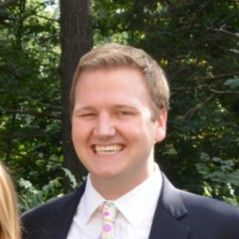
Truett Dwyer co-founded and co-runs Clerq, a New York company built specifically for that gap. Clerq is an account-to-account payments platform - money moves directly from a buyer's bank account to the merchant's, no card network in the middle. Dwyer runs it alongside co-founder and co-CEO Ben Markowitz, a title-sharing arrangement that is unusual and that they have kept.
The reason the category exists is arithmetic. On a normal coffee purchase, a card fee of roughly 3% is a rounding error. On a $50,000 vehicle it is fifteen hundred dollars, and in an industry where per-unit margins are thin, fifteen hundred dollars is a meaningful chunk of the profit. Add chargebacks - where a buyer disputes the charge weeks later and the money vanishes - and you have a payment method that a high-ticket seller quietly dreads. So dealers fall back on wires and cashier's checks, which are cheap and certain but also slow, manual, and a source of friction that can kill a sale at the finish line.
Clerq's pitch is to make the good option feel like the easy option. In the company's own words, it wants a payment "as seamless as a card swipe and as certain as a wire." That is the entire thesis compressed into nine words, and it is worth pausing on, because it names both things a merchant wants and admits that until now you had to pick one.
"As seamless as a card swipe and as certain as a wire."
- Clerq's product promise, and Dwyer's core betDo not build a consumer app
The obvious thing to do in payments is to build something a consumer downloads - a wallet, a button, a brand. Dwyer and Markowitz did the opposite. They chose to embed Clerq directly into the checkout workflows merchants already use, so the buyer barely notices there is a new company involved at all. The merchant gets a branded checkout; Clerq gets to live where the large transactions actually happen.
This is a less glamorous strategy and, so far, a more effective one. It reflects where the two founders came from. Both spent their early careers on the investor's side of the table, evaluating fintech and payments companies rather than running them. When you spend years watching payments businesses from the outside, you develop a taste for which ones have real distribution and which ones are just a nicer-looking app. Dwyer and Markowitz built the company they concluded did not yet exist.
The industries Clerq went after are the ones where the pain is sharpest: automotive, powersports, equipment, home and office, and luxury travel and goods. These are not sexy categories. They are categories where a single transaction can be five or six figures and where the seller has every incentive to shave payment costs. That is exactly the point.
Fortune 500 logos, moving quietly
Clerq says it grew revenue 6x over the past twelve months and processes hundreds of millions of dollars in payment volume. Its client list is more recognizable than the company itself: the number-one Toyota, Mercedes, and Audi dealerships, major dealership groups, and eBay Motors Secure Purchase, the program that handles payment for used vehicles bought on the marketplace. When someone buys a car on eBay and wonders how the money changes hands safely, part of the answer is Dwyer's company.
The market they are aiming at is enormous and mostly analog. Clerq puts the annual high-ticket payment opportunity at roughly $3 trillion, with something like $50 billion in processing revenue currently tied up in check- and debit-based transactions. In automotive alone the company frames the annualized revenue potential at north of a billion dollars. Whether those numbers prove out is the whole game, but the shape of the opportunity is clear: a lot of very large payments are still moving on infrastructure designed decades ago.
What Clerq actually sells is a stack of unglamorous but load-bearing features around the transfer itself: bank account verification, protection against non-sufficient-funds surprises, fraud screening, reconciliation, bookkeeping, and compliance monitoring. None of that shows up on a marketing billboard. All of it is the difference between a merchant trusting a bank transfer for a six-figure sale and sticking with the cashier's check they already understand. The product is less a payment button than a guarantee that the money is real, which is the thing a car dealer has always actually wanted.
"TFGI took the time to get to know us, being helpful with introductions before we were even raising capital."
- Truett Dwyer, on strategic backer The Friedkin GroupA $12M Series A, and who showed up
In October 2025 Clerq announced a $12 million Series A led by 645 Ventures, bringing total funding to $21 million. The round is interesting less for its size than for its cap table. Existing backers FirstMark Capital, Fika Ventures, Commerce Ventures, and Dash Fund re-upped. More telling were the strategic names: The Friedkin Group - a major automotive organization whose dealerships are the exact customer Clerq serves - and Yossi Levi, the operator behind the "Car Dealership Guy" brand that a large share of the auto industry follows.
Getting your customers' parent company and your industry's most-read commentator to write checks is a particular kind of validation. It means the people closest to the problem believe the fix is real. Dwyer's quote about Friedkin - that they made introductions before Clerq was even raising - is the founder's version of saying the relationship came first and the money came second, which in venture capital is usually the good order.
Wharton, Citadel, and the view from the other side
Dwyer graduated Magna Cum Laude from The Wharton School at the University of Pennsylvania with a B.S. in finance and marketing. From there he went into the deep end of finance: an investor role at Summit Partners, then a portfolio manager seat at Citadel, the hedge fund where the phrase "portfolio manager" carries real weight. Earlier stops included internships at The Blackstone Group and P. Schoenfeld Asset Management.
It is a resume built for staying in finance, not leaving it. The interesting decision is that he left. Managing a portfolio at Citadel is the kind of job people spend a decade trying to reach; walking away from it to build payment plumbing for car dealers is not the default career move. But it explains a lot about how Clerq is run - the company treats payments as a margin and risk problem to be optimized, which is precisely how an investor is trained to see the world.
The unglamorous market is the whole point
There is a version of fintech that is all consumer flash - neon cards, cash-back, apps that gamify your savings. Clerq is the other version. It is infrastructure aimed at a buyer who will never know the company's name, sold to a merchant who cares about basis points and chargeback rates. Dwyer picked a market that a lot of founders would find boring, and boring is often where the durable businesses hide.
The bet underneath it all is that account-to-account payments - money moving directly bank to bank, the way it does in much of the rest of the world - eventually eat into the card networks' grip on the most expensive transactions in the economy. If Dwyer is right, the next time you buy something large, the payment will be as easy as tapping a card and as final as a wire, and you will have Clerq to thank without ever realizing it. If he is wrong, it will be because changing how money moves is genuinely hard. Either way, the problem he chose is real, and the people who sell $50,000 things for a living seem to agree.
It is also worth noting how young the company is to be doing this. Clerq was founded in 2022 and, at last count, runs on a team of roughly seventeen people. That is a small group to be moving hundreds of millions of dollars for Fortune 500 retailers and the country's top dealership groups. Small teams processing large volumes is a familiar fintech pattern, and it usually means one of two things: either the software is doing the heavy lifting the way it is supposed to, or the company is about to feel the weight of everything it has taken on. Dwyer's finance background - the years spent underwriting risk at Summit and Citadel - is the reason to bet on the former. The whole company is, in a sense, a wager that a payments business is really a risk business wearing a friendlier interface.
For a founder, that framing is unusually honest. Most payment startups describe themselves in the language of delight - frictionless, magical, one-tap. Clerq describes itself in the language of certainty. It promises the merchant that the money will be there and the buyer that the process will be simple, and it treats those as two separate promises that both have to be kept. Coming from someone who used to manage a portfolio for a living, that is not a coincidence. It is a worldview.
Details worth keeping
Clerq claims to cut payment costs by roughly 75% versus card fees.
He and Markowitz share the CEO title - two co-CEOs, by design.
A strategic backer is Yossi Levi, creator of the "Car Dealership Guy" brand.
Both founders were fintech investors before they became fintech founders.