He ran the agencies that built brands on other people's platforms. Then he took over one of the platforms - and dropped the "Big" from BigCommerce.
A public-company CEO who will tell a reporter his stock price makes him feel like "the kid getting wedgied in front of the class every day." The candor is not an accident.
Travis Hess joined BigCommerce as President on May 28, 2024. Five months later, on October 1, he was CEO. A year after that, the company he runs no longer answered to the name BigCommerce at all. It was Commerce.com, and the "Big" - the word that had sat in front of "Commerce" since the company's founding in 2009 - was gone.
Hess did not come up through software. He came up through agencies, the firms that get hired to make a brand's online store actually sell things. For more than fifteen years he was on the buy side of platforms like the one he now runs, advising and scaling direct-to-consumer brands. He was chief commercial officer and then CEO of BVA, one of the better-known global DTC and Shopify agencies. When The Stable acquired BVA in December 2021, Hess became an executive vice president there. When Accenture acquired The Stable in 2022, he became a managing director, leading Accenture's direct-to-consumer commerce offering and, notably, running Accenture's global Shopify partnership.
That last detail is the interesting one. The person who now runs a competitor to Shopify spent his final pre-CEO job managing the world's largest consulting firm's relationship with Shopify. He has sat on partner advisory boards for Shopify, Klaviyo, SAP/Hybris, and Rackspace. He knows the ecosystem from the side that has to make it work in production, which is a different kind of knowing than the side that sells the license.
What he found when he arrived was a company that had bought interesting things and never connected them. BigCommerce owned Feedonomics, a product-data feed management business, and Makeswift, a visual page builder. Hess has told the story that he did not even know BigCommerce owned Feedonomics when he interviewed for the job. He read that gap as diagnosis: if the CEO candidate can't see the pieces, the market certainly can't. "That told me everything I needed to know about how disconnected the story was," he said.
So he rewired the story. The 2025 rebrand to Commerce.com was not a paint job over the same building. Hess describes it as a reboot - the acquisitions folded into one offering, much of the senior leadership team replaced, and the pitch shifted away from "here is a platform with features" toward "here are business outcomes, increasingly delivered by AI." The domain name change carried its own signal: a company that could afford and defend Commerce.com was making a claim about category ownership, not just picking a shorter URL.
The positioning is deliberately narrow. Asked how Commerce.com fits against the obvious comparison, Hess does not reach for the usual move of claiming to beat the market leader at its own game. "We're not designed for simple and easy - that's Shopify's strength," he says. "We're focused on complexity." That is an unusual thing for a CEO to say out loud, because it concedes a whole category of customers to a competitor. It is also a strategy: complex, enterprise-grade problems are the ones an agency operator spent fifteen years actually solving, and they are the ones a small, simple-first platform tends to struggle with. Hess is pointing his company at the terrain he knows.
Then there is the harder-to-swallow admission. Feedonomics, the product-data business BigCommerce bought, mostly serves customers who never touch the BigCommerce platform. Most CEOs would bury that fact or spin it into a cross-sell funnel. Hess says it plainly: "Most of our Feedonomics clients don't use our platform - and that's fine." The reason it is fine is the whole thesis. If commerce is moving toward a world where AI agents do the discovery, the recommendations, and the pricing, then the choke point stops being the storefront and becomes the product data feeding the agents. Feedonomics sits exactly there. In that framing, a data business with clients on every platform is not a mismatched acquisition. It is the most strategically located asset in the building.
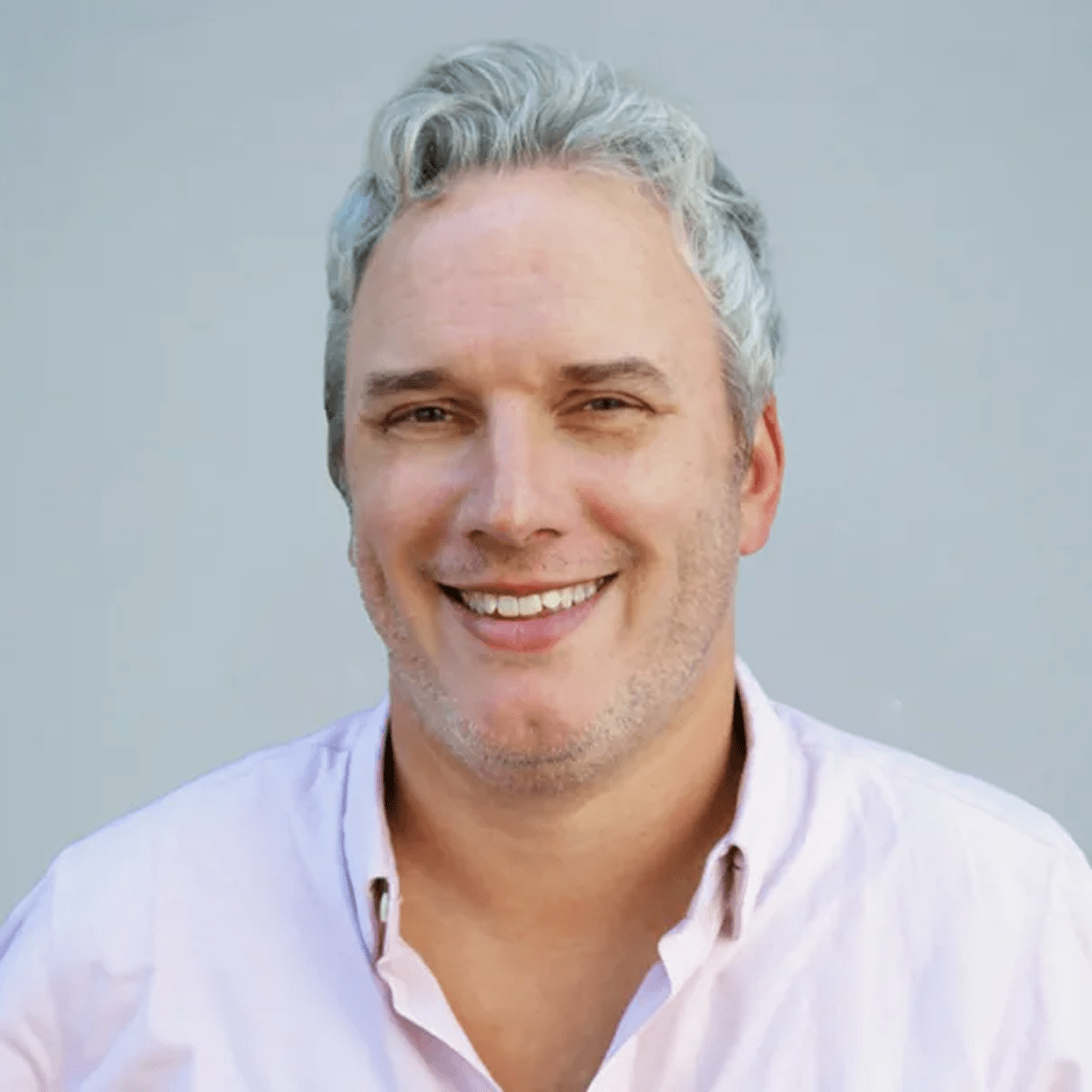
We've rebooted the entire company. It's not just a new name - it's a new model.
"We're not designed for simple and easy - that's Shopify's strength. We're focused on complexity." Hess is aiming Commerce.com squarely at enterprise-grade, hard problems rather than the fastest checkout to set up.
The thesis is that AI agents - not humans clicking buttons - will increasingly handle discovery, recommendations, and pricing. If ChatGPT and Perplexity are the next storefront, the brand with the cleanest product data wins the shelf.
"Most of our Feedonomics clients don't use our platform - and that's fine." A rare admission that the most valuable product lives outside the walls - and a signal about where the strategy is pointed.
Ran one of the most recognized global DTC and Shopify agencies. Earlier stops included LiveArea and Amplifi Commerce.
BVA is acquired by The Stable, a leading omnichannel commerce agency. Hess moves up.
The Stable is acquired by Accenture. Hess leads the firm's DTC commerce offering and runs Accenture's global Shopify partnership. Named one of Signifyd's 30 Most Influential in Ecommerce.
Joins the publicly traded platform on May 28, tasked with connecting a set of acquisitions that had never been stitched together.
Appointed CEO effective October 1, roughly five months after arriving.
Leads the rebrand from BigCommerce to Commerce.com, unifying Feedonomics and Makeswift under an AI-driven, composable model.
"I didn't even know BigCommerce owned Feedonomics when I interviewed. That told me everything I needed to know about how disconnected the story was."
"I've said before - I feel like the kid getting wedgied in front of the class every day."
"This feels like Y2K. There's widespread anxiety in the market."
"The market is changing, and we needed a brand that reflects where commerce is going, not where it's been."
A rough read on where Hess spent his time before taking the CEO seat - and the speed of the move once he was inside.
Advisory boards: Shopify, Klaviyo, SAP/Hybris, Rackspace. Illustrative bars, not to scale.
He is a lifelong Miami Dolphins fan, which is either irrelevant or a useful credential for anyone about to lead a turnaround: proof he can keep showing up through losing seasons. He golfs, he travels, and he raises two kids in Austin. And he talks about the hard parts of leadership - the stock dips, the vulnerability - in a way most public-company executives are coached out of.
Hess reaches for Y2K to describe the AI moment in commerce, and the comparison is more precise than it first sounds. Y2K was a period of genuine, widespread anxiety about a technical shift that most people could not evaluate for themselves, followed by an outcome nobody could confidently predict in advance. "There's widespread anxiety in the market," he says. His answer to that anxiety is not to promise the transition will be painless. It is to place a specific bet on where value moves when machines start doing the shopping - toward clean, structured, AI-ready product data - and to reorganize the company around being the place that value accrues.
That is the intellectual core of the Commerce.com story: agentic commerce, where the buyer arriving at your listing may not be a person at all but an AI system assembling a recommendation inside a tool like ChatGPT or Perplexity. In that world, the brand that wins the shelf is the one whose product information is legible to the machines. It is a less romantic vision of ecommerce than the one built around beautiful storefronts, and it happens to route straight through the assets Hess inherited.
The line that follows Hess around is the one about the stock price. "I feel like the kid getting wedgied in front of the class every day," he has said, describing what it is like to run a public company whose shares have not cooperated. It is a strikingly undefended thing for a sitting CEO to say. Most are trained to project unbroken confidence to the market. Hess has, instead, built a public identity around candor about the parts of the job that hurt.
His stated leadership philosophy runs the same direction. He talks about identity being forged in the hard moments rather than the wins - about vulnerability and resilience mattering more than a polished strategy deck when the pressure is real. "Bad stuff happens," is roughly the summary, "even at the top." Whether that candor becomes the turnaround or just the honest narration of one is the open question of his tenure. Either way, he is not pretending the seat is comfortable.
Travis Hess is the CEO of Commerce.com (the company formerly known as BigCommerce), the publicly traded ecommerce platform he rebranded in 2025 to bet the business on AI-driven, agentic commerce. An agency and consulting veteran who spent 15-plus years scaling direct-to-consumer brands at Accenture, The Stable, and BVA before ever running a software company, he joined BigCommerce as President in May 2024 and took the CEO seat that October. He is candid to a fault about the hard parts of the job, once comparing the experience of watching the stock price to 'getting wedgied in front of the class every day.'
Last updated: