The Story
The Platform Builder Who Always Worked One Platform Ahead
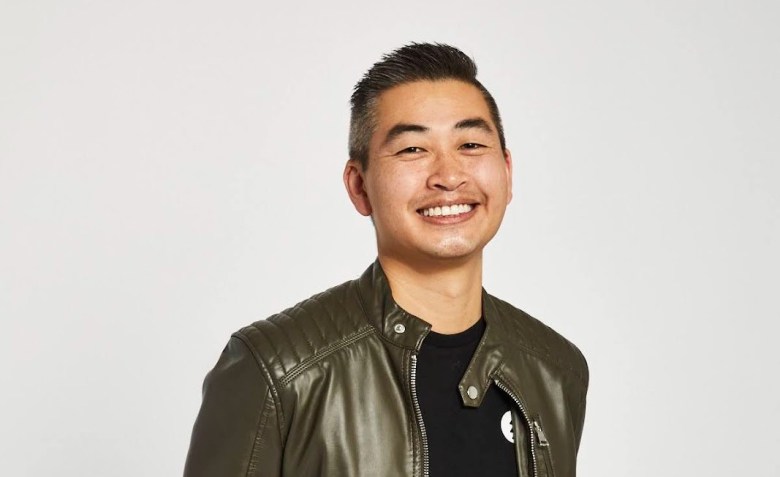
There's a specific year that keeps showing up in Tracy Chan's biography: 2020. That's when he joined Twitch as Head of Music, just as live venues shut down globally and a generation of musicians needed somewhere to perform. It's also when his daughter started playing a music game on Roblox called Splash. He didn't think much of it at the time. Four years later, he runs it.
Chan is CEO of Splash, the Brisbane-founded, AI-powered music creation platform that has accumulated 480 million plays inside Roblox. The premise is simple and quietly radical: what if every kid on Roblox could be the musician, not just the audience? What if "listening to music" became "performing music" - with AI handling the gap between intent and execution? That's the bet Chan made when he left SoundCloud in March 2024 to take the CEO role.
But to understand why he said yes, you need to trace the thread back further. Chan started at YouTube, where he designed and launched YouTube Insight - the platform's first analytics tool for creators. This was the mid-2000s, when "creator" wasn't yet a job title. He was building dashboards that told artists whether anyone was watching, at a time when most of the industry was still arguing about whether YouTube was a problem or an opportunity.
From YouTube he went to found CrowdAlbum, a social photo-and-video aggregator that stitched together fan-shot content from live concerts into something the industry hadn't seen: a "visual history" of a tour, assembled from the audience's perspective. Angel investors included executives from Spotify, Viacom, HBO, and Universal Music Group. That network says something about what he was already building. Spotify acquired CrowdAlbum in 2016, and Chan walked through the door and immediately started leading Spotify for Artists - the analytics and creator platform that is now used by millions of musicians and labels worldwide.
After four years building creator infrastructure at Spotify, he made a lateral move that looked odd from the outside: Head of Music at Twitch. The reasoning was precise. "One of the things that became very clear to me was that artists and fans wanted to connect with each other," he said. "But Spotify is about listening to music and discovering music - it's a kind of background experience. What attracted me to Twitch was that even though it's game-centric, at the core, it is creators and fans building community." The pandemic made that decision look prescient immediately.
Music is ultimately about connection. I'm inspired by Splash's vision to make music fun and accessible to anyone, and the momentum they've built within Roblox, using AI to power music experiences for over 400 million players.
- Tracy Chan, on joining Splash as CEO, March 2024
At Twitch, Chan ran music through arguably the most interesting two years the streaming world has ever had. Virtual concerts went from novelty to necessity. Artists who had never considered gaming platforms started streaming live sets. Chan helped build the infrastructure and partnerships that made Twitch a credible live music venue. Rolling Stone named him to its Future 25 list during this period - a list that tracks people shaping the next chapter of the music business.
Then came SoundCloud, where he was Chief Content Officer from June 2022 through early 2024. He oversaw music content, licensing, intelligence, and creator strategy - and launched several products: the Fans tool for artists, mobile direct messaging, a comments feature, and a global licensing deal with Merlin, the independent music licensing group. He built what he'd later describe as "SoundCloud for Artists," a direct echo of what he'd done at Spotify nearly a decade earlier.
The pattern across all of it: Chan builds at the place where creators need information, connection, or tools they don't yet have. He moves between platforms not because he's chasing titles but because each platform had a version of the problem he was interested in solving. The problem is always some variation of: how does an artist find the people who actually care about their work, and how do you build something sustainable from that connection?
The Roblox Thesis
Why 480 Million Plays Is the Beginning, Not the Peak
When Chan describes the market opportunity at Splash, he starts with a comparison that the music industry doesn't like to sit with: gaming is eight times larger than music. And the reason isn't that gaming made better content. It's that games are foreground activity, while music - in its current streaming form - is background. "Music is devalued," he's said, "because it is not the core central activity that you're doing."
The Splash thesis is a direct challenge to that dynamic. On Roblox, music isn't something playing behind something else. It's the thing itself. Players sing, rap, perform, and collaborate in an immersive virtual environment where they're also the artist, the audience, and the fan. The platform uses AI trained on music that Splash owns or has licensed - an important distinction that Chan draws repeatedly, and loudly.
The numbers are arresting. Splash's Roblox game averages 3 million plays and 2.8 million performances per month. The cumulative total hit 480 million. For context: most music artists spend their entire careers chasing a streaming milestone that size. Splash hands it to users who never recorded a professional track.
Chan's framework for understanding why: 68% of young people now see themselves as creators. They grew up with mobile phones and social tools that made creation the default mode of engagement. Passive listening was a behavior the industry trained into older generations. The next generation isn't waiting for permission to be artists.
The question is 'Why do people create?' If you have a product where people can create things but no one cares about it, it's not a good product.
- Tracy Chan
Hot Take / Industry Position
"It Is Unethical for Generative AI Companies to Make Money Off the Backs of Artists Without Compensation"
In an industry where many AI music companies have leaned on scraping existing recordings for training data, Chan has been unusually direct. Splash hires commissioned musicians to create its training data. They do not use artist content without permission. Chan's view isn't hedged: distributing AI music to streaming platforms in a way that competes with human artists for royalty pool share is, in his word, immoral. That's a harder line than most AI executives will draw. It's also a positioning decision: Splash is explicitly building toward a model where artists collaborate with and benefit from the AI, rather than being displaced by it.
Track Record
What He's Actually Built
📈
YouTube Insight
Designed and launched YouTube's first creator analytics platform, before "creator analytics" was a category.
🎶
CrowdAlbum - Spotify Exit
Founded 2013, acquired by Spotify in 2016. A social aggregator for live event fan content backed by music industry insiders.
🎵
Spotify for Artists
Led the product that became the standard analytics and management tool for artists and labels on Spotify.
🎬
Twitch Music
Built Twitch's music vertical during the pandemic, when live music had no alternative venue. Named to Rolling Stone's Future 25.
🎤
SoundCloud Content Strategy
Launched Fans tool, mobile messaging, and the Merlin global licensing deal as Chief Content Officer.
🧩
Splash CEO
Leading the AI music platform to 480M Roblox plays. SXSW 2025 speaker. Actively shaping ethical AI standards for the music industry.
Career Path
From YouTube Analytics to AI Music Gaming
YT
2006 - 2012
YouTube - Product Manager. Designed and launched YouTube Insight, the platform's flagship creator analytics tool, at a time when no one had built this kind of data visibility for video creators.
CA
2013 - 2016
CrowdAlbum - Founder. Built a social photo and video aggregator creating visual histories of live music events. Backed by executives from Spotify, Viacom, HBO, and Universal Music Group. Acquired by Spotify in 2016.
SP
2016 - 2020
Spotify - Director of Product Management. Led creator platform strategy and built analytics tools for artists and labels, including Spotify for Artists - now used globally by artists as their primary performance dashboard.
TW
2020 - 2022
Twitch - Head of Music. Joined the platform in August 2020, leading music through the pandemic years when virtual concerts became the industry's main live format. Named to Rolling Stone's Future 25.
SC
2022 - 2024
SoundCloud - Chief Content Officer. Oversaw music content, licensing, intelligence, and creator strategy. Launched Fans tool, mobile direct messages, and a global licensing deal with Merlin.
SL
2024 - Present
Splash - CEO (effective March 26, 2024). Leading the AI music platform with 480 million Roblox plays, pioneering ethical AI music training, and positioning Splash for the generation that creates music instead of just consuming it.
In His Own Words
What He Actually Says
It is immoral to take money from artists by distributing unsanctioned AI music to DSPs who compensate artists through the pro-rata royalty pool model.
Humans are important. Human ideas are important. Human creativity is important and valuable.
Artists need only 183 engaged fans on Twitch to earn equivalent income to 50-100 million streams elsewhere. There is a big opportunity in cultivating superfan relationships.
It feels like a generational shift is happening. The generation growing up now has fundamentally different expectations about music creation and consumption.
Side Notes
The Details That Don't Fit Anywhere Else
- He first heard about Splash because his daughter was playing it on Roblox in 2020 - years before he became its CEO. The anecdote functions as a thesis about where music is heading.
- CrowdAlbum was acquired by Spotify in 2016. He then spent four years building Spotify for Artists. He essentially sold his way into the job that defined his next chapter.
- Rolling Stone named him to its Future 25 while he was at Twitch - a list that tracks music industry leaders shaping the next decade.
- He studied both Management Science AND Interdisciplinary Computing and the Arts at UC San Diego. The combination predicted everything that followed.
- He also studied at The University of Hong Kong - the Australian-born exec has been cross-cultural from the start.
- Vinod Khosla - one of Silicon Valley's most demanding investors - specifically praised Chan's ability to "anticipate and build future-facing, culture-shifting products" when he joined Splash.
Links & Resources
Follow the Work