BREAKING Tony Fadell joins Ledger Board - Nov 2024 Named MIT's inaugural Designer in Residence - 2025 Build Collective now coaches 200+ deep-tech startups Quibim & Remedy Robotics - latest investments in 2025 300+ patents held by the Father of the iPod BREAKING Tony Fadell joins Ledger Board - Nov 2024 Named MIT's inaugural Designer in Residence - 2025 Build Collective now coaches 200+ deep-tech startups Quibim & Remedy Robotics - latest investments in 2025 300+ patents held by the Father of the iPod
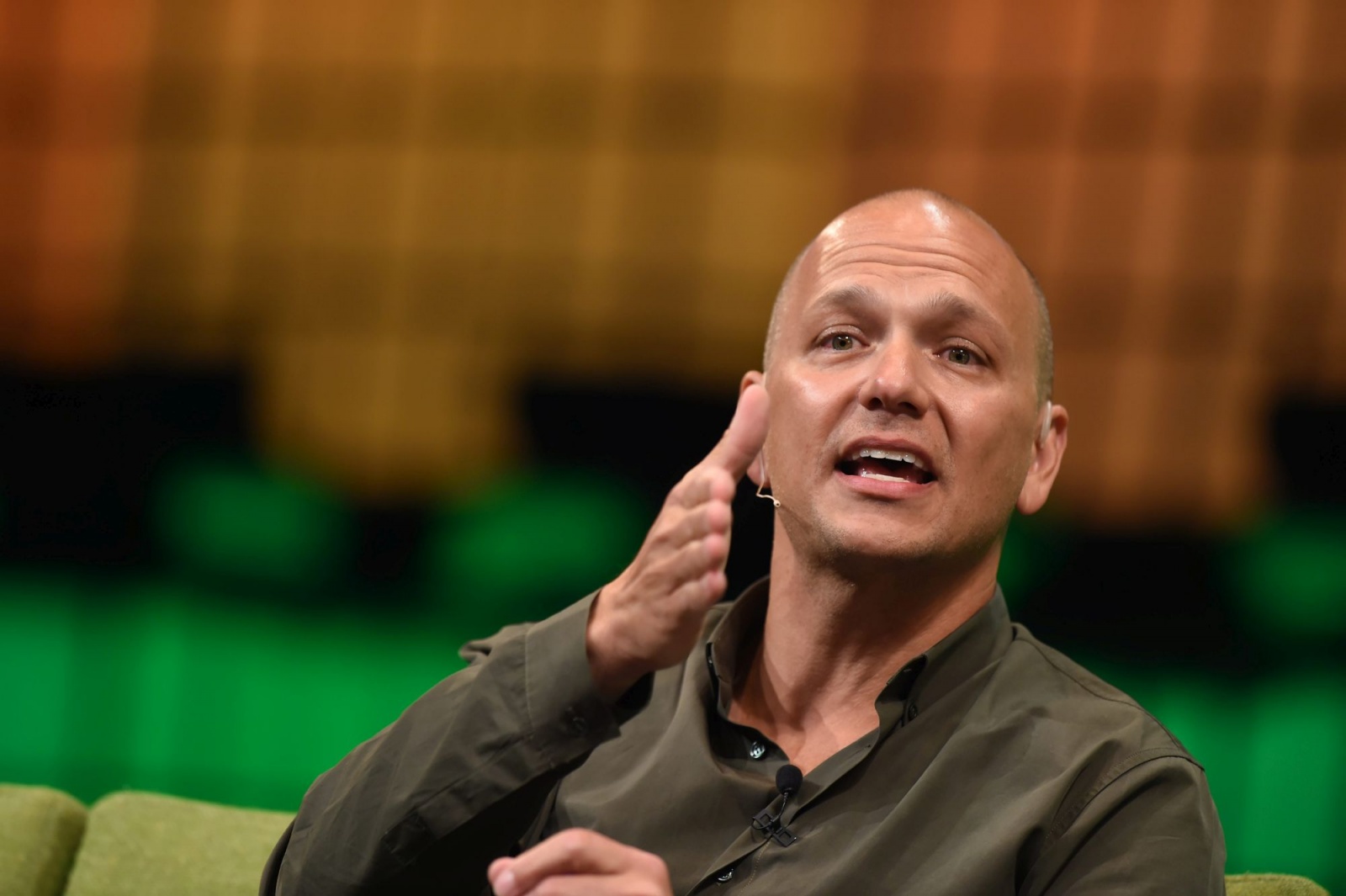
Tony Fadell portrait
Profile ◆ Inventor ◆ Founder ◆ Investor

Tony
Fadell

The man who tucked 1,000 songs into your pocket is now teaching scientists to ship. From a Michigan egg route to a $3.2B Google payday - he's still mid-stride, and still annoyed by bad thermostats.

300+ Patents $3.2B Exit 200+ Startups Coached Paris-Based
iPod iPhone Nest Author Deep-Tech Climate
Fast File "Father of the iPod" - co-creator of the iPhone - Nest founder - NYT Bestselling Author - Paris resident - and still designing hardware in his spare time.

What He Actually Does

Tony Fadell runs Build Collective from an office inside Station F - Paris's enormous startup campus, an old train shed that now incubates more early-stage companies than anywhere in Europe. He wakes up early. He reads. He argues. He designs hardware for companies that can't yet afford a hardware designer. He has done this, in various forms, since he reverse-engineered an Apple II CPU in his Michigan bedroom and sold chips back to the company he would eventually define.

The word "inventor" gets attached to Fadell a lot, and it's accurate, but it misses what makes him unusual. He is not a tinkerer who stumbled into scale. He is someone who has built world-changing products three times - the iPod, the iPhone, the Nest thermostat - across three different companies, with three different constraints, against significant internal resistance every single time. The common thread is not luck. It is a specific, repeatable obsession with the gap between what a product promises and what it delivers.

He left Apple in 2008 because his children were young and he wanted to be present. He came back, eventually, as the founder of a thermostat company. Steve Jobs called him "a pain in the ass." He considers that a compliment.

Before the iPod, There Was the Failure

General Magic is the company Silicon Valley cites whenever it wants to explain how talented people can be catastrophically wrong about timing. Founded as an Apple spinoff in 1992, it gathered an extraordinary roster - Andy Rubin, who would go on to create Android; Andy Hertzfeld and Bill Atkinson, two of the original Mac team. Fadell joined at 22 as a diagnostics engineer and watched something extraordinary collapse in slow motion.

The product - a pocket communicator with a touchscreen and a marketplace for apps - arrived a decade before the infrastructure existed to support it. No cellular data. No consumer internet. No one to explain why you'd want it. Fadell pushed leadership to pivot toward business users. They declined. The company failed publicly and expensively. He called it "the most influential failure in Silicon Valley" - meaning his own education, not the industry's.

After Philips (where he shipped Windows CE handhelds that critics loved and marketing departments ignored), he founded Fuse in 1999 with the idea that someone should build a small hard drive music player bundled with an online store. The dot-com bust killed his second-round funding before the prototype was finished. He shopped the concept everywhere. Jon Rubinstein, Apple's hardware chief, found him through an industry contact and called while Fadell was on a ski slope in Vail. Rubinstein brought him to Apple. Jobs reviewed the concept personally, picked up the model, and reportedly said: "We're building this and you're going to join us."

The iPod Years: One Product, Eighteen Generations

The iPod did not succeed because Apple had superior technology. It succeeded because Fadell and his team thought through every transition a person makes between wanting music and hearing music - and eliminated friction at each one. The "1,000 songs in your pocket" framing wasn't marketing. It was a product brief disguised as a slogan. It told the engineers exactly what the device was for.

Fadell led all 18 generations of the iPod. In 2006, Jobs pulled him sideways onto the iPhone project - the phone hardware and foundational software that would sell 100 million units before Fadell left the company. The famous $4 billion Samsung Flash purchase order, the single largest order Apple had ever placed, required both Jobs and Fadell to co-sign. Jobs called the board room meeting personally. The purchase secured the flash memory that made the iPod Nano possible.

He left Apple in November 2008, quietly, for family. His children were small. He and his wife Danielle - who had been Apple's VP of Human Resources - moved abroad. Jobs called and asked him to stay. Fadell agreed to remain an informal advisor for 18 months. He kept that promise.

A Thermostat That Cost $3.2 Billion

The Lake Tahoe cabin had a bad thermostat. Fadell could not program it. He stood there, a man who had just spent eight years redesigning how humans interact with technology at scale, unable to set his own heating schedule. He wrote a business plan in 2009 while living in Paris - his family's sabbatical home after Apple - and co-founded Nest Labs with Matt Rogers, a former Apple engineer, in May 2010.

The Nest Learning Thermostat launched in October 2011. It learned. It detected occupancy. It spoke in a design language that said "a person made this." It also quietly established that the 50% of US residential energy consumed by heating and cooling was an enormous, underserved market run by companies that had not rethought their products since the 1950s.

Google acquired Nest for $3.2 billion in January 2014 - its second-largest acquisition at the time. Fadell became a billionaire. He became CEO of the merged Google Nest entity. He resigned in June 2016. Reports of management turbulence surfaced. He has been characteristically direct about what happened and characteristically brief about the parts that don't serve as useful lessons.

Paris, Station F, and What Comes Next

Build Collective - which Fadell founded as Future Shape in 2017 and later renamed - is not a conventional venture fund. It takes no outside investors. It deploys Fadell's own capital, typically $250K to $25M per company, and deploys Fadell himself as a hands-on advisor. The portfolio of 200+ companies tilts toward problems that require hardware, systems thinking, and patience: food security, energy efficiency, disease, weather, robotics, transportation.

Known investments include Groq (AI hardware), Impossible Foods, Ledger, Nothing (the phone brand), Prenuvo, and Revolut. Fadell personally designed the Ledger Stax - a hardware crypto wallet featuring the world's first curved E Ink display - and joined Ledger's board in November 2024. He is also a board member at ARM Holdings, where his history runs deep: he helped cement ARM chips in the original iPod and iPhone, a decision that shaped the mobile industry's entire architecture.

In 2025, MIT's Morningside Academy for Design named him its inaugural Designer in Residence - the first time the program has existed. He has described the role as giving him access to exactly the kind of curious, technically brilliant, commercially naive people he has spent his career trying to help.

He still wakes up in cold sweats thinking about what the products he built brought into the world. He still calls that a beginner's mindset. He still argues - loudly, specifically, productively - that the most dangerous thing in any product meeting is the absence of a clear point of view.

$3.2B Nest Sale to Google
18 iPod Generations Led
200+ Startups Coached
20+ Languages for "Build"
The Arc

Career Timeline

1969
Born in Michigan. Lebanese father, Polish mother. Attends 12 schools in 15 years.
1989
Reverse-engineers the Apple II CPU in high school. Sells chips directly back to Apple.
1991
Graduates from University of Michigan with a BS in Computer Engineering.
1992
Joins General Magic - the Apple spinoff that invented the smartphone concept a decade early and ran out of road.
1995
Joins Philips; co-founds Philips Mobile Computing Group. Ships the Velo and Nino PDAs.
1999
Founds Fuse - a hard drive music player with an online store. Dot-com bust kills the funding.
2001
Joins Apple on a ski slope phone call. Designs the iPod. "1,000 songs in your pocket."
2006
Promoted to SVP at Apple. Begins co-leading iPhone hardware and foundational software.
2007
iPhone launches. Changes everything. Fadell was there before the keynote made it obvious.
2008
Leaves Apple. Family sabbatical. Moves to Paris. Remains Jobs's informal advisor for 18 months.
2010
Co-founds Nest Labs. Business plan written because of a frustrating ski cabin thermostat.
2011
Nest Learning Thermostat launches. Rethinks 50 years of residential energy interface design.
2014
Google acquires Nest for $3.2 billion. Named to Time's 100 Most Influential People.
2016
Resigns as Nest CEO. Returns to Paris. Begins planning Build Collective.
2017
Founds Future Shape (later Build Collective) at Station F, Paris.
2022
"Build" published. NYT, WSJ, USA Today Bestseller. 20+ language translations.
2024
Joins Ledger's Board of Directors. Previously designed their curved E Ink Stax wallet.
2025
Named MIT's inaugural Designer in Residence. Latest investments: Quibim, Remedy Robotics.
Track Record

Achievements

🎧

Father of the iPod

Led all 18 generations. Over 100 million units sold. Redefined portable music.

📱

iPhone Co-Creator

Led hardware and foundational software for the first three iPhone generations.

🏠

Nest - $3.2B Exit

Founded, built, and sold to Google in 2014. Google's second-largest acquisition at the time.

📘

NYT Bestselling Author

"Build" (2022) hit NYT, WSJ, and USA Today lists simultaneously. 20+ language translations.

300+ Patents

One of the most patent-prolific product designers in consumer electronics history.

🎓

MIT Designer in Residence

Named inaugural Designer in Residence at MIT Morningside Academy for Design (2025).

💼

Time 100 (2014)

Named one of Time Magazine's 100 Most Influential People in the World.

💰

Ledger Stax Design

Personally designed the world's first curved E Ink display hardware wallet.

🌍

Build Collective

Self-funded; coaches 200+ deep-tech startups. Portfolio includes Groq, Revolut, Impossible Foods.

In His Own Words

Six Things He Actually Believes

"I wake up in cold sweats every so often thinking, what did we bring to the world?"
"Learning by doing is the only way I know how to learn."
"There is always success in failure. Everybody fails. Get up and keep going."
"When I encounter a problem - something that's not quite right - I enjoy breaking it down in my mind and exploring possible alternative solutions."
"No amount of data will tell you if a feature should be in the product, because it doesn't exist. You need to have a very clear leader with a clear point of view."
"Stay beginners."
The Details That Define Him

Stories Worth Knowing

01
The egg route. Grades 2 and 3. Fadell ran a neighborhood egg delivery operation before he understood what a business was. His grandfather - a school superintendent who spent hours teaching him to saw, paint, and use tools - had already wired him for it.
02
Selling chips to Apple at 19. He reverse-engineered the Apple II CPU in his Michigan bedroom, identified a component shortage, and sold the chips back to Apple. Not as an employee. As a teenager with a soldering iron and a mailing list.
03
The ski slope call. Jon Rubinstein tracked down Fadell while he was on a ski run in Vail. Fadell said he'd need Jobs's personal commitment to multiple iPod generations before joining. Jobs made the promise. Jobs kept it - even when early iPod sales were slow enough to give anyone second thoughts.
04
The Sonos argument. Around 2003, Fadell wanted Apple to acquire Sonos - the speaker company that was doing interesting things with wireless audio. Jobs wanted to sue them instead. Jobs won that argument. Fadell has since noted, in various interviews, that Jobs wasn't always right.
05
The $4 billion signature. Jobs summoned Fadell to a board room to co-sign a $4 billion Samsung Flash purchase order - the largest single order Apple had ever placed at the time. It secured the flash memory that made the iPod Nano possible. Two signatures. Four billion dollars. One meeting.
06
The thermostat that cost $3.2 billion. He was standing in his Lake Tahoe ski cabin, unable to program the thermostat. He had just led the team that redesigned how humans interact with technology. The thermostat won that round. Nest won the next one.
07
A year in Bali. In 2018, Fadell based himself in Southeast Asia to study fintech, battery manufacturing, and plastic waste recycling opportunities. Not a vacation. A research trip disguised as one.
Published 2022

The Book

BUILD
Tony Fadell

Build: An Unorthodox Guide to Making Things Worth Making

A collection of 5-to-20-page essays on product design, career building, leadership, and startup survival. Fadell describes it as "a mentor in a box" - the advice he wishes someone had given him at General Magic, Philips, Apple, Nest, and Google. The kind of book that is easy to read and hard to forget.

Published May 3, 2022 by Harper Business. Simultaneous bestseller on the New York Times, Wall Street Journal, and USA Today lists. Translated into 20+ languages. Covers the right way to handle failure, how to manage up and down, when to trust data vs. conviction, and why a product without a clear "why" is already dead.

NYT Bestseller WSJ Bestseller USA Today Bestseller 20+ Languages Harper Business 2022
Build Collective Portfolio

Companies He Bets On

Fadell invests his own capital - $250K to $25M per company - in deep-tech startups solving hard physical problems. No outside LPs. Just his money, his time, and his 300+ patents worth of product judgment.

GroqAI Hardware
Impossible FoodsFood Tech
LedgerCrypto Hardware
NothingConsumer Hardware
RevolutFintech
PrenuvoHealth Imaging
Remedy RoboticsRobotics
QuibimMedical AI
KeyssaConnectivity
PhononicSolid-State Cooling
ARM HoldingsBoard Member
200+ MoreGlobal Deep-Tech
Fast Facts

Things You Didn't Know

01 Attended 12 different schools across 15 years as a child, moving with his father's sales career.
02 His first business was an egg delivery route in 2nd or 3rd grade.
03 Sold reverse-engineered Apple II CPU chips back to Apple at age 19, before he ever worked there.
04 The iPod concept came from a failed startup (Fuse) that lost its funding in the dot-com bust.
05 He left Apple in 2008 specifically to spend time with young children. Then co-founded a $3.2B company.
06 Nest was conceived at a Lake Tahoe ski cabin. The thermostat wouldn't cooperate.
07 His wife Danielle Lambert was Apple's VP of Human Resources. They married in 2002.
08 He personally designed Ledger's curved E Ink display crypto wallet - a hardware first.
09 Build Collective operates from Station F in Paris - Europe's largest startup incubator.
10 He spent 2018 based in Bali researching Southeast Asian fintech and battery manufacturing.
Connect & Share

Follow Tony Fadell