NOW Founder & CEO, CoverGo BASED New York / Singapore / Hong Kong RAISED US$15M Series A TEAM ~200 people LANGUAGES 8 spoken DEGREES 4 master's, 4 languages AWARD Fintech Entrepreneur of the Year, 2019 & 2020 AWARD Gen.T Leader of Tomorrow, 2024
Founder · CoverGo

Tomas
Holub

He tried to pay off his late father's mortgage with a life-insurance payout. The claim was rejected. Then he built the software he wished the industry had run on.

insurtechno-codeCoverGohealth · life · P&C
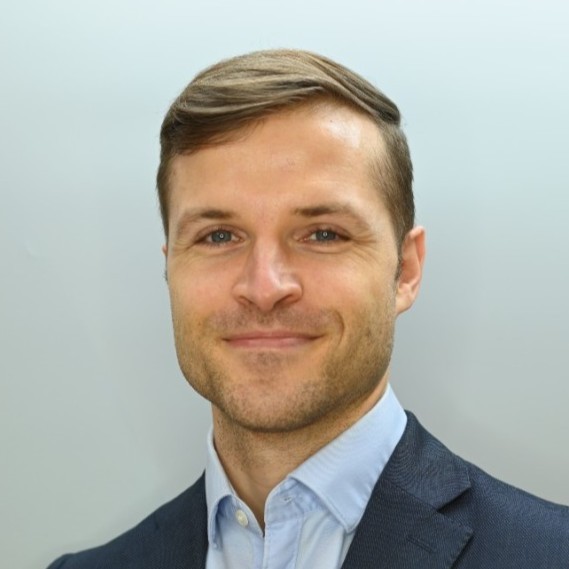
Tomas Holub, founder and CEO of CoverGo

The face insurers meet across five offices and twenty-plus countries. He speaks eight languages; the pitch works in most of them.

2017
CoverGo founded
20+
insurer clients
5
global offices
$32.7M
total funding
01 / The work now

A drag-and-drop builder for a century-old industry

Tomas Holub runs CoverGo, a no-code, AI-powered core insurance platform that health, life and property-and-casualty insurers use to build products without writing much code. The company holds a patent on a drag-and-drop builder that lets an insurer assemble a policy roughly the way you would assemble a slide deck. This is a stranger sentence than it sounds. Insurance product logic is famously the kind of thing that lives in a mainframe written before the people maintaining it were born, and CoverGo's proposition is that you can drag that logic around on a screen instead.

The company is headquartered out of Singapore and Hong Kong, with offices reaching Silicon Valley, New York and Dubai, and it now employs somewhere around 200 people serving more than 20 insurance clients. Holub himself lists New York as home base, which is a reasonable place to be if your customers are large regulated financial institutions on several continents and your job is to convince them that the boring, load-bearing part of their business can be replaced by a startup's software.

That is the harder sell in enterprise technology. Insurers do not switch core systems casually; the core system is where the money and the promises live. CoverGo's answer has been to make the platform modular and standards-heavy - ISO 27001 certified in 2023, SOC 2 Type I compliant - so that the pitch is less "trust the startup" and more "here is the paperwork." It raised a US$15 million Series A in 2022, part of roughly US$32.7 million total, which in insurtech terms buys you a seat at the table without buying you the whole room.

"Make insurance a hundred percent digital, and accessible, for everyone."Tomas Holub, on CoverGo's mission

The mission is stated flatly and repeated often, and it is worth noticing that "accessible" is doing real work in that sentence. Holub did not arrive at digital insurance as a market opportunity he spotted in a spreadsheet. He arrived at it through a specific, personal failure of the analog kind, which is the part of the story he tells first.
02 / The origin

A denied claim, and a mortgage he had to pay himself

Nine years before CoverGo existed, Holub's father died. Holub went to settle his father's mortgage using the life-insurance policy that was supposed to cover exactly this situation. The claim was rejected. The coverage, he learned, had lapsed. So he repaid the mortgage himself, during a period that was already about as difficult as periods get.

It is the kind of experience that most people file away as a grievance and a warning to read the fine print. Holub filed it as a product spec. He noticed that plenty of other people ran into the same wall - opaque policies, lapsed coverage nobody flagged, claims processes that seemed designed to be survived rather than used - and he decided the underlying machinery was the thing to fix. If insurance were fully digital, the reasoning went, the lapse would have been visible, the terms legible, the claim less of a black box.

There is a tidiness to founder-origin stories that usually deserves suspicion, but this one has the opposite quality. It is not flattering and it is not clever. It is a bereaved person discovering that a financial product failed at the one moment it was purchased for, and then spending the next decade building infrastructure so the failure is at least harder to hide.

"My insurance claim was rejected. My father's coverage lapsed."On the events that led to CoverGo

He founded CoverGo in February 2017 and assembled a team of insurance and insurtech people around the idea. The company grew out of Asia rather than the usual insurtech launchpads of London or the US, which turned out to fit a founder who had already spent his career moving between countries and languages.

03 / Before the company

Four degrees, four languages, twenty countries

Holub grew up in a modest family in the Czech Republic, where his parents did not have university degrees. He then went and collected an unusual number of them. By his own account he earned two bachelor's degrees and four master's degrees in six years, each of the master's in a different language, covering risk management, international business, public administration and business administration. He did this while working part-time and living on scholarships, which is a lot of syllabi to hold in your head at once.

The languages were not a party trick; he speaks eight of them, and that fluency became load-bearing when the job turned into selling enterprise software to regulated institutions across three continents. Before CoverGo he worked as an insurance and banking consultant at PwC in London, then as head of operations at an insurance-technology company in Singapore - two roles that, in retrospect, look like a fairly deliberate education in the exact problem he would go on to attack.

He has worked in more than 20 countries. That number tends to get cited as a credential, but its real value shows up in how CoverGo was built: as a company that treats being spread across Singapore, Hong Kong, Dubai, New York and Silicon Valley as the default state rather than an expansion milestone. Global was the starting condition, not the reward.

Outside the company, Holub sits on the Insurtech Committee of the Fintech Association of Hong Kong and the Insurance Authority's Fintech Task Force, mentors fintech startups, and turns up regularly on conference stages. He was named Fintech Entrepreneur of the Year in 2019 and again in 2020, and a Gen.T Leader of Tomorrow in 2024.

04 / In his words

Four short sentences that explain the whole company

My insurance claim was rejected.

My father's coverage lapsed.

Many other people have similar issues with insurance.

Help insurance companies make insurance a hundred percent digital, and accessible, for everyone.

05 / The record

What he has actually built and won

01

Founded and scaled CoverGo to ~200 people across five global offices.

02

Fintech Entrepreneur of the Year, 2019 and 2020.

03

Gen.T Leader of Tomorrow, 2024.

04

Raised a US$15M Series A; ~US$32.7M total funding.

05

Grew CoverGo to 20+ insurance clients worldwide.

06

Company holds a patent for its drag-and-drop product builder.

07

Earned four master's degrees, each in a different language.

08

Serves on Hong Kong fintech & insurance-regulator committees.

06 / Odd & telling

Details worth keeping

LANGUAGES

He speaks eight languages - and earned each of his four master's degrees in a different one.

MILEAGE

He has worked in more than 20 countries across three continents.

THE MISSION

CoverGo's stated purpose is exactly this: make insurance 100% digital and accessible to everyone.

THE PATENT

Insurers assemble products on CoverGo the way you'd assemble slides - drag, drop, done.

ORIGIN GEOGRAPHY

He built a global insurtech out of Asia, not the usual London or Bay Area launchpad.

FIRST DEGREE-HOLDER

His parents had no university degrees; he ended up with six.

07 / The bet

Selling modern software to an industry that distrusts it

The thing about core insurance systems is that they are the least glamorous and most consequential software an insurer owns. They price the risk, hold the policies, and pay - or decline to pay - the claims. Replacing one is closer to a heart transplant than an app update, which is why the incumbents in this space tend to be decades-old vendors selling multi-year implementations. CoverGo's argument is that a modular, no-code, cloud-deployable platform can do the same job faster and let insurers change products themselves instead of filing a change request and waiting a quarter.

That argument only works if the buyer believes the newcomer will still be standing in ten years and will not become the next headline breach. This is why so much of CoverGo's public posture is about certifications rather than features - ISO 27001, SOC 2 Type I, a patent on the builder. For a founder whose entire origin story is about an insurance product that quietly failed a customer, there is a certain consistency in building a company obsessed with making its own reliability legible on paper.

The company also leans hard on where the industry is going: AI-driven workflows, claims automation, embedded insurance sold through non-insurance channels, and the general expectation that a policy should be as buyable as anything else on a phone. Holub's framing keeps returning to the word "accessible," which for insurance means fewer people discovering, at the worst possible moment, that the coverage they thought they had was not there.

Whether CoverGo becomes the platform that a meaningful slice of the world's insurers run on is an open question - it is a mid-stage company competing against very large, very entrenched incumbents in a market that punishes downtime. But the setup is coherent. A founder who lived the failure, a product aimed squarely at the failure, and a decade of moving between the countries and languages where the customers actually are.

08 / Watch

On camera

YOUTUBE · ITC ASIA Adrit Raha & Tomas Holub on CoverGo Interview at InsureTech Connect Asia 2023 →

Quick facts: Tomas Holub

Tomas Holub is the founder and CEO of CoverGo, a global no-code, AI-powered core insurance platform for health, life and P&C insurers. He started the company in Hong Kong in 2017 after his own insurance claim was denied following his father's death, and has since grown it to roughly 200 people with offices in Singapore, New York, Silicon Valley, Dubai and Hong Kong and more than 20 insurance clients. Before CoverGo he consulted at PwC London and ran operations for an insurtech in Singapore; along the way he collected four master's degrees in four languages and has worked across 20-plus countries.

Role
Founder & CEO at CoverGo
Organizations
CoverGo, Fintech Association of Hong Kong (Insurtech Committee), Insurance Authority (Fintech Task Force), PwC (former)
From
Czech Republic
Nationality
Czech
Education
Four master's degrees: risk management, international business, public administration, business administration, Multiple (studied in four languages), Two bachelor's degrees, Multiple
Known for
Founded and scaled CoverGo to ~200 employees with offices in Singapore, New York, Silicon Valley, Dubai and Hong Kong, Fintech Entrepreneur of the Year, 2019 and 2020, Gen.T Leader of Tomorrow, 2024

Last updated: