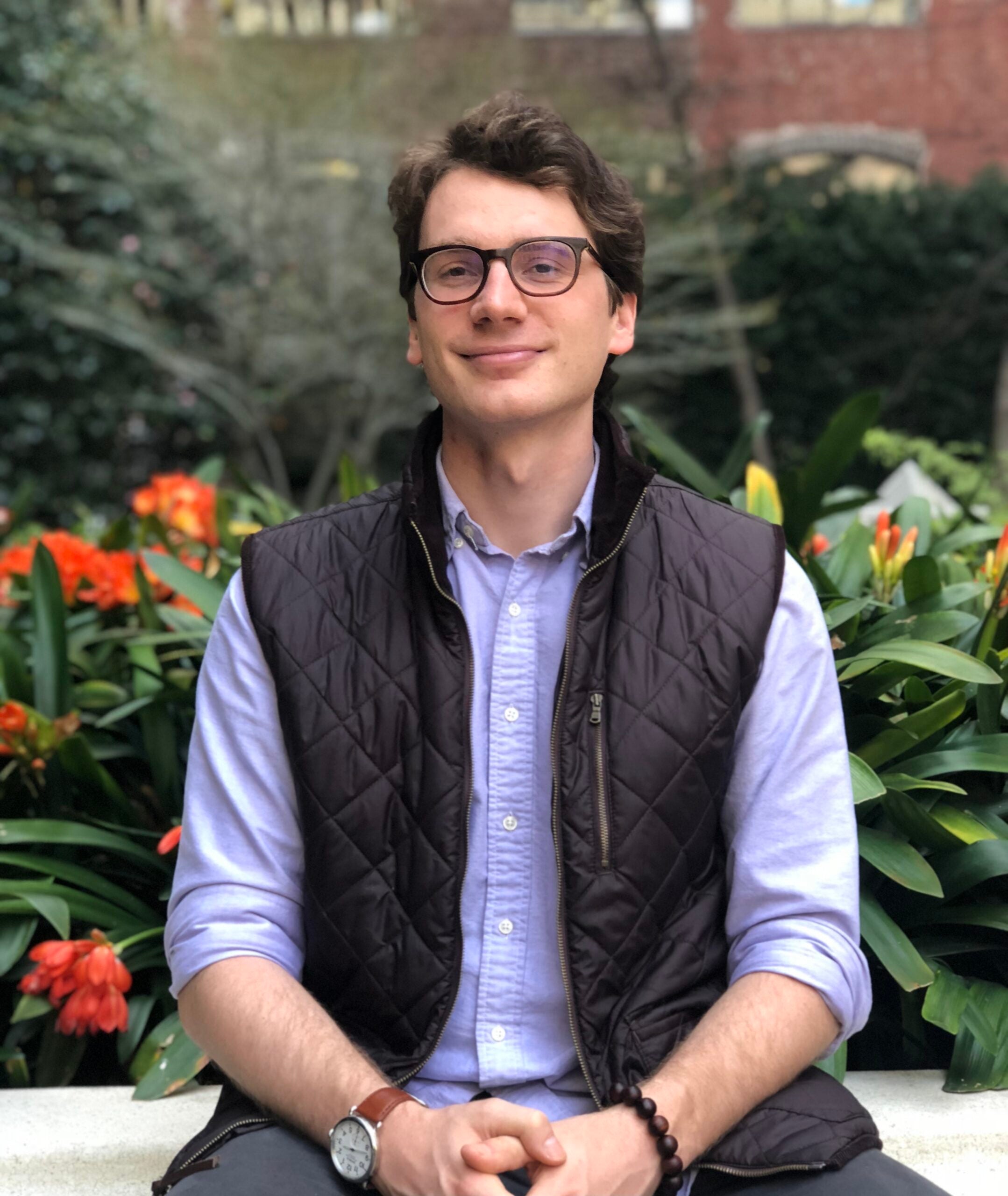
Built alone. Before the world caught up.
The clinical trial system was designed for a different century. Patients drove hours to academic hospitals. Participation required geography, proximity, and luck. Diverse communities - the ones most affected by many diseases - were structurally excluded from the research meant to help them. Tom Lemberg looked at that system and saw not a feature, but a bug.
Lemberg grew up in Bloomfield Hills, Michigan, graduated from Cranbrook Kingswood, and landed at Harvard with dual interests that would define his career: computer science and molecular and cellular biology. He wasn't just curious about disease - he understood the code underneath it. At Harvard, while completing two degrees, he taught undergraduates how to build mobile apps. That's the kind of person he is: always operating at two levels simultaneously.
"I really wanted to do something impactful that affects people's lives."
- Tom Lemberg, Founder & CEO, CurebaseAfter Harvard, Lemberg spent a year at Athenahealth building healthcare software, then moved to Syapse - a real-world evidence startup in San Francisco - where he worked on EMR data integrations, clinical trial matching engines, and tumor board workflows. By 2017, he had seen enough of the problem up close. He left to build the solution.
For six months, there was no team. Just Lemberg, his couch, and a $3,000 domain name. The technology he built in that period became the foundation of Curebase: a full-stack platform for decentralized clinical trials. In 2018, Y Combinator came calling, and the company raised its first $2.5M. The rest followed fast.
Bring Your Own Physician - and everything changes.
The standard clinical trial model has a built-in absurdity: to participate in research that might save your life, you typically have to travel to one of a handful of academic research centers, find time off work, arrange transportation, repeat visits for months. If you live in rural America, or lack the money to navigate that system, you're simply not in the trial. And the trial is less useful for it.
The "Bring Your Own Physician" Revolution
Curebase pioneered a model where patients discover a trial online, enroll from home using their phone, and participate in the study with their own community doctor - not a distant research institution. Lemberg has onboarded 100+ community physicians as first-time clinical trial researchers. The local doctor, who already knows the patient, becomes the study investigator. Geography stops being destiny.
"Bring Your Own Physician is something that we're really pioneering. A patient could discover a clinical trial on the internet, sign up at home, and participate with their own doctor."
- Tom LembergThe downstream effect is striking. Curebase trials achieve 32% greater diversity among participants compared to traditional methods. The 97% patient satisfaction rating in a pivotal FDA-cleared study isn't a marketing number - it reflects what happens when the trial comes to the patient, rather than demanding the patient come to the trial.
What decentralized trials actually look like.
From a $3,000 domain to $59M raised.
Total raised: $59M+ • Lead investors: GGV Capital (A), Industry Ventures (B), Gilead Sciences (strategic)
The Series B in May 2022 was a validation from two directions at once: $40M from financial investors who saw the unit economics, and a strategic check from Gilead Sciences - one of the world's largest biopharma companies - who wanted Curebase baked into their own drug programs. When a global pharmaceutical company invests in your decentralized trial infrastructure, the thesis is confirmed.
The journey, checkpoint by checkpoint.
When the world caught up to what he'd already built.
There's a particular satisfaction in building something years before the world realizes it needs it. In 2020, when COVID-19 made in-person clinical trials nearly impossible, pharmaceutical companies and regulators scrambled to find remote alternatives. Curebase was already there. Lemberg launched CURE-19 - a platform enabling any patient in the US to enroll in COVID-related clinical studies from home. Y Combinator publicly celebrated it.
The Pandemic Paradox
COVID-19 didn't create decentralized clinical trials. It made ignoring them impossible. Three years into building Curebase, Lemberg found his entire thesis validated by global emergency. The company that had been explaining "why remote trials matter" was suddenly the company everyone needed.
The pandemic accelerated an industry shift that Lemberg had been betting on since 2017. Clinical trial software and methodology that would have taken a decade to adopt was suddenly the only viable option. Curebase's growth rate - 300-400% year over year - reflects that moment of forced adoption becoming genuine belief.
What Tom Lemberg says about it.
"The goal is to enable any patient to be in a clinical trial."
On Curebase's mission"We are an end-to-end clinical trial company with global capabilities and an extensive site network."
On Curebase's scope, Series B announcement"I want to change people's lives."
On founding motivationThings worth knowing about Tom Lemberg.
Double Harvard degree: Computer Science AND Molecular & Cellular Biology. The combination isn't accidental - it's the lens through which he sees every clinical trial.
$3,000 domain: The first real investment in Curebase was the URL. Before a co-founder, before a team, before a pitch deck.
Harvard teaching fellow: While completing two degrees, he taught undergrads mobile app development. He's always operated at two speeds.
Michigan roots: Born and raised in Bloomfield Hills, Michigan. Attended Cranbrook Kingswood, which he credits for teaching collaboration - the skill he says matters most as a founder.
Gilead backer: When one of the world's largest biopharma companies writes a check into your startup, your business model has officially graduated from "interesting idea" to "industry infrastructure."
BYOP pioneer: The "Bring Your Own Physician" concept sounds obvious in retrospect. Most great ideas do. Lemberg built it before anyone asked for it.
The scoreboard.
- Named to Forbes 30 Under 30 (2022, Healthcare category) for positive global change
- Raised $59M+ across seed, Series A, and Series B financing rounds
- Grew Curebase from solo founder to 125+ person company
- Enrolled 60,000+ patients across 60+ decentralized clinical studies
- Achieved 97% patient satisfaction in a pivotal FDA-cleared study
- 32% greater diversity among trial participants vs. traditional clinical site model
- Onboarded 100+ community physicians as first-time clinical trial researchers
- Secured strategic investment from Gilead Sciences (Series B)
- Y Combinator S18 cohort alumnus
- Launched CURE-19 platform for at-home COVID-19 trial participation (2020)