He runs a company that edits the copy of your genetic code and leaves the original alone. The lead drug is one changed letter of RNA, and the whole bet is that temporary beats permanent.
AIRNA is a Cambridge, Massachusetts biotech with an unusual proposition: it wants to edit RNA, not DNA. RNA is the working copy the cell makes from your genes, and AIRNA's platform recruits an enzyme your body already produces - ADAR - to rewrite a single letter of that copy. Change the message, and the disease-causing instruction goes away. Stop the drug, and the edit fades. Nothing permanent is done to the genome itself.
In June 2026, the company handed the operating job to Todd Bazemore, naming him President, CEO and a member of the board. The timing is the point. AIRNA had just moved its lead program, AIR-001 for alpha-1 antitrypsin deficiency, toward the clinic on the back of an oversubscribed $155 million Series B. That is the moment a biotech stops being a science project and starts being a company that has to run trials, manage cash, and eventually sell something. It is exactly the phase Bazemore has spent three decades working in.
He is not a bench scientist. AIRNA's science came from its co-founders, Thorsten Stafforst at the University of Tubingen and Jin Billy Li at Stanford. Bazemore is the person brought in to turn a platform into a pipeline into a product. His resume is a near-complete tour of the Boston-area rare-disease cluster - Sepracor, Dyax, Santhera, Kala - and now AIRNA, most of them within a short drive of one another.
Rodger Novak, AIRNA's executive chair, framed the hire around exactly that specialization, calling Bazemore's expertise in developing rare and orphan drugs "a perfect fit" to lead the company's next stage of growth. Bazemore, for his part, kept it simple: RNA editing, he said, has the potential to impact millions of people living with both rare and common conditions.
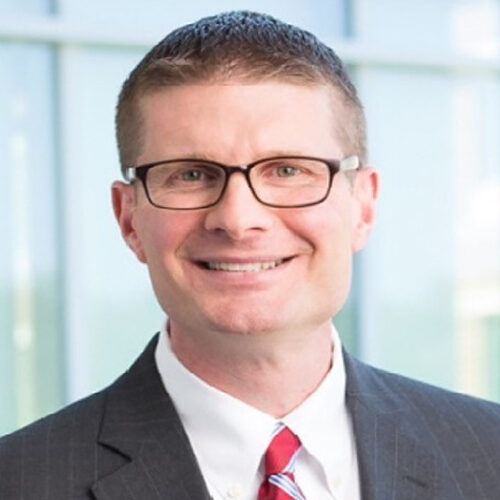
"RNA editing has the potential to impact millions of people globally living with both rare and common conditions."
The platform edits the transcribed RNA message rather than cutting the genome. The underlying DNA is left intact, so the change is temporary by design.
Instead of importing foreign machinery, AIRNA guides the body's own ADAR enzymes to a precise site and rewrites a single base of RNA.
The lead candidate targets alpha-1 antitrypsin deficiency, a rare genetic disorder, and has advanced toward a Phase 1/2 clinical trial.
Roughly 15 years at Sepracor, later Sunovion Pharmaceuticals, rising through commercial roles including VP of Managed Markets and VP of the Respiratory Business Unit, and helping launch blockbuster therapies.
EVP and Chief Commercial Officer at Dyax Corp, running global commercial strategy for hereditary angioedema - and playing a key role in the company's $6.5 billion acquisition by Shire plc.
EVP, COO and President of U.S. Operations at Santhera Pharmaceuticals, focused on rare neuromuscular diseases.
Joins Kala Bio (Kala Pharmaceuticals) as Chief Operating Officer.
Promoted to President and CEO of Kala Bio, a clinical-stage company working on secretome therapies for orphan ophthalmic conditions.
Named President, CEO and board member of AIRNA as its lead RNA-editing program moves into the clinic.
He stayed at one company - Sepracor, later Sunovion - for around 15 years. In an industry where executives rotate every few seasons, that is close to a tell: this is an operator who compounds inside an organization rather than optioning between them.
His degree is from UMass Lowell, not one of the marquee names he now works beside in Cambridge, where AIRNA sits a short walk from MIT and Harvard's biotech gravity. He got to the corner office through commercialization and operations, not a lab.
AIRNA itself lives on two continents - Cambridge for the company, Tubingen for a chunk of the chemistry - which means the operating job comes with a transatlantic seam to manage on top of the clinic.
Fix the message, leave the code.
Todd Bazemore is the President and CEO of AIRNA, a Cambridge, Massachusetts biotech developing RNA-editing medicines that rewrite disease-causing genetic variants without permanently altering DNA. Appointed in June 2026, he arrived as the company's lead program, AIR-001 for alpha-1 antitrypsin deficiency, moved into the clinic on the back of an oversubscribed $155 million Series B. A University of Massachusetts Lowell graduate with more than 30 years in rare-disease drug development, he previously ran Kala Bio, led U.S. operations at Santhera, and was chief commercial officer at Dyax during its $6.5 billion acquisition by Shire.
Last updated: