He ran social media for a sports network, got tired of waiting a week for every video, and built the tool that lets a marketing team make one before lunch.
That is the strange thing at the center of Thibaut Machet's company. He runs PlayPlay, a business whose entire product is making videos, and his argument for why it exists is that people would rather not.
"The main objective of an organisation's communications, HR, social media, and marketing functions isn't to create videos," he has said. "These teams want to sell products, hire people, and engage their communities, and video is the most powerful type of content to help them do this." The tool, in other words, is a means to skip the tool. You type the words, choose a template, and PlayPlay returns something on-brand and finished in a few minutes. The editing timeline that professionals stare at all day never appears.
Machet is the CEO and one of three co-founders of PlayPlay, which he started in 2017 with Aurelien Dayres and Clement Moracin. The company sells software to marketing and communications departments at large companies - the sort of teams that need a recruitment clip, a product announcement, or an internal update, and do not have a video editor sitting nearby. By 2024 that had grown into a business with roughly $48 million in annual recurring revenue, more than 1,500 customer companies across 15 countries, and something close to half of the CAC 40, the index of France's largest listed firms.
The insight did not arrive in a vacuum. Before PlayPlay, Machet spent about six years as the social media director at Eurosport, from 2010 to the end of 2016, running strategy across Facebook, Twitter, Instagram and Snapchat. A sports newsroom is a video factory that never stops, and he watched, up close, how long it took to turn a moment into a shareable clip. The bottleneck was not ideas or footage. It was the software, and the specialists you needed to operate it. PlayPlay is essentially his attempt to remove the week between having something to say and being able to say it in video.
He came to that job the long way. In 2007, still a student at emlyon business school, he founded an early social venture called izi-pass.com. In 2009 he joined Canal+, the French media group, as a project manager assistant in its strategy department. And in 2013, while at Eurosport, he started a football film festival called La Lucarne - named for the top corner of the goal, the hardest place to score. A decade of media jobs and side projects, all circling the same territory: sport, screens, and the internet, before the company that would define him.
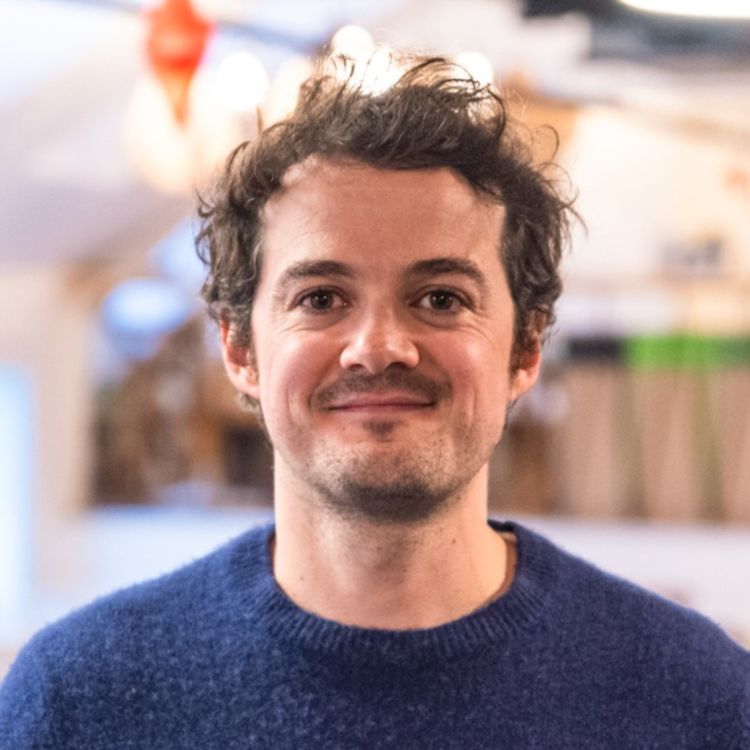
"These teams want to sell products, hire people, and engage their communities, and video is the most powerful type of content to help them do this."
Founds izi-pass.com, an early social media venture, while a student at emlyon business school.
Joins Canal+ as a project manager assistant in the strategy department.
Becomes social media director at Eurosport, running strategy across every market and platform for six years.
Starts La Lucarne, a football film festival, on the side.
Leaves Eurosport at the end of the year.
Co-founds PlayPlay in Paris with Aurelien Dayres and Clement Moracin.
Raises a Series A led by Balderton Capital.
Raises a $55M Series B led by Insight Partners, opens the New York office, and moves there himself to lead the US business.
The 2022 Series B came with a plan attached. The $55 million, led by Insight Partners with Balderton continuing on from the earlier round, was earmarked for two things: making the product better, and going to America. PlayPlay opened an office in New York City and set out to hire around a hundred people across technology, product, sales and marketing on both sides of the Atlantic. Machet did not send someone else to run the US expansion. He moved to New York himself.
That is a particular kind of choice. A founder who relocates across an ocean is signaling that the new market is not a satellite - it is the front line. The company he left behind in Paris was already substantial, backed by the French Tech Next40/120, the government list of startups judged capable of becoming global leaders. Selling the same product into American enterprises, against American competitors, is a different game, and Machet decided to play it in person.
He has been unusually open about the parts of the journey that founders normally polish out. He wrote a long essay, in French, recounting a startup's first day through its Series A "like you've never read it" - the honest version, not the highlight reel. It is the kind of thing a person writes when the messy middle interests them more than the trophy.
The next test is arriving on its own. A product built on the premise that video editing is too slow now has to reckon with AI that can generate a video from a website or a document outright. PlayPlay's answer has been to fold those capabilities in - idea-to-video features that sit inside the same platform. The tool that made editing easy is trying to make it automatic, which is either the natural next step or the beginning of a very different company. Machet is betting it is the former.
His first company launched in 2007, a full decade before the one that made his name.
He ran Eurosport's social feeds across Facebook, Twitter, Instagram and Snapchat before building a video startup.
La Lucarne, the film festival he founded, is named for the top corner of a goal - the hardest shot in football.
He grew up in the French Alps and traces his entrepreneurial streak to his family.
PlayPlay's official account is @playplayvideo, but Machet keeps his own at @thibautmachet.
Roughly half of the CAC 40 - France's largest listed companies - are PlayPlay customers.
Thibaut Machet is the CEO and co-founder of PlayPlay, a video creation platform that lets marketing, HR and communications teams turn text and raw clips into polished branded videos without editing skills. He started it in 2017 after six years running social media at Eurosport, grew it to roughly 240 employees across Paris, New York and Berlin, and raised a $55M Series B in 2022 led by Insight Partners. He now runs the company from New York, where he moved to build out the US business.
Last updated: