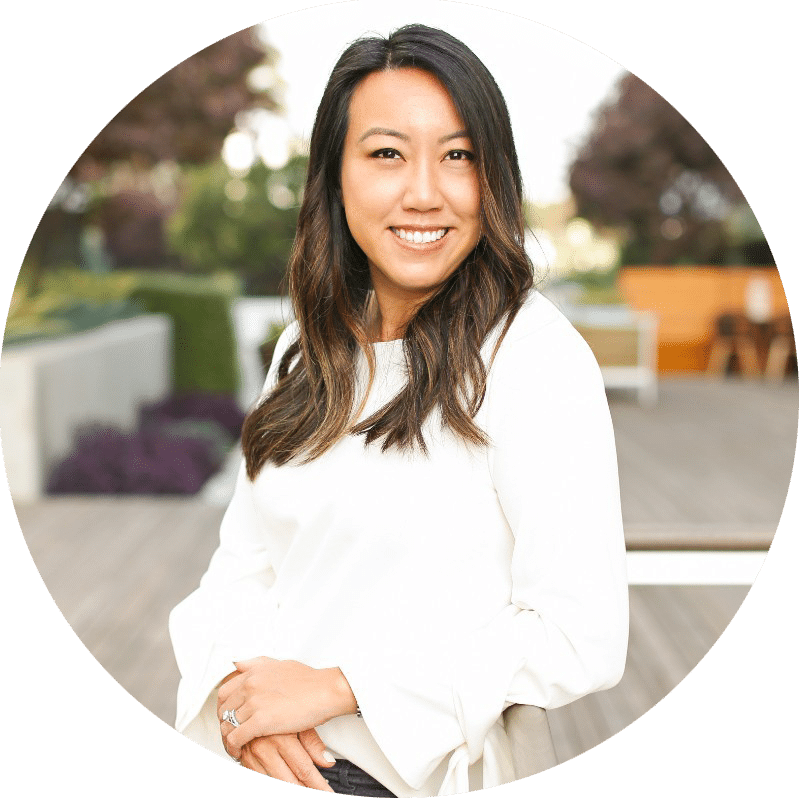
She opened a bank account with a coupon code. It later held millions in venture money. That is roughly how the whole company started.
The first three bank accounts at Greater Good Health were opened with new-customer coupon codes. One of them went on to receive millions of dollars in venture funding. Sylvia Hastanan tells that story without flinching, because the alternative - pretending she always knew what she was doing - would be a lie, and she does not seem to have much use for those.
Today she runs a Los Angeles medical group built on a single, contrarian bet: that nurse practitioners, long treated as a supporting cast in American medicine, can be the lead. Greater Good Health embeds NP-led primary care into the lives of seniors, by telehealth and by in-home visit, partnering with the risk-bearing organizations that get paid to keep people healthy rather than to bill them when they are sick.
It is a company about access. Hastanan watched physicians grind through 35 patients a day, minutes at a time, burning out in real time, while an entire skilled workforce stood underused beside them. So she went and built the thing that would put that workforce to work. No grand plan announced it. A casual call with a colleague produced a contract to build a primary care model. She had no business plan, no team, and no funding, which is to say she had exactly the conditions most founders spend months trying to avoid.
Six months later there were nearly 50 employees. The office grew from 200 square feet to 2,000 in two months. As of early 2026 the company has closed a Series B and reached roughly 120 people. The accident has held up rather well.
Healthcare is a right. No matter your upbringing, ethnicity, belief system, or skin color, everyone should have access.- Sylvia Hastanan
Hastanan's argument is simple enough to fit on a napkin and stubborn enough to build a company on. Nurse practitioners are trained, licensed, and ready. The system mostly asks them to assist. Greater Good Health asks them to deliver - primary care, for seniors, where the need is sharpest and the physician shortage is most acute.
The wager underneath it is about people, not org charts. Make the work humane, she argues, and the patients are the ones who benefit. So the company treats provider happiness as a clinical input, not a perk.
The economics matter here too. By partnering with risk-bearing organizations - the groups paid to keep a population well rather than to bill for each visit - the model lines up incentives that usually point in opposite directions. A happier provider stays longer, knows the patient better, and catches the chronic condition earlier. That is the whole loop, and Hastanan has spent two decades learning where it tends to break.
Enable nurse practitioners to practice the full scope of their training, not a fraction of it.
Telehealth and in-home visits meet seniors where they actually are.
Partner with risk-bearing organizations paid to keep people well.
There was an opportunity to wrap our arms around nurse practitioners and enable them to work at top of license.- On founding Greater Good Health
She credits Penn for the cross-wiring that made it possible - nursing in one hand, the language of finance in the other. "I probably wouldn't have been exposed to all that if I didn't go to Penn," she has said. It is the rare founder origin where the unfair advantage was paying attention in two buildings instead of one.
The years in between were not a detour. As a strategist for physician groups, health plans, and hospitals, she worked on value transformation, population health, care model design, and the unglamorous machinery of revenue cycle management. At HealthCare Partners she built programs for the highest-risk patients, the ones the system most often loses track of. At Optum she carried that work to a national scale, supporting care delivery organizations across multiple states. By the time the idea for Greater Good Health surfaced on a phone call, she had already seen the failure modes up close. The company is less a leap than a thesis she had been assembling for years.
We believe in supporting nurse practitioners, who we think have been an overlooked and maybe underutilized resource in healthcare.
If we can create a work environment where providers are happy, that in turn yields healthier patients.
I watched as physicians continued to be burnt out and struggled with caseloads, 35 patients in a day and only seeing them for minutes at a time.
Resting is as essential as working. We must remember to take care of ourselves mentally and physically.
Pass control to others who are experts in their areas and learn how to extract what you need.
Healthcare is a right. Everyone should have access.
A founder who calls rest "as essential as working" has to back it up, so she does. Greater Good Health runs a Wellness Wednesday with company-paid Pilates, and leadership is required to take fully unplugged days off. For a first-time CEO who admits she leans hard on a network of advisors, the move is consistent: she would rather hand control to the right expert than perform certainty she does not have.
Before any of this, there was a stage. As a child she trained in ballet and performed in a parade at Disneyland - which, depending on how you squint, is either an unrelated fun fact or the earliest evidence that she is comfortable being the one out front.
Sylvia Hastanan on building a medical group around an overlooked workforce - and why happier providers make healthier patients.