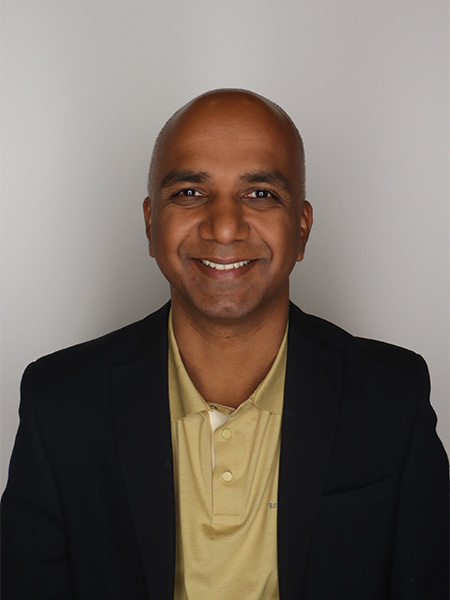
Thirty Dollars and a Broken Fax Machine
In 2009, Sunil Patro was on vacation in Riviera Maya, Mexico when an email arrived with a job offer attached. Standard procedure: print the document, sign it, fax it back. The catch was that Riviera Maya had no obvious fax machine. Patro spent the better part of an afternoon hunting through a small Mexican town, finally locating a print shop, completing the transaction for somewhere around $30-40 - and spending the rest of the vacation turning that annoyance into a company.
That company is Signeasy, now one of the world's most accessible electronic signature and contract management platforms, with 10 million users across 180+ countries and over 100 million contracts processed since launch. The logic was that simple: if signing a document is this painful, someone needs to fix it.
Patro grew up in Orissa (Odisha), India, in a household that moved every two to three years because of his father's banking career. That early nomadism seems to have set a pattern. He studied Electronics and Communication Engineering at the Indian Institute of Technology in Kharagpur - one of India's most competitive universities - then crossed the Atlantic for a Master's in Computer Engineering at Purdue University. From there, the resume reads like a controlled march through Silicon Valley: software design engineer at Microsoft, senior software engineer at Eyecon Technologies in Palo Alto, then early roles at Tokbox and Cleartrip.
Origin Moment
"In 2009 when I was vacationing in Mexico, I got an email that I had to sign and fax a few important documents. I had a tough time looking for a fax machine and a printer. So, that led me to develop an app where you could sign on any mobile device." - Sunil Patro, Times of India
Coded From a Hammock. Launched Into History.
In March 2010, Patro quit his job at Eyecon Technologies. Rather than renting an office or joining an accelerator, he did something considerably more interesting: he packed up and traveled through Central and South America for six months, building the first version of Signeasy from hostels and cafes. Total spend on living and development during that stretch: roughly $20,000. Launch date: July 2010.
That founding mythology matters because it isn't incidental - it's the company's actual product philosophy. Patro was building specifically for the person receiving a document, not for the enterprise sending it. While DocuSign built workflows for senders - IT departments, legal teams, enterprise procurement - Patro focused on making the signing experience so fluid that it felt invisible. The insight held: Signeasy's user base grew through word of mouth, organic app store discovery, and eventually, two Apple global commercials.
Apple featured Signeasy in its advertising. That's not a badge most mobile founders can claim. It signals a product that Apple believed average consumers would recognize and want - not an enterprise power tool, but something genuinely useful in daily life.
The Decade No One Talks About
Between 2010 and 2020, Signeasy existed in a place the venture capital world doesn't have a clean name for: too successful to ignore, too stubborn to fund. Patro wasn't looking for outside money. He built the product, the users came, revenue followed, and the team grew. When the company finally raised its first external capital in December 2020 - a Seed round from strategic SaaS operators - it was a decade in.
That timeline is unusual enough to be almost disorienting. The SaaS model in the 2010s was practically synonymous with early venture funding, aggressive growth targets, and hockey-stick slides. Patro ran a different play: keep the product simple, keep the team lean, keep the customers happy. "We rely on product to sell the job for us," he said in one interview. With 48,000+ business customers and no traditional enterprise sales motion for most of its life, it was product-led growth before that phrase became a LinkedIn category.
"Making something easy is the most difficult part of any product. It should be so easy that people don't even notice it."
- Sunil PatroThe Signer vs. The Sender
The strategic insight behind Signeasy was positional, not technological. DocuSign, Adobe Sign, and the other major players focused on the enterprise sending experience: compliance dashboards, workflow builders, admin controls, audit trails for legal teams. Those are real needs. But Patro noticed something: no one was building for the person at the other end of the process - the contractor, the patient, the new hire who just got an email with a PDF attachment and has no idea what to do next.
Signeasy claimed that territory. By being mobile-first, dead simple, and available on any device before the enterprise players fully committed to mobile, it built a base of individual users who then brought the product into their organizations. Classic bottom-up SaaS motion, executed before that pattern had its current name.
In 2024, the company layered in AI: Key Terms Extraction, AI Contract Summary, Smart Q&A. In 2025, it shipped AI contract review, bulk send, and SMS signatures. The 15-year-old startup is running at 250+ product releases per year. Patro's aspiration remains consistent: a platform so easy that no professional services or training is ever required.
"Play your own game, make your own rules - entrepreneurship is where you define the horizon, success criteria, and rules."
"When it is your own idea on your own company, there's no boundary to it."
"We must be easy to use, easy to do business with, and easy to set up. No professional services or trainer required."
"Take care of your employees first and they will make your customers happier." (Citing J.W. Marriott)
The Geography of the Build
Patro is a genuinely mobile person. His family was based in Mexico City at the time of at least one interview while he ran operations across Dallas, San Francisco, and Bangalore. He built the company's founding version from hostels. The product's earliest customers found it because they needed to sign something from a hotel room, or a beach cafe, or a taxi. There is a coherence between the founder's temperament and the product's identity that doesn't always exist in software.
The Purdue University engineering alumni program recognized him in 2024. The Software Report named him a Top 50 SaaS CEO in 2020. Apple ran his product in global commercials. None of those feel like the final chapter. At 15 years in, Signeasy is still accelerating - AI features, new integrations, 250+ releases per year - and Patro still frames the goal the same way he did in 2010: make signing so easy no one notices it.
He started that project because a fax machine cost him $35 and an afternoon in Mexico. Some problems are worth solving for less.