YesPress Profile / Health & Wellness
StretchLab Franchise
The company that took the thing everyone skips at the gym - and built 500+ studios around it.
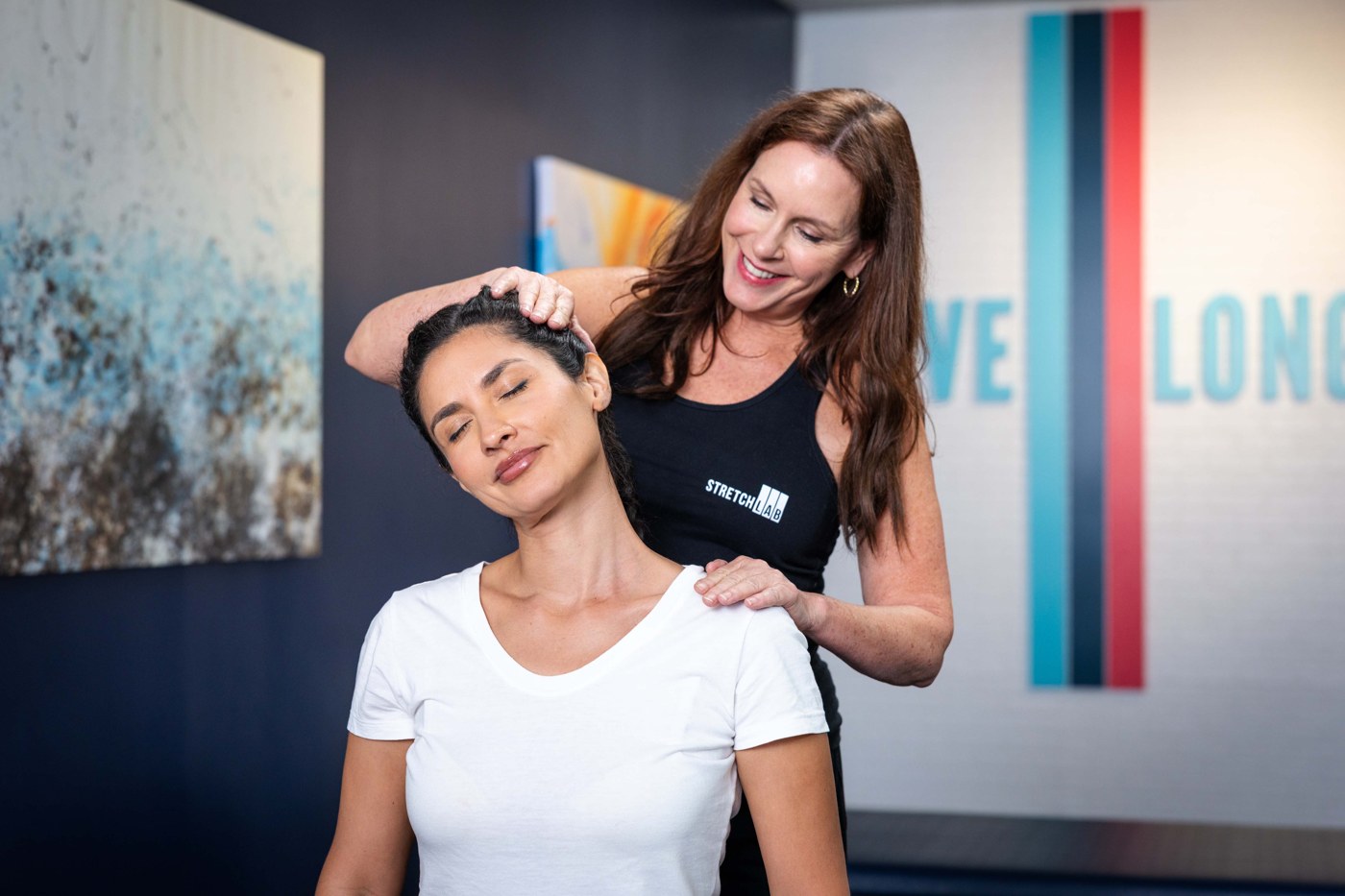
The company that took the thing everyone skips at the gym - and built 500+ studios around it.
Walk into a StretchLab on a Tuesday morning and the scene is oddly calm for a fitness brand. No clanging plates, no spin-class shouting. Just rows of padded tables, soft music, and a member lying down while a specialist named a Flexologist eases their hamstring through a range it has not visited in years. The whole business is built on a small, stubborn truth: almost everyone knows they should stretch, and almost no one does. StretchLab decided that gap was a market.
Today it is the original and largest one-on-one assisted stretching franchise in the world - more than 500 open studios across North America and a growing international footprint. It is owned by Xponential Fitness, the publicly traded boutique-fitness group behind brands like Club Pilates. And it has done something genuinely rare in wellness: it turned a free, forgettable habit into a membership people actually keep.
"Don't just stretch - get stretched."
StretchLab's brand promise, which doubles as the entire pitchFor decades, flexibility lived in the cracks of the fitness world. It was the five minutes a trainer tacked on at the end, the foam roller gathering dust, the thing physical therapists prescribed only after something already hurt. There was no place you went specifically to get stretched, and no professional whose entire job was to do it well. The advice was everywhere; the service was nowhere.
That created a strange vacuum. Athletes wanted better recovery. Desk workers wanted relief from hours of sitting. Older adults wanted to keep moving without pain. All of them were told to "stretch more," and almost none of them had a good way to do it. StretchLab's founding insight was unglamorous but correct - if you build a studio, hire trained people, and make the appointment as easy as booking a haircut, plenty of people will pay to have it done right.
"Stretching used to be the thing you felt guilty about not doing. StretchLab made it an appointment on your calendar."
The category shift, in one sentenceStretchLab opened in Venice, California in 2015 as a single boutique concept. The bet that changed its trajectory came in 2017, when Anthony Geisler's Xponential Fitness acquired the then-tiny brand - just a handful of studios - and pointed its franchising machine at it. Xponential had a thesis: take a focused wellness concept, standardize it, and let owner-operators carry it into every neighborhood.
The other half of the bet was credibility. Anyone can offer a stretch; not everyone can defend it. So in 2017 the company recruited stretching expert Brad Walker - a man who has written actual books on the subject - to build a real curriculum. The result was the Flexologist Training Program: a 70-plus hour course, blending in-studio instruction with online learning, that became the first nationally accredited certificate program for assisted stretching recognized by the Institute for Credentialing Excellence. The word "Flexologist" sounds a little invented because it is. The training behind it is not.
What makes a StretchLab visit different from a friend yanking your arm is the system around it. New members start with MAPS, a body-scan assessment that sounds like science fiction and mostly delivers. You do three overhead squats in front of a 3D camera; it captures thousands of data points and scores four things - Mobility, Activation, Posture and Symmetry. The output is a map of how your body actually moves, including the imbalances you cannot feel. Your Flexologist uses it to customize each session rather than guessing.
25- or 50-minute sessions using PNF, static and dynamic techniques, tailored to you.
Small-group classes that keep the communal, energetic studio feel - and the price - friendlier.
3D imaging that turns three squats into a movement profile across four metrics.
Pneumatic compression add-on for circulation and muscle recovery after the stretch.
"MAPS uses 3D imaging to measure your Mobility, Activation, Posture and Symmetry - then your Flexologist reads the data and adjusts."
How StretchLab keeps a soft service feeling measurableSkeptics are right to ask whether assisted stretching is a real category or a clever rebrand of "we'll touch your toes for you." The growth curve is the strongest counterargument. From roughly a handful of studios at acquisition to 300-plus within a few years, then past 500 - that is not a fad's shape. It is a network compounding.
The customer base is deliberately broad. StretchLab serves people across a wide range of ages and fitness levels - athletes chasing recovery, office workers untangling desk posture, seniors protecting their mobility, and people managing chronic tension or pain. The business model is the familiar boutique-fitness one: recurring memberships of stretch sessions, plus add-ons like MAPS and NormaTec, sold through franchisees who own and run their own studios under a standardized system.
"First assisted stretching franchise to reach 500 open studios in North America."
October 2024 - the milestone that retired the 'is this a real thing?' questionStretchLab states its mission plainly: help people move better, feel better and live better. It is the kind of line every wellness brand writes, but here it has an unusually concrete delivery mechanism. The value is not a vague feeling of self-improvement - it is a measurable range of motion, a posture imbalance corrected, a Flexologist who remembers that your left shoulder is the problem child. The brand's quiet ambition is to make assisted stretching as normal a category as Pilates or massage.
Book a session and someone trained takes you through stretches you would never reach alone. Start with a body scan and get a baseline you can track over time. Add compression recovery after a hard week. Buy a membership and treat flexibility like the maintenance it is, instead of the emergency repair it usually becomes. For entrepreneurs, there is a different use entirely - a franchise model with an accredited training program and a brand that already proved the category exists.
Why it matters tomorrowGo back to that calm Tuesday-morning studio. A decade ago, that room did not exist - not as a destination, not as a profession, not as a line on anyone's monthly budget. Stretching was advice you ignored. StretchLab's bet was that if you gave it a table, a trained specialist, a 3D camera and a membership, people would show up. More than 500 studios later, they do. The member on the table is not doing anything new; humans have stretched forever. What is new is that someone built the place, trained the people, and made it an appointment worth keeping. That is the whole story - and it is a surprisingly durable one.