He studied how to build a star on Earth. Then he picked a smaller, stranger fight: the rust eating America's bridges.
CO-FOUNDER & CEO // ALLIUM ENGINEERING // PEABODY, MA
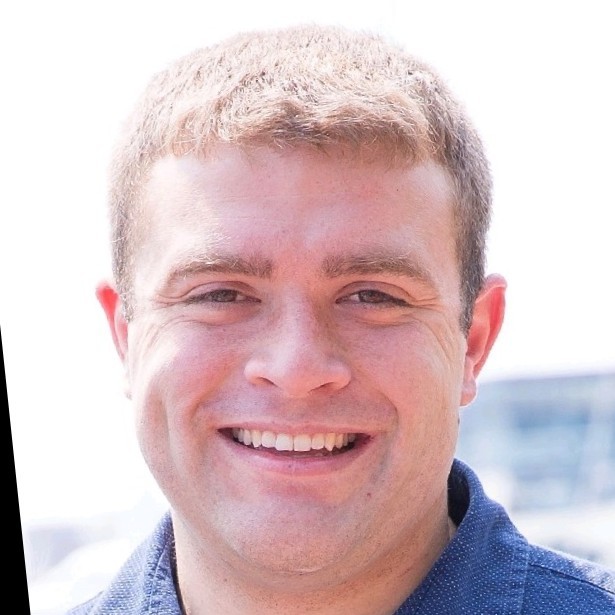
Steven Jepeal, co-founder and CEO of Allium Engineering
Across the U.S., the typical bridge deck lasts about 30 years on average - we're enabling 100-year lifetimes.
Origin
Jepeal earned his PhD in MIT's Department of Nuclear Science and Engineering, working under Professor Zach Hartwig on the brutal materials problem at the heart of fusion: what survives inside a machine trying to recreate the conditions of the sun. While he was there, Hartwig and a cluster of NSE researchers spun out Commonwealth Fusion Systems, one of the most-watched deeptech startups of the decade.
He watched scientists become founders up close. "It definitely helped me catch the startup bug," he has said. The lesson he took wasn't about plasma. It was about taking hard science out of the building.
The science that became Allium came from a different lab. His co-founder, Sam McAlpine, did his MIT PhD under Associate Professor Michael Short on ARPA-E-funded work bonding metals to resist corrosion. Jepeal and McAlpine met through that research, then asked a contrarian question: what if you aimed exotic materials science not at reactors, but at the most ordinary structural material on Earth?
They worked with MIT's Venture Mentoring Service and connected with Tata Steel through the Industrial Liaison Program. The contrarian question became a company.
The Trick
Most "better steel" pitches die at the mill door, because they ask the mill to retool. Allium's design sidesteps the whole objection.
Begin with a standard steel billet - the same feedstock mills already run. No new supply chain.
Allium bonds a thin layer of stainless steel onto the billet, then rolls it into rebar through the existing line. "We integrate our system into mills so they don't have to do anything differently."
The cladding shields the steel from chloride and water. The corrosion clock that kills bridges at 30 years gets reset toward 100.
The Character
Plenty of climate founders chase the photogenic - batteries, jets, capture rigs. Jepeal chose rebar, the material nobody photographs, because that is where the carbon and the cost actually sit.
He took corrosion science born in an ARPA-E project and reshaped it to fit equipment that already runs. The hard part wasn't the chemistry. It was the willingness to change nothing.
His public line is a 30-vs-100 number a city engineer can repeat in a budget meeting. No jargon. Just the lifespan, and what it saves.
Why It Matters
Concrete and steel are two of the most carbon-intensive materials humans make. Every time a bridge deck corrodes and gets torn out at year 30, the carbon and the cost of pouring it are spent again - and again at year 60, and year 90. Jepeal's argument flips the math: build it once to last a century and you avoid the rebuilds entirely. The emissions you never emit are the cheapest ones.
That framing is why Allium reads as a climate company even though its product is gray, heavy, and shipped on flatbeds. The durability is the decarbonization. Allium pitches its cladding as climate resilience too - rebar engineered to hold up against intensifying storms, freeze-thaw cycles, and the salt of coastal conditions that wreck conventional steel fastest.
It is also a cost story, which is what gets a material specified. Stainless rebar exists already, but pricing has kept it niche. Allium's clad approach aims to deliver corrosion resistance close to stainless at a fraction of the price, while cutting the lifetime maintenance bill that quietly drains public works budgets.
The company has built its early base inside the climate-tech ecosystem - a member of Greentown Labs, with backing from investors including Anthropocene Ventures, Propeller, Great Wave Capital, and Aera VC. Jepeal's own Activate Fellowship, the Boston 2023 cohort, is the same launchpad that has incubated a generation of hard-tech founders trying to move atoms, not just bits.
Field Notes
The details that make Jepeal's company easy to remember and hard to dismiss.
Make the century-long bridge the default, not the upgrade.
— THE QUIET AMBITION OF STEVEN JEPEAL
Follow the Trail