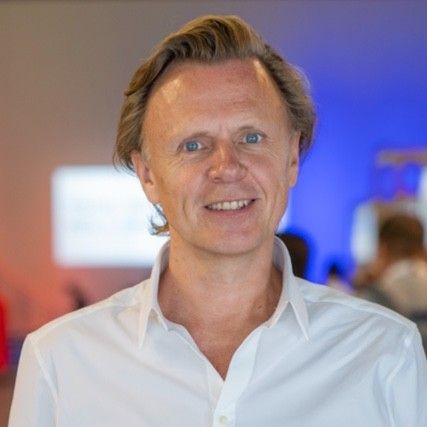
VideoElephant is a company you have probably used without knowing it. If you have watched a news clip embedded on a publisher’s website, or a weather segment on an app, or a short entertainment reel next to an article, there is a decent chance the clip passed through a Dublin company run by Stephen O’Shaughnessy. He does not make the videos. He does not own the audience. He owns the thing in the middle, which turns out to be the part everyone forgot to build.
What VideoElephant actually does is aggregation. It collects professionally produced video from providers like Reuters, Bloomberg, Al Jazeera, Fox, EuroNews and National Geographic, puts them in one library, and licenses that library to publishers, broadcasters and ad-tech platforms who need a lot of brand-safe video and do not want to negotiate with a hundred different content owners to get it. O’Shaughnessy’s pitch is refreshingly free of mystery: “The key reason why companies come to us is because we have all the big media providers in one place.”
This is the boring middle of the video business, and boring middles are frequently where the money hides. Everyone else in online video is fighting over the two glamorous ends - making the content or capturing the eyeballs. O’Shaughnessy went for the plumbing, the supply layer, the part where the water actually flows. It is not the kind of business that gets a documentary made about it. It is the kind of business that quietly adds 2,000 new clips a day.
“Video is exploding. It is where all the advertising dollars are going right now.”
Stephen O’ShaughnessyThe 500 videos that started it
The origin story is unusually literal. Before VideoElephant, O’Shaughnessy ran a venture called TravelGuide.TV, for which he produced roughly 500 travel videos of cities around the world. Having made all this content, he did the obvious thing and tried to license it to publishers. And here he ran into the problem that became the company: there was no centralized marketplace where a video producer could syndicate content to buyers. The supply existed. The demand existed. The exchange did not.
This is the cleanest kind of startup idea, the one that arrives as a personal annoyance rather than a whiteboard exercise. O’Shaughnessy needed a place to sell video and there wasn’t one, so in 2012 he built it in Dublin. The frustration was the market. The insight was not that video would be big - everyone could see that - but that the connective tissue between producers and publishers was missing, and whoever built it would sit in the flow of an enormous amount of content and money. He had spent the previous years accumulating what looks in hindsight like a deliberately assembled toolkit - Managing Director of Webmatrix through the early 2000s, founder of TravelGuide.TV, a stint in product at the music-video platform MUZU.TV - roughly 25 years across music, digital publishing, digital advertising and video production. Four industries that all, it turned out, needed the same missing piece.
From selling clips to selling everything at once
VideoElephant did not start in its current shape. Early on it worked the way you’d expect a marketplace to work: licensing individual clips, one at a time. Then clients started asking for something else. They didn’t want to shop for single videos - they wanted bulk access to the whole library. So O’Shaughnessy switched the model to a flat cost-per-thousand fee, letting publishers pull as much content as they needed. It is a small-sounding change that reshaped the business, and it came from the least glamorous source of product insight there is: listening to what customers were actually trying to buy.
That instinct - sell it the way people want to buy it - runs through the whole operation. The library now spans more than 30 categories, from breaking news to sport to travel to entertainment, precisely because publishers want a single supplier that covers everything rather than a specialist for each vertical. O’Shaughnessy is not building a boutique. He is building a warehouse, and he is fairly open about wanting it to be the largest warehouse of its kind on the planet.
“The goal is to have the biggest library in the world and I think we may already be at that point.”
Stephen O’ShaughnessyThe brand-safety business
There is a second, less obvious reason publishers and ad-tech buyers pay for a library rather than pulling free video off the open web: they need to know exactly what they are running. An advertiser buying inventory next to a news clip wants that clip to be legitimate, rights-cleared and unlikely to blow up next to their logo. VideoElephant’s whole proposition rests on being the safe, licensed, professionally produced alternative to the chaos of user-generated video. Every clip in the warehouse has a known provenance. In an industry that spends a great deal of money apologizing for the places its ads end up, “we know where this came from” is a genuine product.
O’Shaughnessy was making a version of this argument early. Even in the company’s first years he was framing the problem in terms publishers immediately recognized: advertisers were betting that video was the most effective way to spread their message, which created an awkward bind for web publishers - how do you publish enough engaging video to satisfy that demand when you don’t produce video yourself? VideoElephant’s answer was to be the supplier that let a publisher behave like a broadcaster without owning a single camera. The clients that followed - names like Forbes, AccuWeather, PCH and BitTorrent among them - were mostly buying exactly that: the ability to run professional video at scale without building a newsroom to make it.
Act Venture Capital, one of Ireland’s better-known funds, first backed the company with EUR 750,000 in 2014. Five years later they led a EUR 5.5m Series A in July 2019, capital earmarked for expanding the content library and building out the technology platform. The round is notable less for its size than for its cap table: alongside institutional money from Enterprise Ireland and the AIB Seed Capital Fund, the backers reportedly included Smurfit Kappa chief executive Tony Smurfit, a co-founder of Hostelworld, and a co-founder of Paddy Power. When several of Ireland’s most seasoned operators put money into the same relatively quiet media-infrastructure company, it is worth noticing what they saw. What they saw was a founder with a very large library and a plausible claim to owning the biggest one.
The funding fueled the kind of expansion that VideoElephant has always done without fanfare. A Dublin startup grew into a business with offices in New York, Los Angeles, Berlin and Sydney - following the video advertising dollars wherever they pooled. Its client and partner lists came to include names like Hearst, USA Today, Comcast, Forbes and ByteDance. By mid-2022 the Dublin team had expanded by roughly 50%, with parallel hiring in the US, on the back of what O’Shaughnessy described as rising demand for digital video content.
A bigger house on Earlsfort Terrace
In a sign of that growth, the company relocated its global headquarters to new offices at Earlsfort Terrace in Dublin, moving out of its previous Leeson Street space after outgrowing it a decade into the company’s life. “The move to new offices in Dublin marks an important milestone for VideoElephant,” O’Shaughnessy said of the relocation, “which has established itself as a key player in the video industry.” It is the language of a founder who has stopped explaining what his company is and started stating what it has become.
There is a timing story buried in here too. When O’Shaughnessy started licensing bulk video, the phrase “FAST channel” - free ad-supported streaming television - was not yet the thing investors said at every media conference. Those channels, and the broader CTV boom, run on exactly the kind of rights-cleared, brand-safe, categorized video that VideoElephant had spent years quietly assembling. Being early to a market is rarely glamorous. Mostly it just means you are already standing there, warehouse stocked, when everyone else arrives looking for content to fill their channels.
The interesting thing about O’Shaughnessy is how little he seems interested in being interesting. The public record on him is thin on personal color and thick on library statistics, which is itself a kind of tell. He talks about content categories and provider counts and cost-per-thousand pricing the way some founders talk about mission and disruption. His ambition is enormous - literally the biggest library in the world - but he states it as a logistics fact rather than a manifesto. The company he built is infrastructure, and he appears to have modeled himself on the same principle: essential, ubiquitous, and largely invisible to the people relying on it.
It also fits a particular tradition of Irish company-building. Ireland has produced a run of businesses that succeed by being critical infrastructure for someone else’s more visible product - payments, hosting, logistics, the layers customers never see. VideoElephant belongs in that lineage. It is not a consumer brand and never tried to be. It is a supplier to suppliers, a wholesaler in an industry obsessed with retail. The fact that some of Ireland’s most successful consumer-facing founders chose to back it - people who made their names in travel booking and betting - suggests they recognized the pattern: the least glamorous position in a growing market is often the most defensible.
And the market kept growing in exactly the direction O’Shaughnessy had bet on. Digital video consumption climbed, connected-TV advertising matured, and the free ad-supported streaming channels multiplied - all of them hungry for the same thing, which is a great deal of rights-cleared, organized, brand-safe video. A company that adds 2,000 clips a day across more than 30 categories is, almost by definition, well positioned to feed that hunger. The pitch barely had to change over a decade. The world simply moved toward the position the company had already taken.
That is the quiet joke of VideoElephant. It is one of the more consequential Irish media-tech companies of the last decade, its content likely playing on sites read by tens of millions of people, and its founder is a man most of those people could not name. He built the thing in the middle. The middle, it turns out, was where the elephant was hiding all along.