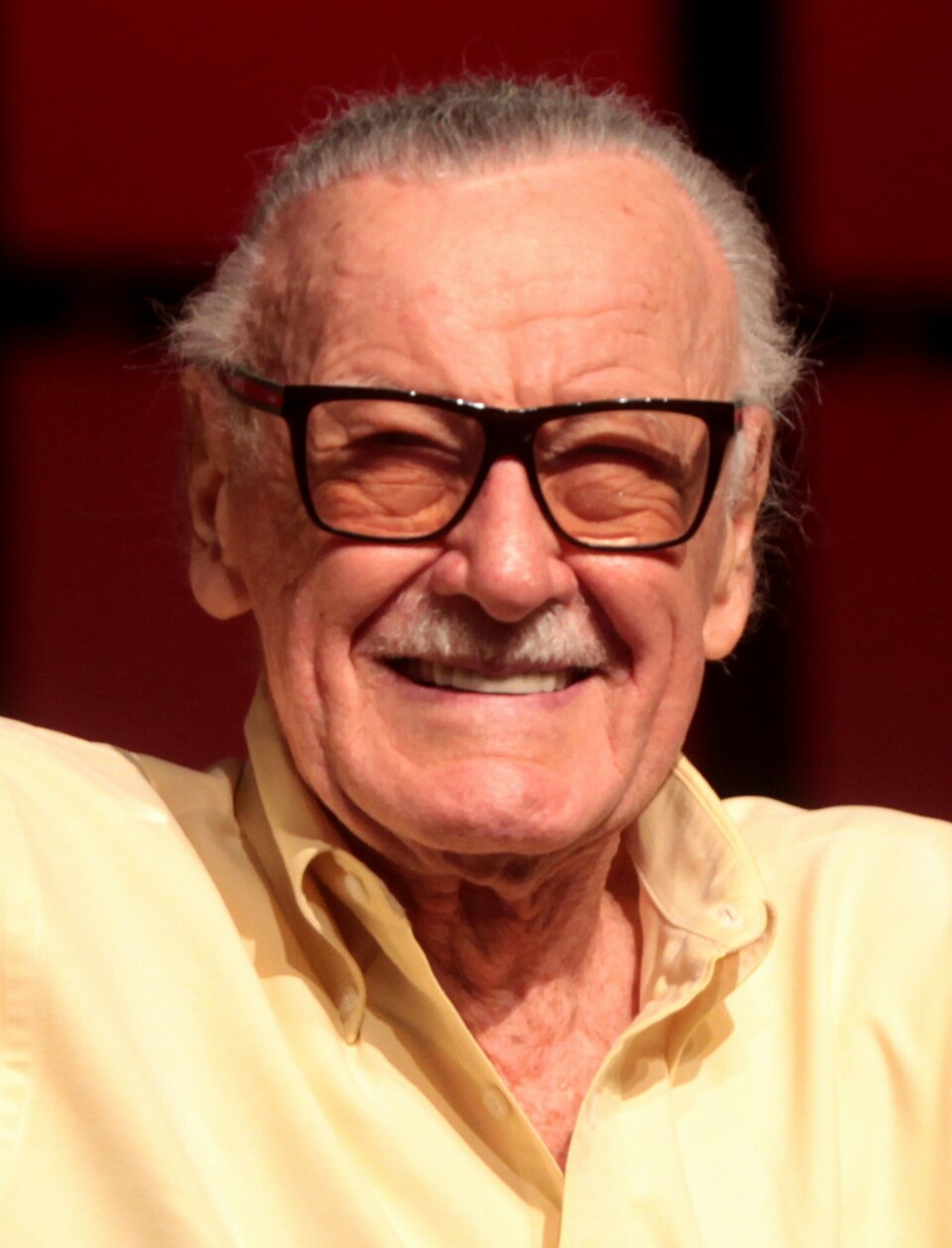
"You know, I guess one person can make a difference. Enough said." It is the kind of line that sounds like a benediction — and, coming from Stan Lee, it more or less is. In a short, disarming talk that plays like a fireside confession, the architect of the Marvel universe sets out to tell a single anecdote. What he actually delivers is a master class in creative nerve, dressed up as a story about a bug on a wall.
He warns us, gently, that it may strain belief. "It's a true story," Lee says, "although sometimes it's hard even for me to believe it." He had been asked to say a few words, and anecdotes, he reasoned, are easy. So he chose the one he knew best: the improbable, nearly-didn't-happen birth of Spider-Man. What follows is not a triumphant march of genius but something far more human — an idea nearly strangled in the crib, rescued only by a writer too stubborn to let it die.
The setup is almost mundane. Marvel had already scored with the Fantastic Four and, Lee thinks, the X-Men — he cheerfully admits he can't remember the order. Then the publisher came calling with a directive that doubles as a portrait of the working life: "Stan, I want you to come up with another superhero." Lee's response was not artistic rapture but professional survival. "When my publisher said, 'Do something,'" he recalls, "I better do it 'cuz I wanted to keep my job."
There is something quietly radical in that framing. We tend to imagine cultural landmarks arriving on a bolt of inspiration, delivered to geniuses standing on mountaintops. Lee's version is the opposite: a man at home under deadline pressure, obeying a boss, casting about for anything that might work before someone noticed he had nothing. The greatness, if there is any in the story, is not in the circumstances. It is in what he did with them.
The Power Comes First
Lee's creative method, as he lays it out, is refreshingly unglamorous. "The most important thing in a superhero at first is the superpower," he explains. "Once you get that, everything else comes along." So he sat, and he thought, and he waited for the world to hand him something. It did — in the form of an insect. "I saw a fly crawling on the wall," Lee says, "and I said, 'Hey, if I can get a superhero that could stick to walls and crawl on them, man, that would be cool.'"
Then, in a flourish of comic honesty that gets a laugh from his audience, he corrects himself mid-flight. "No, I'm lying to you," he says. "I don't think the word cool was in use then. I probably said, 'It'll be groovy.'" It is a tiny moment, but it's the whole man in miniature: the showman who refuses to gild his own legend, the storyteller who would rather be accurate than impressive. "I'll never lie to you," he adds — and somehow you believe him precisely because he just caught himself doing it.
That instinct — to puncture his own myth before anyone else can — is a large part of why audiences trusted Lee for decades. He performs the story, but he keeps winking at the performance, reminding you that the legend was assembled by a fallible man in real time. The fly was real. The uncertainty was real. Even the vocabulary of the era gets fact-checked on the spot. In an industry built on larger-than-life fantasy, Lee's charm was always his refusal to pretend the making of it was anything but ordinary, improvised, and gloriously imperfect.
"I saw a fly crawling on the wall. And I said, 'Hey, if I can get a superhero that could stick to walls and crawl on them, man, that would be cool.'"
— Stan LeeFly-Man, Mosquito-Man, and a Name That Stuck
With the power in hand, Lee needed a name — and here the story becomes a small comedy of near-misses. He ran through the options aloud: "Fly-Man. Mosquito-Man." Neither had the ring he wanted. Then he arrived at the one that did. "I got down to Spider-Man," he says. "Spider-Man. It just sounded dramatic." In two words, an accident of taste, he had christened a character who would outlive everyone in the room.
But Lee wasn't finished complicating things. Having secured a hero, a power, and a name, he decided — "just for fun," as he puts it — to hand his creation something no superhero of the era carried: baggage. "I'm going to give him personal problems," he decided, "'cuz except for you people whose lives are perfect, most other people have personal problems." Then came the second heresy. He made his hero a teenager, reasoning that "there were no teenage superheroes that I knew of at the time." Armed with, in his words, "all that wonderful material, those great ideas," he marched into his publisher's office.
"The Worst Idea I Have Ever Heard"
The reaction was not applause. It was a wall of logic aimed straight at everything Lee loved about the pitch. "Stan, that is the worst idea I have ever heard," the publisher told him. He was, Lee is careful to note, "a very logical man, very intellectual" — which somehow made the rejection land harder. The objections came in a tidy, devastating list. People hate spiders, so you can't call a hero Spider-Man. Teenagers can only be sidekicks. And personal problems? "Stan, don't you know what a superhero is?" the publisher demanded. "They don't have personal problems."
"Stan, don't you know what a superhero is? They don't have personal problems."
— The publisher, rejecting Spider-ManEvery one of those objections was, by the conventional wisdom of the moment, correct. And every one of them is the reason Spider-Man became immortal: the ordinary name, the teenage awkwardness, the aching pile of personal problems that made Peter Parker the first superhero readers could see themselves inside. Lee left the office, in his wry telling, "disappointed, but obviously a much wiser man." The wisdom, of course, was a joke. He hadn't been convinced at all.
A Dying Magazine and a Quiet Act of Defiance
The idea would not leave him. "I couldn't get Spider-Man out of my system," Lee says. And then fate — or rather, a failing title — cracked open a door. Marvel was about to kill a magazine called Amazing Fantasy. It wasn't selling well, and the final issue was heading to press. Here Lee offers a piece of publishing wisdom that becomes the hinge of the entire story: "When you do the last issue of a magazine, nobody cares what you put in it 'cuz the book is dying."
So he did the thing that changed everything, and he did it almost casually. "Just to get it out of my system," he says, "I put Spider-Man in Amazing Fantasy, featured him on the cover" — and then, remarkably, "forgot about it." There was no fanfare, no bet-the-company confidence. There was only a writer smuggling his rejected idea onto the pages of a book no one expected anyone to read, because it was the only door left unguarded.
"Just to get it out of my system, I put Spider-Man in Amazing Fantasy, featured him on the cover, forgot about it."
— Stan LeeA month later, the sales figures came in — and with them, a scene Lee clearly relishes retelling. The publisher came "racing" into his office. "Stan, Stan," he said, "you remember that character we both loved so much, Spider-Man?" The pronoun does a lot of work in that sentence. The man who had called it the worst idea he'd ever heard now remembered it as a shared passion. "Let's do him as a series," he said. The rejection had been quietly, completely reversed by a column of numbers.
Lee does not linger to gloat, but the detail is too delicious to pass unnoticed. "That character we both loved so much" — the gentle rewriting of history is left hanging in the air for the audience to enjoy. It is the sweetest kind of vindication precisely because Lee refuses to underline it. He simply reports the words as spoken and lets the comedy of the reversal speak for itself, a storyteller confident enough to trust his listeners to catch the joke.
It is worth pausing on the sheer contingency of it all. Had Amazing Fantasy been a healthy title, there would have been no unguarded final issue to hide the character in. Had the book been selling, the publisher's veto would have held, and Spider-Man might have stayed a doodle in Lee's mind, a rejected pitch remembered only by the man who dreamed it. The character survived not because the system embraced him, but because a crack opened in the system — a dying magazine that "nobody cares what you put in" — and Lee was watching for it. Opportunity, in his telling, looked exactly like failure.
And note what Lee did not do. He did not storm out, quit, or wage war with his publisher over principle. He absorbed the "no," pocketed his conviction, and waited for a door. When one appeared, he walked through it without asking permission — "just to get it out of my system," a phrase that makes an act of quiet rebellion sound like nothing more than tidying up. That is a particular kind of creative courage: not loud defiance, but patient persistence, the willingness to keep an idea alive in private until the world is finally ready to see it.
The Lesson Underneath the Legend
Lee is too seasoned a performer to leave the moral unspoken — though he frames it with characteristic self-deprecation. "Now, why am I telling you this?" he asks. "Besides the fact that I have to kill a little time." Then the real point lands. "If you have an idea that you genuinely think is good," he says, to cheers, "don't let some idiot talk you out of it."
He is careful, immediately, to add the guardrail. This is not a license for stubbornness for its own sake. "That doesn't mean that every wild notion you come up with is going to be genius," he allows. "But if there is something that you feel is good, something you want to do, something that means something to you — try to do it." The distinction matters: conviction, not contrarianism. The point is not to ignore every voice, but to protect the ideas you genuinely believe in from the ones who don't yet see them.
And then Lee, who spent a lifetime inventing gods and monsters, closes on something almost tender — a definition of good work that has nothing to do with fame or sales figures at all. "You can only do your best work if you're doing what you want to do," he says, "and if you're doing it the way you think it should be done, and if you can take pride in it after you've done it." The reward isn't the applause. It's the private moment afterward: "No matter what it is, you can look at it and say, 'I did that, and I think it's pretty damn good.' That's a great feeling."
He signs off the way only he could, folding the whole philosophy back into a mission statement. "I'm Stan Lee. I've been writing stories for the young generation for the past 30 years." In that time, he says, he learned a great deal about what young people think — and, "more importantly," what young people are. It is a subtle but telling distinction, and it explains everything about the character he fought to save: a hero defined not by what he could do, but by who he was. "We're going to try to present a voice that somebody will listen to," he promises. "The voice is needed. We hope it will be ours." Decades on, the fly is long gone, the dying magazine is a collector's holy grail, and the voice is still being heard. One person, it turns out, really can make a difference. Enough said.