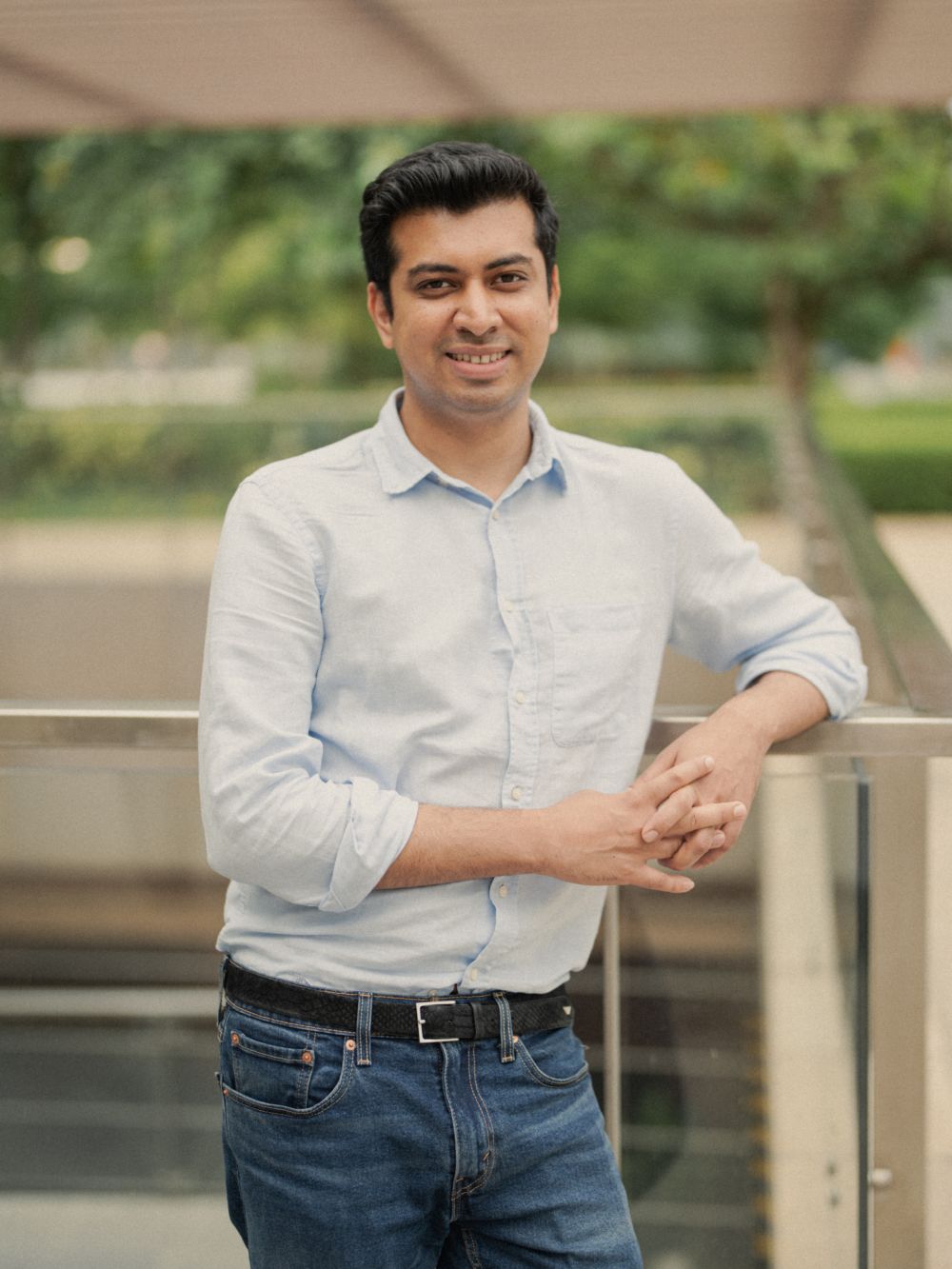
Sourabh Gupta runs Skit.ai from a Madison Avenue address more famous for advertising than for accounts receivable, which is convenient, because his company is quietly automating the least glamorous corner of enterprise telephony - the collections call about a car payment that is thirty days late. Skit sells voice AI to auto lenders, insurers, healthcare revenue-cycle operators, and buy-here-pay-here dealers. The pitch is that the phone still rings in these industries, and that the humans who used to answer it were, at scale, expensive and unhappy about it.
Gupta and his co-founder Akshay Deshraj started the company in 2016, roughly ten minutes after graduating from IIT Roorkee, under a different name - Vernacular.ai - and with a different sales pitch: a multilingual voicebot for Indian enterprises that wanted to talk to their customers in the ten or so languages those customers actually spoke. It worked. In 2020 the World Economic Forum invited them into its Global Innovators cohort. In 2021 WestBridge Capital led a $23M Series B. That same year Forbes put Gupta on its 30 Under 30 Asia list, which is what a certain kind of investor and a certain kind of parent both wait to see.
Then came the rebrand, which is usually where founders lose the plot.
In 2022 the company shed the Vernacular.ai name - which had done its job telling early customers what the product did, and no longer did - and became Skit.ai. Around the same time, Gupta moved himself, not just the org chart, to New York. This is the sort of decision that reads well in hindsight and is uncomfortable at the time. The company had a business in India, an obvious language moat, and a name investors already recognized. Trading all three for a U.S. accounts-receivable pitch on Madison Avenue is either strategy or vanity. The revenue makes the argument.
Skit's platform, which the company likes to call its Augmented Voice Intelligence Platform because voice AI sounds vague and Augmented Voice Intelligence sounds sold, does something simple in principle. It picks up the phone. It identifies who is on the line. It has a conversation appropriate to the situation - a payment reminder, a dispute, a hardship request, a routine confirmation - and it either resolves the call or hands it to a human collector who is now spending time on something worth their time. Skit charges for this, mostly by the minute, mostly at volume, and mostly to companies where a percentage-point improvement in right-party contact rate is a real number on a real P&L.
What is striking about Gupta as a founder is what he did not do. He did not build a chatbot on the side. He did not pivot into general-purpose agents when the generative AI cycle turned hot in 2023 and every other conversational AI company added the word "copilot" to its homepage. He did not diversify into vertical after vertical simultaneously. He built voice, on the phone, for collections, and he built it deeper. In an industry that fetishizes the pivot, this reads as either stubbornness or clarity. In interviews he calls it focus.
He also relocated. This matters. There is a growing pattern of Indian founders keeping engineering in India and shipping the CEO to the U.S. to sell, and Gupta is one of the visible examples. Skit's engineering and product weight remains rooted in Bengaluru; its go-to-market has been rebuilt in Manhattan; and the CEO commutes, physically and emotionally, between the two. Founders who try this from a laptop in Bengaluru usually stall. Gupta did not stall.
The company employs about 210 people. It has raised roughly $30M in total across rounds. It has been named a Gartner Cool Vendor and won a CCW Disruptive Technology of the Year award in 2022. Its customer list includes 60+ enterprises the company describes as "prominent" and does not, for the most part, name in press releases. This is the polite way to describe the accounts receivable management industry, which prefers not to have its vendors talked about by name.
Gupta himself writes occasionally for VentureBeat's DataDecisionMakers column, sits on the Forbes Technology Council, and does the rounds on the founder-interview podcast circuit. His public voice is measured, engineering-adjacent, and unusually free of the vocabulary drift that afflicts most conversational AI CEOs after Series B. He talks about phone calls. He talks about right-party contact. He talks about compliance in collections, which is boring, and which is exactly the reason his product sells. When asked what makes AI exciting, he offers this: "The need for constant improvements and upgrades makes AI exciting. AI algorithms must be upgraded consistently; it's an iterative process that brings about innovation." Not poetic. Not viral. A founder describing his product, exactly.
Which, in an industry running mostly on vibes, is a competitive advantage.